UPS Battery Scrap Buyer Dammam: Guide to Selling Used Batteries
When you search for a UPS battery scrap buyer Dammam, you are usually looking for a practical way to sell batteries removed from backup-power systems. Before requesting a quotation, identify the battery chemistry, estimate the quantity, document the condition, and explain whether the units are disconnected, accessible, and ready for collection.
Used UPS batteries should not be treated like ordinary mixed metal scrap. Their chemistry, electrical charge, weight, damaged condition, and connected equipment can affect handling and evaluation. Clear information helps a buyer understand the material and discuss suitable collection options without relying on assumptions.
Understanding the Batteries Inside a UPS System
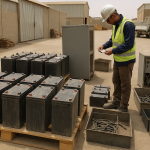
Many uninterruptible power supply installations use sealed lead-acid batteries, including valve-regulated lead-acid units commonly marked SLA or VRLA. Larger installations may contain flooded lead-acid cells, while some newer or specialist systems use lithium-ion or nickel-cadmium batteries. The identification label is important because each chemistry requires different handling and recycling arrangements.
- SLA or VRLA: Often installed as individual battery blocks inside cabinets or modular trays.
- Flooded lead-acid: May contain liquid electrolyte and requires careful inspection for leakage.
- Lithium-ion or nickel-cadmium: Should be identified clearly rather than mixed with lead-based batteries.
Do not identify chemistry from case colour or size alone. Record the wording on the label, model reference, voltage, ampere-hour rating, and battery count when these details are readable. UPS cabinets may also include steel panels, copper cables, busbars, connectors, and electronic controls. These components are ferrous, non-ferrous, or electronic material, but they should not be separated by cutting into batteries.
How a UPS Battery Scrap Buyer Dammam Evaluates a Load
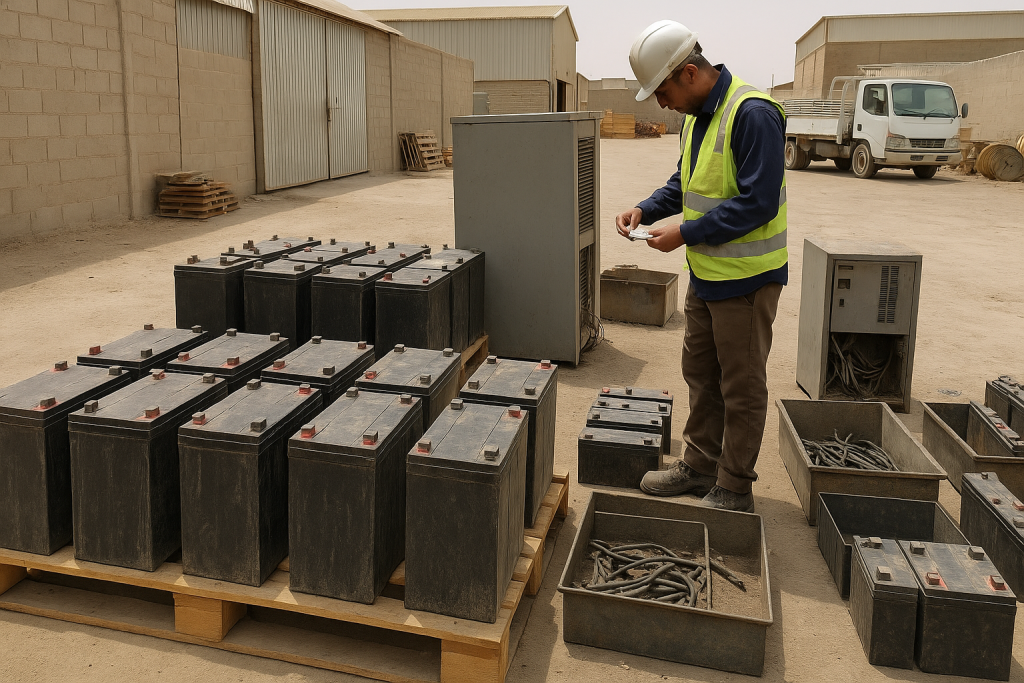
A buyer will usually need more than a statement that used batteries are available. An initial assessment may consider the chemistry, number of units, approximate total weight, age information when known, physical condition, sorting, and whether cabinets or cables are included. Photos of labels and the overall storage area can clarify the enquiry.
- Battery chemistry and model information
- Individual unit count and approximate weight
- Intact, swollen, cracked, burnt, or leaking condition
- Loose units, trays, racks, or complete UPS cabinets
- Ground-level access, stairs, lifts, loading bays, or restricted routes
- Disconnection, lifting, packaging, and collection requirements
Condition affects more than value. A leaking lead-acid battery may present corrosive material, while a damaged lithium-ion unit may require specialist precautions. Disclose these issues before anyone attempts to move the batteries, and seek competent safety guidance when the appropriate handling method is uncertain.
7 Smart, Essential Tips Before Selling Used UPS Batteries
These seven steps can make an enquiry clearer and reduce avoidable handling problems.
- Confirm the battery chemistry. Read the original label and group lead-acid, lithium-ion, and nickel-cadmium units separately. If a label is missing or unreadable, mark that unit as unidentified instead of guessing.
- Create a simple inventory. Count the batteries and note voltage, ampere-hour rating, model, dimensions, and approximate unit weight where available. For large installations, record the number of cabinets, trays, or battery strings.
- Separate related equipment. Keep battery modules distinct from steel cabinets, copper cables, electronic UPS equipment, packaging, and unrelated warehouse scrap. Better sorting allows each material category to be considered appropriately.
- Protect exposed terminals. Prevent loose metal objects from bridging battery terminals. Follow the manufacturer’s handling guidance and use suitable non-conductive terminal protection where appropriate. Never place tools or mixed scrap on top of batteries.
- Report damage honestly. Photograph bulging cases, cracks, corrosion, liquid residue, burn marks, unusual odours, or heat from a safe position. Do not open, crush, drain, or casually move a suspect battery.
- Plan the removal route. Check door widths, stairs, lift capacities, security procedures, loading areas, parking restrictions, and working-space limitations. Heavy battery blocks and cabinets may require a planned lifting method.
- Clarify the quotation scope. Ask whether the assessment covers batteries only or also includes cabinets, cables, disconnection, packaging, labour, and transport. Confirm what may change if the quantity or condition differs at collection.
A well-prepared request to a UPS battery scrap buyer Dammam should combine inventory details with clear photographs and access information. This gives both parties a better basis for discussing the material, collection responsibilities, and quotation terms.
What Influences the Scrap Evaluation?
There is no responsible way to provide a fixed current price without reviewing the batteries and market conditions. Used UPS batteries may be evaluated by unit, weight, chemistry, or complete lot. The method can vary according to the material and collection arrangement.
- Chemistry and identifiable battery grade
- Quantity and estimated total weight
- Intact or damaged condition
- Mixed versus consistently sorted batteries
- Attached cabinets, wiring, trays, or electronics
- Loading, labour, transport, and site-access requirements
- Current demand and relevant commodity conditions
Ask how quantity will be confirmed and whether non-battery items are assessed separately. Removing labels, draining electrolyte, breaking cases, or extracting internal metal is not a suitable way to improve value. Keeping units intact and accurately identified is generally safer and makes the load easier to describe.
How Collection and Removal Generally Work
An enquiry to a UPS battery scrap buyer Dammam can begin with the site location, contact person, battery type, quantity, photographs, and desired removal period. A buyer may first review the information remotely and ask follow-up questions. Any initial quotation may need confirmation if the actual chemistry, weight, condition, or access differs from the description.
Disconnection and Site Preparation
UPS batteries can retain electrical energy after equipment is switched off. Electrical isolation and disconnection should be completed by appropriately competent personnel following the equipment manufacturer’s instructions and the site’s procedures. The seller should confirm whether batteries are already disconnected and whether cabinets remain connected to the UPS system.
Access, Loading, and Handover
Before collection, identify who is responsible for internal movement, lifting, packaging, loading, and site supervision. Keep access routes clear and provide accurate information about floor level, lifts, gates, loading docks, and vehicle restrictions. At handover, the parties can compare the prepared inventory with the available material and discuss any visible differences.
Dammam and Eastern Province Site Considerations
Commercial buildings, data rooms, warehouses, factories, workshops, healthcare facilities, and telecom sites can all generate used UPS batteries during maintenance or equipment replacement. In Dammam industrial areas, access permissions, shift activity, security checks, and busy loading zones may influence the practical removal plan. For locations elsewhere in the Eastern Province, provide the exact site address rather than assuming transport arrangements.
When contacting a UPS battery scrap buyer Dammam, mention whether the batteries are stored indoors, outdoors, or in a temperature-controlled room. Follow manufacturer guidance for storage, keep units protected from direct heat and physical impact, and report any battery that is unusually warm, swollen, leaking, or producing an odour.
Responsible Recycling and Material Recovery
Used batteries contain materials that may be recoverable through appropriate recycling routes, but they also require controlled handling. Lead, steel, copper, plastics, and other components should remain within suitable material-management channels rather than being mixed with general rubbish. The UN Environment Programme provides broader information about resource conservation, pollution prevention, and responsible waste management.
Sellers should keep an internal record of battery type, quantity, removal date, and the party receiving the material. They should also identify any site-specific or regulatory requirements that apply to storage, transport, or disposal. Ask the buyer about the handling process and any documentation requirements relevant to the particular transaction.
Frequently Asked Questions
Can Different UPS Battery Types Be Included in One Enquiry?
Yes, they can be described in one enquiry, but each chemistry should be listed and photographed separately. Do not combine lead-acid, lithium-ion, nickel-cadmium, and unidentified units into an unmarked mixed pile. Ask the buyer which categories can be considered.
What Should I Do with Swollen, Cracked, or Leaking Batteries?
Do not dismantle or move them casually. Restrict unnecessary access, avoid contact with residue, and obtain competent safety guidance based on the battery chemistry. Tell the buyer about the condition before collection options are discussed.
Can UPS Cabinets, Racks, and Cables Be Assessed with the Batteries?
They may be considered as separate material categories, depending on the enquiry. State whether the load includes steel cabinets, copper cabling, busbars, trays, or electronic UPS equipment. Also explain whether these items have been disconnected.
How Do I Request Collection Information for a Dammam Site?
Contact a UPS battery scrap buyer Dammam with the location, chemistry, battery count, photos, condition, floor level, access route, and loading details. Ask about collection options, responsibilities, timing, and how the material would be evaluated.
Discuss Your Used UPS Batteries
If you have used backup-power batteries in Dammam or elsewhere in the Eastern Province, contact Metal Scrap Dammam to discuss the material, quantity, condition, site access, and possible collection arrangements. For a current enquiry with a UPS battery scrap buyer Dammam, visit the Metal Scrap Dammam website, call or WhatsApp +966532510699, or email info@metalscrapdammam.com.