Retired Equipment Scrap Register Dhahran: 7 Useful Essentials
Retiring a pump, motor, machine line, or control cabinet is not only an asset decision. The seller also needs a clear record of ownership, metal content, condition, residual materials, and collection constraints. A retired equipment scrap register Dhahran companies can use helps align finance, procurement, facilities, and a prospective scrap buyer before anything is moved. The goal is a practical, defensible enquiry—not an inflated weight estimate or a vague photo list.
Why Equipment Scrap Records Matter
Retired equipment can remain in an accounting system after it has stopped operating, while physical labels may be damaged or different departments may use different names for the same asset. A single register creates a shared reference for internal approval and an external scrap enquiry.
- Connect each physical item to an internal asset reference.
- Separate approved equipment from assets still under review.
- Record visible metals and attached non-metal components.
- Identify access, lifting, isolation, and loading questions.
- Preserve useful photographs without treating them as weight evidence.
Keep the full internal record under company control. A buyer-facing copy can omit confidential purchase costs, operational data, and other details that are unnecessary for evaluating the scrap.
7 Essentials for a Retired Equipment Scrap Register Dhahran Teams Can Use
The following seven fields make an equipment register more useful for reconciliation, assessment, and collection planning.
- Asset identity: Record the internal asset number, equipment name, manufacturer or model when visible, serial reference, department, and current site zone. Use the same description on photographs and approval records.
- Retirement status: State whether the item is proposed for retirement, internally approved, isolated, or ready for buyer assessment. This prevents equipment awaiting authorization from being mixed with confirmed scrap.
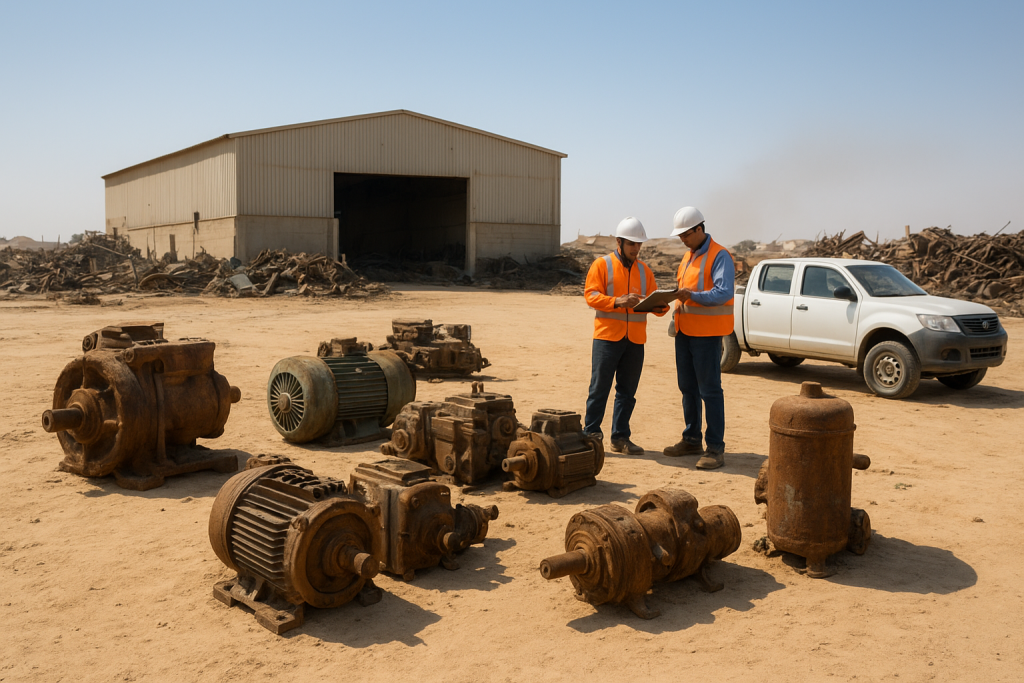
- Physical condition: Note whether the asset is complete, dismantled, damaged, corroded, stored indoors, or exposed outdoors. Mention loose panels, sharp edges, unstable sections, or missing components.
- Material description: List visible ferrous steel or iron, stainless steel, aluminum, copper-bearing cable, brass fittings, motors, and electronic controls. Use “unknown” rather than guessing an alloy or grade.
- Residual materials: Flag oil, coolant, refrigerant, batteries, insulation, product residue, or pressurized parts. These details can affect preparation, acceptance, handling, and the parties required for removal.
- Quantity evidence: Record item counts and any verified weight already available from reliable records. Add dimensions where practical, but do not calculate exact weight from photographs alone.
- Access and loading details: Describe the floor level, doorway or gate limits, aisle width, ground condition, loading area, site induction needs, shutdown restrictions, and whether equipment remains anchored or connected.
When maintained consistently, the retired equipment scrap register Dhahran users share with prospective buyers can reduce repeated questions while keeping internal authorization separate from commercial assessment.
Classifying Metal Content Without Overstating It
Industrial equipment is often a mixture rather than one scrap grade. Frames, bases, shafts, gears, and housings may be ferrous and can respond to a magnet. Copper may appear in motor windings, cables, busbars, or coils. Aluminum can be present in housings, fins, covers, or profiles, while brass and stainless steel may appear in fittings or process-contact parts.
- Ferrous items: carbon-steel frames, iron castings, shafts, guards, and structural supports.
- Non-ferrous items: identifiable copper, aluminum, brass, and stainless components.
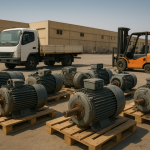
- Mixed assemblies: motors, pumps, gearboxes, panels, HVAC equipment, and machinery containing several materials.
- Non-metal attachments: rubber, plastic, insulation, wood, glass, or process residue.
Avoid destructive testing or unsafe dismantling merely to improve a description. Clear photographs of the complete asset, identification plate, connections, and accessible metal components are usually more useful than unsupported claims about internal copper or alloy content.
Preparing a Clearer Quotation Request
Scrap value cannot be determined from the asset name alone. A buyer will usually consider material type, grade, recoverable metal, condition, contamination, quantity, current market conditions, sorting, and the work required for collection or removal. Equipment still fixed to foundations or connected to services may need different planning from loose items beside an accessible loading point.
- Provide the register in a consistent spreadsheet format.
- Attach current photographs matched to asset references.
- Identify the company contact responsible for site coordination.
- State whether weight is verified, recorded historically, or unknown.
- Ask what additional information is needed before collection is discussed.
A well-prepared retired equipment scrap register Dhahran submission supports a more informed conversation. Companies can use the industrial scrap seller enquiry route to share relevant material, quantity, and access details without assuming a price from images.
How Assessment and Collection Coordination Generally Work
The process normally begins with an equipment list, photographs, location details, and an explanation of site access. The buyer may then ask questions about material separation, verified weight, disconnection status, residual substances, and loading requirements.
- The seller confirms ownership and completes internal disposal approval.
- Both parties clarify which assets are included and excluded.
- Site contacts discuss access, removal boundaries, and collection timing.
- The parties confirm how material will be evaluated and what records are required.
Before movement, equipment should be isolated through the seller’s appropriate internal procedures. Site management should identify who may disconnect services, operate lifting equipment, or authorize entry. The retired equipment scrap register Dhahran record should be updated if assets are removed, divided into lots, or withdrawn from the proposed sale.
Responsible Handling and Recycling Context
Recovering usable metal from retired machinery can return steel, copper, aluminum, and other materials to productive use. The UN Environment Programme provides broader information about resource efficiency, waste reduction, and sustainable material management.
Metal recovery does not remove the need to identify attached batteries, oils, refrigerants, pressure vessels, electronic controls, or process residues. Sellers should ask relevant specialists about preparation and handling requirements when an asset contains uncertain or potentially sensitive materials. Equipment should not be drained, cut, or dismantled by unqualified personnel.
Dhahran Records with Dammam Collection Context
Dhahran companies seeking scrap collection may coordinate with buyers serving Dammam and the wider Eastern Province. Distance is only one planning factor: industrial gate procedures, loading access, traffic restrictions, item dimensions, and whether machinery is loose or installed can all influence collection arrangements.
For that reason, a retired equipment scrap register Dhahran team prepares should identify the actual site zone without suggesting that the buyer has a branch or facility there. For general business and contact information, review Metal Scrap Dammam.
Frequently Asked Questions
Should Asset Tags Be Removed Before Requesting a Scrap Quotation?
Keep tags in place until internal reconciliation is complete. Photographs of identification plates can help match equipment to the register, but confidential identifiers may be redacted from the buyer-facing copy if they are not needed for assessment.
Can Equipment Weight Be Estimated Accurately from Photographs?
No. Images help show condition, dimensions, visible materials, and access, but they do not establish exact weight. Use verified records or an appropriate weighing method, and label unknown weight honestly in the register.
Should Motors, Cables, and Steel Frames Be Listed Separately?
Separate entries are useful when components are already detached and can be identified safely. For complete machinery, describe it as a mixed assembly and list visible components without claiming inaccessible metal content or purity.
What Access Information Should Accompany the Register?
A practical retired equipment scrap register Dhahran entry should note floor level, gates, aisles, loading space, ground conditions, attached services, anchoring, site-entry requirements, and any operating-area restrictions relevant to collection planning.
Discuss Your Retired Equipment Records
Before seeking a quotation, reconcile the asset list, separate approved items, document visible materials, disclose residual substances, and provide realistic access information. To discuss a retired equipment scrap register Dhahran enquiry, material quantity, site access, and possible collection options, contact Metal Scrap Dammam.
Website: https://metalscrapdammam.com/
Call / WhatsApp: +966532510699
Email: info@metalscrapdammam.com
Related material information: our relevant scrap buying and preparation guide.