A Seller’s Guide to Copper Scrap Grades Dammam
For companies researching copper scrap grades Dammam, the main task is to identify what is actually copper, separate different forms, and record coatings or attachments before requesting a quotation. Clean wire, oxidized pipe, insulated cable, and mixed electrical components are not normally evaluated in the same way.
Accurate sorting can make inspection easier and reduce uncertainty. Sellers should avoid assuming a grade from colour alone because brass, copper-plated steel, tinned conductors, and painted material can look similar under industrial dust or oxidation.
What Common Copper Grade Names Mean
Copper is a non-ferrous metal, so solid copper is not attracted to a magnet. However, a magnet is only a screening tool: copper-coloured steel may be plated, while a copper assembly may contain magnetic fasteners or internal parts. A clean, safely accessible edge can also help reveal the base metal beneath paint or surface oxidation.
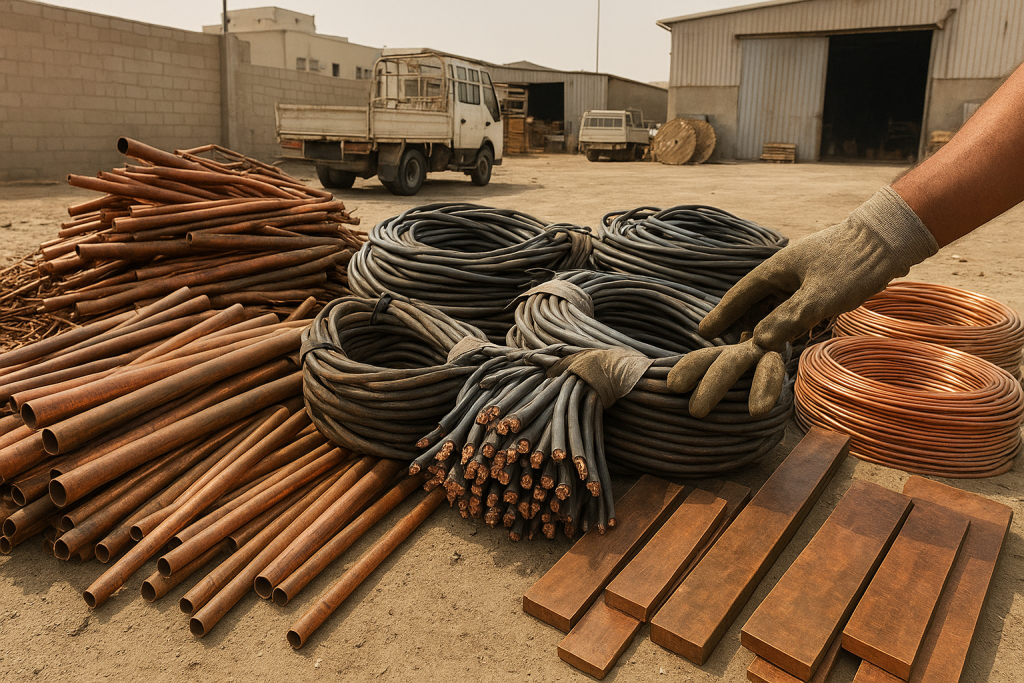
Commercial descriptions vary between buyers. Bare bright generally refers to clean, uncoated copper wire. No. 1 copper commonly includes clean copper pipe, busbar, clippings, or wire with minimal contamination. No. 2 copper may include heavier oxidation, solder, paint, or other attachments. Insulated cable and copper-bearing assemblies are usually evaluated separately because their recoverable copper content varies.
6 Useful Practical Checks for Copper Scrap Grades Dammam
Use these six checks to create a more accurate inventory before contacting a buyer:
- Confirm the base metal. Look for the reddish-brown colour of copper beneath a clean edge. Brass appears more yellow, while aluminium is silver-grey. Use a magnet to identify obvious ferrous parts, but do not treat that test as conclusive.
- Identify the material form. Separate bare wire, tubing, sheet, busbar, cable, windings, and mixed assemblies. The form matters because each category can contain different coatings, insulation, fittings, or non-copper components.
- Inspect the surface condition. Note paint, lacquer, tinning, enamel, solder, oil, heavy oxidation, or burnt areas. Surface changes do not always mean the material is unusable, but they can affect classification and recoverable content.
- Check for attachments. Steel brackets, brass valves, plastic plugs, terminals, rubber, and insulation add non-copper weight. Remove only loose, safe-to-handle items; unnecessary dismantling may consume time without improving the overall return.
- Examine insulated cable separately. Cable value can depend on conductor thickness, insulation, armouring, plugs, and the ratio of copper to total weight. Keep different cable types apart instead of combining fine communication cable with heavy power cable.
- Label each sorted group. Record the material source, approximate quantity, known coatings, and whether items are loose, bundled, palletised, or attached to equipment. Clear records help a buyer understand what requires assessment.
Applying these checks makes copper scrap grades Dammam discussions more specific. Final classification still depends on the buyer’s specifications and physical assessment, so sellers should describe uncertain items honestly rather than assigning an unsupported grade.
Prepare Copper Scrap and Seller Records
Keep dry, loose copper separate from cable, mixed metals, and general waste where practical. Do not burn insulation or use unsafe cutting methods. Electrical items should be isolated from power, and dismantling should be left to suitable personnel when stored energy, sharp edges, heavy components, or unknown residues may be present.
- List the material type and its industrial source.
- Record separate quantities for each sorted category.
- Photograph overall piles and representative close-ups.
- Note pallets, containers, stairs, gates, and loading restrictions.
- Identify who will provide labour or loading equipment.
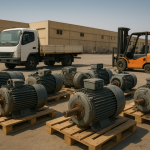
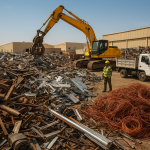
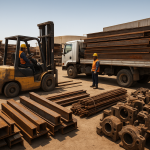
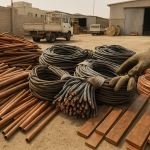
Photographs are useful for initial discussion, but they do not prove grade, purity, or weight. Avoid estimating weight from images. Existing website photographs are also illustrative and should not be treated as evidence of a seller’s site, stock, condition, or quantity.
How Copper Scrap Is Evaluated
For copper scrap grades Dammam evaluations, relevant factors can include copper type, cleanliness, oxidation, coatings, insulation, solder, mixed-metal attachments, quantity, and current market conditions. Collection distance, access, loading requirements, and the work needed to remove material may also affect a quotation.
Sellers should ask how categories will be weighed, whether packaging is included, and how mixed loads are treated. There is no single fixed rate that applies to every copper item. A current quotation should be based on an accurate description and, where required, an appropriate inspection or agreed evaluation process.
General Collection and Selling Process
A commercial copper scrap enquiry will usually move through several practical stages:
- Create an inventory with photos and known material details.
- Separate obvious grades and disclose contamination.
- Share the site location, access route, and loading conditions.
- Discuss assessment, collection options, and responsibilities.
- Confirm the agreed categories and commercial terms before removal.
A clear copper scrap grades Dammam enquiry should cover both the metal and the site. Sellers can review the Metal Scrap Dammam website and use the industrial scrap seller enquiry page to provide relevant details.
Dammam and Eastern Province Considerations
Sorting copper scrap grades Dammam businesses generate is particularly relevant to factories, workshops, warehouses, contractors, and facility teams managing cable offcuts, electrical upgrades, plumbing material, or equipment clearance. Dust, outdoor storage, and coastal exposure can obscure surfaces, making close inspection important. For sites elsewhere in the Eastern Province, collection planning should also account for travel, security procedures, gate access, loading areas, and any site-specific scheduling restrictions.
Responsible Copper Handling and Recycling
Keeping copper separate from mixed waste supports material recovery and reduces unnecessary disposal. Copper should not be burned to remove coatings, and unknown residues should be identified before handling. The UN Environment Programme provides broader information on resource conservation, waste reduction, and sustainable material management. Sellers should also confirm any site, transport, or documentation requirements applicable to their material.
Frequently Asked Questions
What Is the Difference Between No. 1 and No. 2 Copper?
No. 1 usually describes cleaner copper with minimal coatings or attachments. No. 2 commonly has more oxidation, solder, paint, or contamination. Exact specifications vary, so ask the buyer how each batch will be classified.
Should Insulated Copper Cable Be Stripped Before Selling?
Not automatically. Stripping may be impractical for fine cable and should never involve burning. Compare the safe labour required with the likely grading difference, and keep cable types separated even when insulation remains attached.
Can Copper Pipe with Brass Fittings Be Sold as Clean Copper?
Attached brass, solder, valves, and steel fasteners can change the classification. Separate fittings where this can be done safely and efficiently. Otherwise, disclose the attachments and let the buyer assess the mixed material.
What Information Is Needed for a Copper Scrap Quotation?
Provide the material forms, condition, sorted quantities, representative photos, location, access details, loading arrangements, and any removal constraints. State whether the quantity is measured or approximate, and identify any uncertain coatings or components.
Discuss Your Copper Scrap in Dammam
If you need to discuss copper scrap grades Dammam for your business, contact Metal Scrap Dammam with details about the material, quantity, condition, site access, and preferred collection options. Visit https://metalscrapdammam.com/, call or WhatsApp +966532510699, or email info@metalscrapdammam.com.
Related material information: our relevant scrap buying and preparation guide.