Fabrication Workshop Offcut Records Dammam: A Practical Seller Guide
Fabrication workshops generate plate skeletons, trimmed sheet, short profiles, pipe ends, rejected components and machining remnants. These materials may have recoverable value, but mixed piles and incomplete descriptions can make a scrap enquiry difficult to assess. This guide explains how to build a practical register for fabrication workshop offcut records Dammam, covering metal identification, quantity records, contamination, storage and collection access.
The aim is not complicated administration. It is to give workshop, procurement and facility teams a consistent view of their own surplus metal before contacting a buyer.
Why Fabrication Workshop Offcut Records Dammam Matter
An offcut register connects workshop operations with inventory control and scrap disposal decisions. It helps distinguish approved surplus from usable stock, customer-owned material, work in progress or parts waiting for inspection. That distinction reduces the risk of presenting the wrong material for sale.
Clear records also allow a buyer to understand whether a lot is mainly carbon steel, stainless steel, aluminum or another metal. Quantity, condition, sorting and removal details can then be discussed before collection arrangements are considered.
7 Essential Records for Workshop Offcuts
The core of a fabrication workshop offcut records Dammam register is a consistent set of fields. Record these seven items for every batch:
- Metal family and known grade: Identify carbon steel, stainless steel, aluminum, copper or brass separately. Add a verified grade or alloy designation when it is available from purchasing records, material markings or job documentation. Do not guess a grade from colour alone.
- Offcut form and condition: Describe whether the batch contains sheet edges, plate skeletons, profiles, pipe ends, bars, punched pieces or swarf. Note heavy rust, oxidation, coatings, deformation, sharp edges or retained moisture that could affect handling and evaluation.
- Source and internal reference: Link the offcuts to a work order, production area, material issue record or stock code where practical. Traceability helps staff confirm ownership and prevents reusable remnants or customer material from entering a scrap batch accidentally.
- Quantity and measurement method: Record container counts, piece counts or an actual measured weight. Include the date and method used. Photographs can show composition and scale, but they should not be treated as a reliable substitute for verified weight.
- Contamination and attachments: Note paint, oil, coolant, insulation, rubber, plastic film, fasteners, timber or mixed-metal attachments. Honest contamination records help explain whether further separation is practical and prevent a clean batch from being confused with mixed material.
- Storage position and access: State the building, bay, rack or marked floor area. Record doorway dimensions, restricted routes, stairs, overhead obstructions and nearby operations when relevant. Access information helps determine suitable loading and removal arrangements.
- Approval and responsible contact: Mark whether the material has been approved internally for disposal. Include the person or department responsible for confirming the batch, answering material questions and coordinating access. Keep unapproved items outside the sale list.
Separate Materials Before Recording a Batch
Ferrous and non-ferrous metals should generally be recorded separately. A magnet can help with preliminary identification of many iron and carbon-steel items, but it is not a complete grade test. Some stainless alloys behave differently, so purchasing records and visible material markings are more dependable when available.
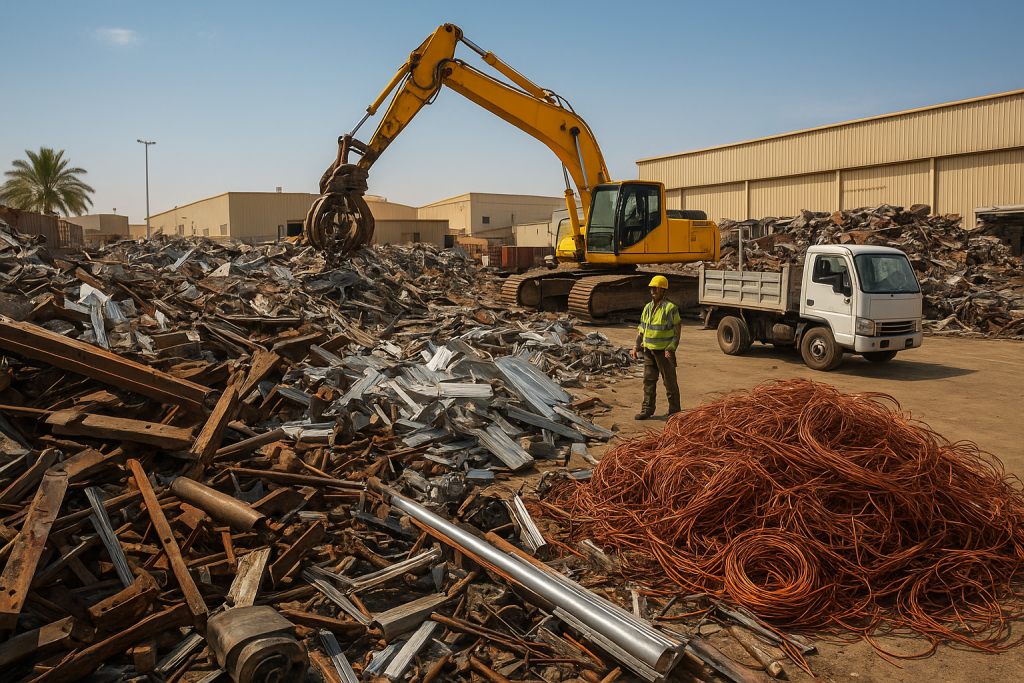
Keep carbon steel away from stainless steel and aluminum where practical. Separate copper and brass components from steel fasteners or frames. Fine turnings and swarf need their own description because they may retain cutting fluids and present different containment and loading issues. Never burn insulation or coatings to expose metal; uncertain residues should be isolated and reviewed under the seller’s site procedures.
Turning Fabrication Workshop Offcut Records Dammam into a Clear Enquiry
A concise enquiry should summarize the metal type, known grade, approximate quantity or measured weight, batch location, contamination and access conditions. Attach current photographs of the actual seller-owned material, including a wide view of the batch and closer views of markings or mixed attachments. Images are illustrative only and should not be used to invent a weight.
- Use one batch reference for each clearly separated metal group.
- State whether material is loose, racked, bundled or held in containers.
- Identify sharp, oversized or awkward pieces before removal is planned.
- Explain any site induction, gate or scheduling requirements in advance.
Businesses can review Metal Scrap Dammam information and use the industrial scrap seller enquiry route to present their material details.
How Assessment and Collection Generally Work
Industrial scrap transactions usually begin with the seller confirming ownership and internal disposal approval. The seller then shares the batch register, photographs and access notes. A buyer may ask follow-up questions about grade, contamination, dimensions, quantity and whether mechanical loading or cutting needs to be considered.
- The parties clarify which batches are included in the enquiry.
- Material condition and sorting are reviewed before a quotation is discussed.
- Loading responsibilities, site access and a suitable collection window are confirmed.
- The seller keeps production routes and excluded stock clearly separated.
- Batch records are reconciled with the material actually handed over.
Ask the buyer how weighing, quantity confirmation and any required records will be handled. Requirements should be agreed before collection rather than assumed from a photograph or an old inventory entry.
Factors That Can Affect Offcut Evaluation
There is no single rate that applies to every fabrication offcut batch. Evaluation may depend on metal family, confirmed grade, purity, dimensions, condition, contamination, quantity, separation quality and current market conditions. Collection distance, loading needs, restricted access and oversized pieces may also be relevant.
Clean, consistently sorted batches are easier to describe than mixed bins containing several alloys and non-metal attachments. However, preparation should remain commercially sensible and safe. The labour and equipment needed for extra separation should be considered before staff dismantle, cut or repackage material.
Dammam Industrial Coordination
For teams using fabrication workshop offcut records Dammam as an internal control, local collection planning should reflect the actual industrial site. Workshops in Dammam industrial areas or Second Industrial City may have gate controls, active loading zones, delivery traffic and production schedules that affect access.
Record whether the material is indoors or outdoors and whether dust, moisture or coastal exposure has changed its condition. For enquiries elsewhere in the Eastern Province, provide the precise collection area without implying that the buyer has a branch or facility there. Accurate location information supports realistic transport discussions.
Responsible Handling and Recycling Context
Recovering usable metal through established recycling channels can support resource conservation and reduce avoidable waste. The UN Environment Programme provides broader information about resource efficiency and responsible material management.
At workshop level, responsible preparation means preventing unstable stacks, controlling sharp edges, containing oily swarf and keeping pedestrian or emergency routes clear. Staff should follow the site’s own safety procedures. Materials with unknown residues or potentially hazardous contamination should be identified and assessed appropriately before any collection discussion.
Frequently Asked Questions
What Should Fabrication Workshop Offcut Records Dammam Include?
Include the metal family, verified grade when known, offcut form, condition, quantity method, contamination, storage position, access constraints and internal approval status. Add a batch reference so photographs and later updates remain connected to the correct material.
Should Carbon Steel, Stainless Steel and Aluminum Be Recorded Together?
They should generally have separate batch entries, even if stored in the same workshop. Separation makes the composition clearer and prevents one mixed description from hiding differences in grade, contamination, condition or handling requirements.
Can Photographs Provide an Accurate Offcut Weight?
No. Photographs are useful for showing material type, form, condition and access, but they do not establish an accurate weight. Provide an actual measured figure when available, or clearly label the quantity as a piece or container count.
Which Access Details Help with Collection Planning?
Record gate procedures, doorway clearance, travel routes, floor level, overhead obstructions, loading-zone availability and nearby operations. Also explain how the material is stored and ask the buyer what loading or removal information is needed.
Prepare Your Offcut Enquiry
Well-maintained records help a fabrication business present its own surplus metal clearly without guessing at grade, weight, value or collection requirements. If you are reviewing fabrication workshop offcut records Dammam, contact Metal Scrap Dammam to discuss the material, quantity, condition, site access and possible collection options.
Metal Scrap Dammam
Website: https://metalscrapdammam.com/
Call / WhatsApp: +966532510699
Email: info@metalscrapdammam.com
Related material information: our relevant scrap buying and preparation guide.