steel pallet recycling Dammam: Warehouse Collection and Preparation Guide
Damaged, obsolete, or surplus steel pallets can consume valuable warehouse space and obstruct storage or loading areas. Warehouses seeking steel pallet recycling Dammam typically need a practical way to identify recyclable pallets, obtain an assessment, and coordinate collection without unnecessary disruption. Metal Scrap Dammam can review pallet details and collection requirements for commercial and industrial sites.
The process begins with confirming that the pallets are genuinely retired assets. Sorting, contamination, quantity, access, and loading arrangements all affect how efficiently the steel can be removed and evaluated.
What Counts as Steel Pallet Scrap?
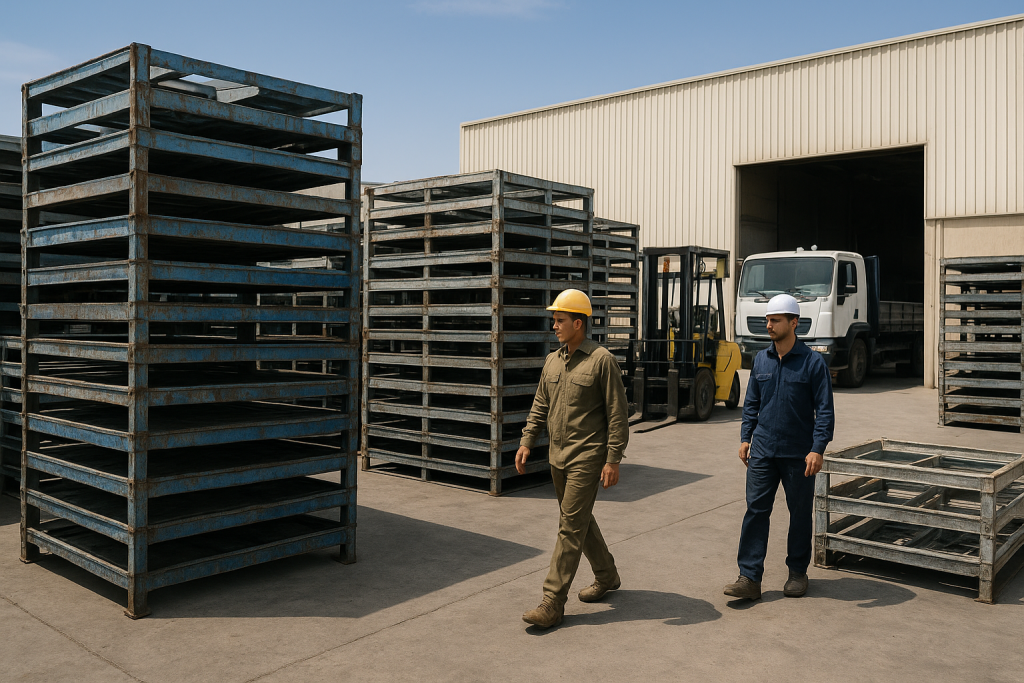
Steel pallets are reusable load platforms manufactured for demanding warehouse, factory, and transport environments. Common designs include flat-deck pallets, post pallets, stackable frames, and pallets with mesh or solid-steel surfaces. They may become scrap after structural distortion, severe corrosion, broken welds, incompatible specification changes, or replacement by another handling system.
- Painted carbon steel: Common ferrous material with a protective surface coating.
- Galvanized steel: Steel protected by a zinc coating and best identified separately.
- Stainless steel: Used where corrosion resistance or hygienic handling is important.
- Mixed-material pallets: Steel frames fitted with timber, plastic, rubber, labels, or other attachments.
Most carbon-steel pallets are magnetic, but a magnet is only an initial identification aid. Some stainless grades respond differently, while an aluminum pallet should not be mixed with steel scrap. Asset labels, specifications, purchase records, and visible construction details can support a more accurate description.
6 Essential Steps for steel pallet recycling Dammam
A structured process helps a warehouse avoid collecting unsuitable assets, mixing valuable grades, or discovering access problems when removal is due.
-
Verify Ownership and Retirement Status
Confirm that every pallet is owned by the business and approved for disposal. Rental, pooled, supplier-owned, or returnable pallets may carry identifying marks and should be separated. The warehouse should also check its internal asset-disposal process before offering pallets as scrap.
-
Record Pallet Types and Quantities
Count the available units and group them by design, approximate dimensions, condition, and material. Note whether they are nested, stacked, loaded with goods, or scattered across multiple storage zones. Clear photos of representative pallets and the complete quantity can assist an initial review.
-
Sort Steel Grades and Coatings
Keep painted carbon steel, galvanized steel, and identifiable stainless steel in separate groups. Do not place aluminum platforms or unrelated non-ferrous components into the steel stack. Better segregation allows each material group to be considered according to its actual composition and condition.
-
Remove Products and Loose Contamination
Empty the pallets and remove loose cardboard, shrink wrap, strapping, and general packaging where this can be done safely. Fixed timber decks, plastic runners, rubber feet, or sealed attachments should be disclosed rather than removed through unsafe cutting. Pallets exposed to oils, chemicals, or unknown residues require clear communication before collection.
-
Check Access and Loading Requirements
Inspect aisle width, door clearance, loading-dock availability, floor restrictions, gate procedures, and the distance from the stack to the vehicle position. Identify whether suitable site equipment is available and who is responsible for operating it. Bent pallets may not stack safely and may require a different removal plan.
-
Request Assessment and Coordinate Collection
Provide the pallet count, material groups, photos, collection address, preferred operational window, and relevant access information. The assessment can then consider the steel and the work involved in collection. Confirm the approved staging area and site contact before the arranged removal time.
Following these steps provides a practical basis for steel pallet recycling Dammam while reducing avoidable sorting, loading, and scheduling problems.
How Steel Pallet Scrap Is Evaluated
Steel pallets do not have one fixed value in every situation. Assessment depends on the recoverable material and the resources needed to collect it. Pallets that appear similar from a distance can differ in grade, wall thickness, attached components, coating, corrosion, and overall weight.
- Material and grade: Carbon, galvanized, and stainless steel should be identified separately.
- Quantity: The number of pallets and estimated volume affect collection planning.
- Contamination: Timber, plastic, rubber, product residue, and general waste may require separation.
- Condition and handling: Distorted or unstable pallets can be harder to stack and load.
- Logistics and market conditions: Access, labor, transport requirements, and current scrap demand may influence a quotation.
For steel pallet recycling Dammam, an accurate quotation therefore requires current information rather than an assumed rate per pallet. Metal Scrap Dammam can review the available material, supporting photos, and removal conditions before discussing the applicable quotation.
Dammam Warehouse Collection and Site Coordination
For steel pallet recycling Dammam, collection planning must fit the warehouse rather than interfere with active receiving, dispatch, or production work. Conditions can vary between distribution warehouses, factory stores, and premises in Dammam industrial areas, including Second Industrial City. The position of the pallets may be as important as the total quantity.
A single consolidated stack near an accessible loading area is usually easier to review than pallets spread across racks, yards, or production zones. However, pallets should not block emergency routes, fire equipment, doors, vehicle lanes, or normal material-handling paths while awaiting collection.
- Share gate-entry instructions and the name of the responsible site contact.
- Identify loading docks, ramps, low clearances, restricted areas, and vehicle-positioning limits.
- Confirm whether the warehouse or collector will handle each part of loading and removal.
Facility managers should plan lifting and movement under their own site procedures. Workers should not climb unstable stacks or attempt uncontrolled cutting, crushing, or manual movement of heavy pallets simply to make the load appear smaller.
Responsible Recycling and Material Recovery
Steel can be processed as a secondary industrial material when it is separated from avoidable waste and sent through an appropriate recycling route. This helps retain useful metal in the material cycle and reduces the amount of bulky warehouse scrap requiring disposal. Broader guidance from the UN Environment Programme highlights the importance of resource efficiency, waste reduction, and responsible material management.
For warehouses, responsible handling also means preventing unknown residues from entering a normal metal load. Contaminated pallets should be identified honestly, while reusable units should be considered for continued service if they remain safe, suitable, and approved by the owner.
Frequently Asked Questions
Can painted and galvanized steel pallets be collected together?
Both types can be reviewed, but they should be identified and preferably grouped separately. Galvanized pallets have a zinc coating, while painted pallets may have different attachments or contamination. Photos and approximate quantities help clarify the material before collection arrangements are discussed.
Must steel pallets be dismantled before recycling?
Not necessarily. Complete pallets may be easier to identify and handle with suitable equipment. Do not cut welded frames or remove fixed components unless this has been requested and can be completed safely. Loose goods, packaging, and unrelated waste should be removed where practical.
What information is needed for a quotation?
For a steel pallet recycling Dammam quotation, provide the pallet count, dimensions, visible material or coating, condition, photos, site location, loading access, and available handling equipment. Mention mixed materials, unstable stacks, restricted collection hours, or suspected contamination at the outset.
Can collection be coordinated around warehouse operations?
Collection timing can be discussed using the site’s receiving, dispatch, security, and loading requirements. Provide preferred time windows and operational restrictions when requesting an assessment. The final plan depends on material quantity, access, vehicle positioning, and safe loading arrangements.
Request a Steel Pallet Scrap Assessment
To discuss steel pallet recycling Dammam for your warehouse, prepare a basic inventory, clear photos, and access details. Contact Metal Scrap Dammam services to request a current assessment and coordinate suitable scrap collection arrangements.
- Business: Metal Scrap Dammam
- Call / WhatsApp: +966532510699
- Email: info@metalscrapdammam.com
- Website: https://metalscrapdammam.com/