Selling Retired Excavators to a scrap excavator buyer Dammam
If you are searching for a scrap excavator buyer Dammam, start by documenting the machine rather than treating it as a single piece of steel. Its metal composition, condition, reusable components, residual fluids, attachments, weight, and site accessibility can all affect the assessment. Clear photographs and accurate information also help a prospective buyer understand whether the excavator can be collected complete or requires preparation before removal.
When Is an Excavator Considered Scrap?
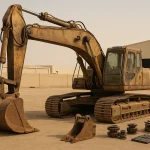
An excavator may be retired after extensive wear, structural damage, fire exposure, corrosion, missing components, or an uneconomical mechanical failure. Tracked and wheeled excavators, mini excavators, demolition machines, and incomplete excavator bodies may all contain recoverable metal. However, a non-operational machine is not automatically valueless beyond its weight; usable attachments or components may still influence how it is evaluated.
Define exactly what is being offered. The sale could include the complete excavator, its undercarriage, boom and arm, cab, engine, hydraulic cylinders, counterweight, bucket, breaker, grapple, or loose spare parts. Confirm whether any rented attachment, third-party accessory, or unrelated material must remain on site.
Understanding the Excavator’s Material Composition
Heavy equipment contains a combination of ferrous metals, non-ferrous metals, fluids, rubber, glass, and electronic components. These should not be assumed to have one uniform scrap grade.
Ferrous Structural Material
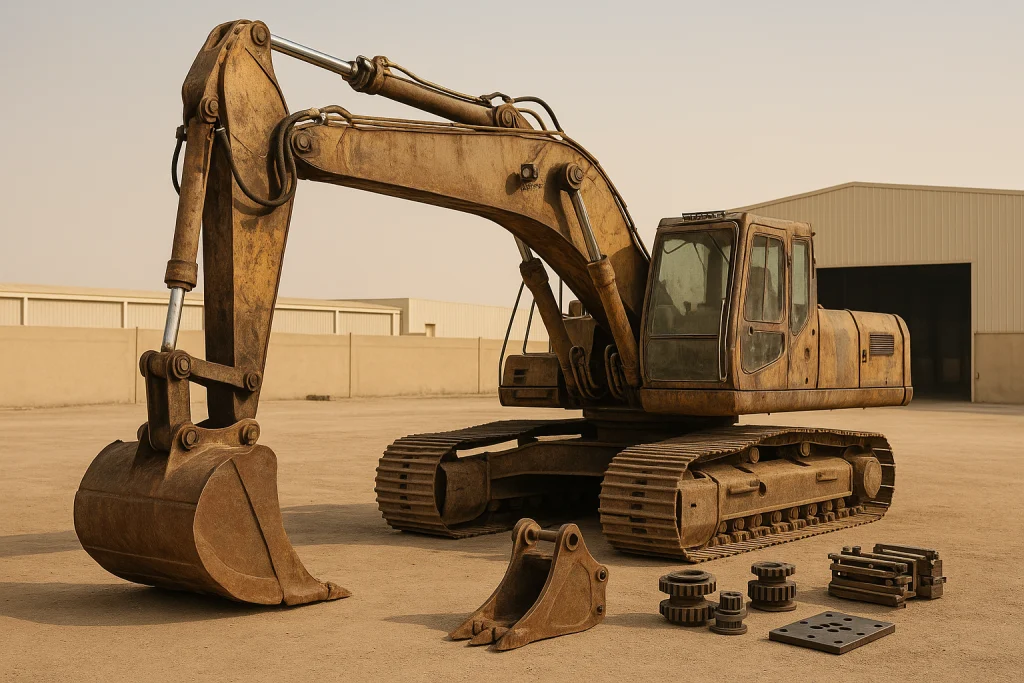
The boom, arm, bucket, frame, track links, rollers, guards, and much of the undercarriage are normally dominated by steel or iron. Thick, heavy sections contribute significant recoverable metal, while soil, concrete, rubber track material, and attached non-metallic parts can reduce cleanliness. A counterweight may also require separate identification because its construction varies between machines.
Non-Ferrous Metals and Other Components
Copper may be present in wiring, alternators, starter motors, and electrical assemblies. Radiators, coolers, and housings may contain aluminum or mixed metals. Hydraulic hoses, cab glass, seats, filters, batteries, electronic controls, fuel, coolant, oils, and air-conditioning refrigerant require separate consideration. Sellers should disclose what remains in the machine and ask who will be responsible for safe removal or specialist handling.
7 Steps Before Contacting a scrap excavator buyer Dammam
These seven steps create a clearer basis for assessment and reduce avoidable uncertainty during collection planning.
- Record the machine’s identity. Note the manufacturer, model, approximate operating weight if known, serial information if available, and whether the machine starts, moves, slews, or operates its hydraulics. Do not guess when details cannot be verified.
- Define the sale scope. State whether the offer covers a complete excavator, an incomplete body, dismantled sections, attachments, spare parts, or several retired machines. List any items that are specifically excluded.
- Identify fluids and controlled components. Check for fuel, engine oil, hydraulic oil, coolant, batteries, filters, and refrigerant-containing systems. Do not drain or disconnect them without appropriate competence, equipment, and site procedures; arrange suitable technical support where necessary.
- Create a component inventory. Record whether the engine, hydraulic pump, cylinders, radiator, cab, tracks, counterweight, boom, arm, and bucket remain fitted. This helps distinguish a complete machine from a stripped shell.
- Photograph condition and contamination. Take wide views and close-ups of fire damage, corrosion, broken structures, oil leakage, missing sections, concrete deposits, packed soil, or standing water. Honest photographs support a more useful initial discussion.
- Review access and loading constraints. Measure gates where relevant and identify soft ground, slopes, trenches, overhead services, restricted turning space, or site access controls. Clarify whether the excavator can roll or must be lifted or dismantled.
- Request a clearly scoped assessment. When contacting a scrap excavator buyer Dammam, provide the inventory, photographs, location, quantity, and access details. Ask how removal, loading, dismantling, metal quantity, exclusions, and changing market conditions will be considered.
How a Retired Excavator Is Evaluated
A scrap excavator buyer Dammam may need more than a model name to assess a machine. The following factors commonly affect the potential value and practicality of the transaction:
- Metal composition: The estimated proportions of steel, iron, copper, aluminum, and mixed assemblies.
- Completeness: Whether valuable components and heavy structural sections remain with the excavator.
- Condition: Fire damage, severe corrosion, fluid leakage, deformation, and missing parts can change handling requirements.
- Contamination: Packed earth, concrete, waste, rubber, fluids, and unrelated materials may require additional separation.
- Quantity and separation: One complete machine is assessed differently from mixed loose parts or multiple excavators.
- Removal requirements: Machine mobility, loading responsibility, lifting needs, dismantling, travel distance, and site restrictions matter.
- Market conditions: Metal values change, so current quotations should be requested rather than estimated from old rates.
Ask how quantity will be established and what the quotation includes. Depending on the situation, assessment may refer to equipment specifications, component estimates, inspection, or a suitable weighing method. The parties should clarify the basis before removal.
How Collection and Removal Generally Work
The process usually begins with photographs, machine details, location, and a description of site access. A buyer can then decide whether further assessment is needed and discuss the proposed sale scope. Collection planning should identify the loading method, responsible parties, vehicle access, dismantling needs, timing restrictions, and how loose attachments will be secured. Final arrangements should be confirmed rather than assumed.
Industrial Site Coordination
Factories, workshops, construction projects, and equipment storage areas may have gate procedures, work permits, induction requirements, traffic controls, or restricted loading zones. The site representative should communicate applicable rules before work begins. Lifting plans, exclusion areas, competent operators, and suitable equipment should be addressed by the responsible parties whenever heavy sections must be moved.
Dammam and Eastern Province Considerations
When approaching a scrap excavator buyer Dammam, explain whether the machine is at a construction site, industrial property, workshop, or equipment storage area. Congested access, loose ground, active operations, and large attachments can affect collection planning. Metal Scrap Dammam serves Dammam and the Eastern Province, so owners and site managers can discuss their location, machine quantity, access limitations, and preferred collection options without assuming that every site requires the same approach.
Responsible Reuse and Metal Recycling
Reusable attachments or components may be considered before the remaining machine is directed toward metal recovery. Separating fluids, batteries, rubber, electronics, and mixed-metal components helps prevent contamination and supports more effective material management. Guidance from the UN Environment Programme provides broader context on resource efficiency, waste reduction, and responsible material use. Site owners should also identify any requirements that apply to their particular equipment and location.
Frequently Asked Questions
What should I send to a scrap excavator buyer Dammam?
Send the model, approximate operating weight if known, condition, operating status, component inventory, site location, and clear photographs. Include images of the full machine, tracks, engine area, cab, attachments, damage, and access route.
Should a retired excavator be dismantled before collection?
Not automatically. Dismantling may be unnecessary or could make safe loading more difficult. First discuss whether the machine can be removed complete, which party would handle separation, and what equipment and site controls would be required.
How is the scrap value of an excavator estimated?
Evaluation can depend on recoverable metal, machine completeness, reusable parts, contamination, condition, quantity, current market conditions, and removal costs. Because these factors vary, request a current quotation based on accurate machine and access information.
Can collection from an active construction or industrial site be discussed?
Yes, collection options can be discussed, but the site representative should disclose access rules, operating restrictions, ground conditions, hazards, and loading space. Timing and responsibilities should be agreed before any vehicle or lifting equipment is arranged.
Discuss Your Retired Excavator
For a practical conversation with a scrap excavator buyer Dammam, contact Metal Scrap Dammam to discuss the machine’s condition, included components, quantity, location, site access, and possible collection arrangements. Visit the Metal Scrap Dammam website, call or send a WhatsApp message to +966532510699, or email info@metalscrapdammam.com. Provide photographs and verified equipment details so the discussion can address your specific situation.