warehouse racking recycling Dammam: Safe Dismantling and Metal Recovery
Businesses searching for warehouse racking recycling Dammam are usually planning more than a simple scrap sale. They may need to clear pallet racks, remove damaged bays, reorganize storage space, or prepare a leased warehouse for handover. The work requires an orderly plan for dismantling, material separation, access, loading, and collection.
Metal Scrap Dammam can review the racking type, approximate quantity, site conditions, and removal requirements before discussing a quotation. Warehouse operators, contractors, facility managers, and property teams can learn more through Metal Scrap Dammam services.
What warehouse racking recycling Dammam Includes
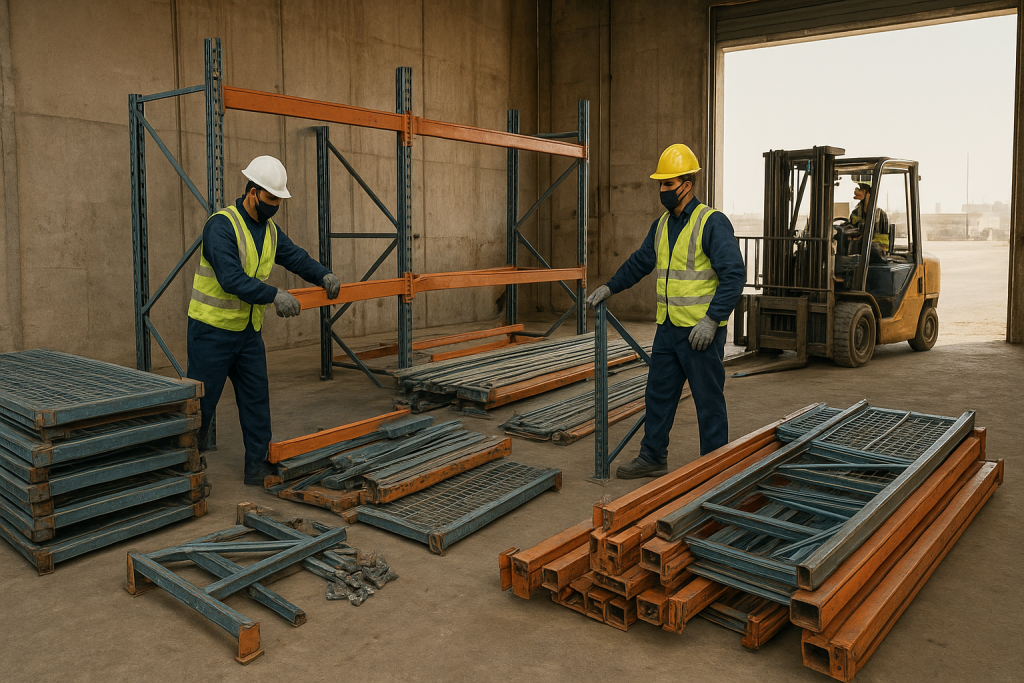
A racking project may involve selective removal of individual bays or clearance of an entire storage area. Typical components include upright frames, horizontal beams, diagonal braces, baseplates, safety guards, wire-mesh decking, metal shelves, row spacers, and fasteners. Most structural pallet-rack components are made from painted, powder-coated, or galvanized steel.
The service scope should clarify whether the racks are already dismantled, whether dismantling is required, and whether any parts are intended for reuse. Reusable pieces should be kept separate from bent, cracked, heavily corroded, modified, or incomplete components that are being directed to metal recycling.
Identifying and Sorting Racking Components
Correct identification makes handling and evaluation more efficient. Structural steel is ferrous and is generally attracted to a magnet. Some installations may also contain aluminum labels, stainless steel fasteners, timber boards, plastic protectors, or electrical accessories, but these should not be assumed to have the same scrap classification as the main rack frames.
- Uprights and braces: These form the vertical frames and usually contain the largest, longest steel sections.
- Load beams: Horizontal beams may have welded end connectors, locking pins, labels, and accumulated warehouse dust.
- Decking and shelves: Steel panels and wire mesh can be grouped separately from timber or composite boards.
- Guards and anchors: Column protectors, barriers, baseplates, and bolts may carry concrete, rubber, or plastic contamination.
Remove loose packaging, cardboard, stretch film, stored products, and general waste before collection. Non-metal decking and damaged pallets should also be separated so the metal load is not mixed with unrelated warehouse waste.
6 Practical Steps for Racking Dismantling and Recycling
A planned sequence helps control risk, reduce disruption, and produce clearly sorted material for assessment.
- Survey the installation. Record rack height, number of bays, beam levels, decking type, visible damage, and nearby equipment. Note whether racks are freestanding, back-to-back, fixed to walls, or connected to barriers and conveyors.
- Clear and isolate the work area. Remove inventory, pallets, loose objects, and mobile equipment. Establish a controlled area so warehouse traffic does not pass beneath or beside components while they are being released and lowered.
- Plan access and equipment. Confirm door dimensions, floor loading considerations, loading-bay availability, lift access, and truck position. Dismantling should be handled by competent personnel using suitable, site-approved access and lifting equipment.
- Dismantle in a controlled sequence. Remove decking and accessories before releasing load beams and frames. Components should be lowered rather than dropped, and unstable frames must remain supported during the work.
- Sort by material and condition. Keep reusable sections apart from scrap steel. Separate timber, plastic, electrical items, concrete-covered anchors, and confirmed non-ferrous metals to prevent unnecessary contamination.
- Prepare for loading. Stack long beams and uprights securely, contain small fittings, and maintain clear lifting points. Agree on the loading method, collection vehicle access, and site contact before pickup.
A well-planned warehouse racking recycling Dammam project should define who clears the stored goods, who dismantles the structure, how the steel is grouped, and what loading support is available. This avoids confusion when the collection vehicle arrives.
Value Factors for warehouse racking recycling Dammam
There is no single fixed value for every rack clearance. A quotation depends on the recoverable material and the work needed to make it ready for transport and recycling.
- Material type: Carbon steel, galvanized steel, stainless steel, and aluminum are evaluated differently when correctly identified.
- Quantity: The number of bays, component dimensions, and estimated total weight affect collection planning.
- Condition: Heavy rust, fire damage, coatings, attached boards, and non-metal contamination may influence preparation.
- Sorting: Clean, separated metal is easier to evaluate than mixed racks, packaging, pallets, and general waste.
- Removal requirements: Dismantling labor, lifting needs, floor level, access restrictions, and loading time can affect the overall quotation.
Current metal market conditions may also influence scrap value. For a relevant quotation, provide recent photographs, rack dimensions, an estimated bay count, the site location, and details of whether the material is standing or already dismantled.
Pickup and Industrial Site Coordination
Before collection, identify a safe loading area and confirm the route from the storage zone to the vehicle. Long beams and upright frames require more space than compact scrap, while loose bolts and brackets need containers or secure bags. The site should also disclose restricted working hours, gate procedures, loading-bay limits, and any active production or warehouse traffic.
If racks are being removed during a wider warehouse clearance, keep machinery, cables, HVAC parts, pallets, and general waste in separate groups. Clear photographs of each category help determine what belongs in the metal load.
Responsible Recycling and Resource Recovery
Steel pallet racks can remain useful material even when they are no longer suitable for their original storage role. After non-metal attachments and contaminants are removed, recyclable steel can enter established processing streams instead of occupying warehouse space or being mixed with general disposal waste.
This approach supports resource conservation and responsible material management, principles promoted by the UN Environment Programme. Proper sorting also helps prevent timber, plastic, packaging, oils, and electronic accessories from entering the wrong waste stream.
Planning a Racking Clearance in Dammam
For warehouse racking recycling Dammam, local planning matters because industrial premises can differ significantly in access, operating schedules, and loading arrangements. Facilities in Dammam industrial areas and Second Industrial City may have security procedures, busy truck movements, high storage structures, or limited clearance around loading docks. Sharing accurate site information makes it easier to plan dismantling, collection, and warehouse scrap removal without unnecessarily interrupting nearby operations.
Frequently Asked Questions
Can bent or rusty pallet racking be recycled?
Many damaged steel uprights, beams, braces, shelves, and guards can be directed to metal recycling. They should be separated from reusable sections and from timber, plastic, inventory, and general waste. Photographs help assess severe corrosion, fire damage, or attached contaminants.
Must the racks be dismantled before collection?
Not necessarily, but the required scope must be confirmed in advance. Explain whether the racks are standing, partly dismantled, or stacked for loading. Rack height, anchors, access equipment, labor requirements, and available loading support can all affect the collection plan.
How is warehouse racking scrap evaluated?
Evaluation may consider metal type, estimated weight, condition, sorting, contamination, current market conditions, and removal requirements. Transport access and the amount of dismantling or loading work may also influence the quotation. Current photographs and measurements support a more relevant assessment.
How can I request a quote for warehouse racking recycling Dammam?
Send the Dammam site location, contact details, rack dimensions, approximate number of bays, photographs, and preferred clearance schedule. Mention whether the warehouse is operating, whether inventory has been removed, and whether lifting or loading equipment is available on site.
Arrange a Racking Assessment and Collection
To discuss warehouse racking recycling Dammam, contact Metal Scrap Dammam. Share clear images and practical site details so the material, dismantling scope, sorting needs, access conditions, and collection requirements can be reviewed before a quotation is provided.
Call / WhatsApp: +966532510699 | Email: info@metalscrapdammam.com | Website: https://metalscrapdammam.com/