industrial cable tray removal Dammam: A Practical Recycling Guide
Businesses searching for industrial cable tray removal Dammam usually need a practical way to clear dismantled trays from a factory, warehouse, commercial building, or project site. A useful plan should cover material identification, safe dismantling, sorting, access, loading requirements, and the information needed for a scrap quotation.
Cable tray systems can represent recoverable metal rather than mixed site waste. Their value and removal requirements vary according to composition, condition, quantity, attached cables, contamination, and ease of access. Preparing these details before contacting a buyer can make the discussion more accurate and efficient.
Understanding Cable Tray Scrap
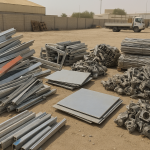
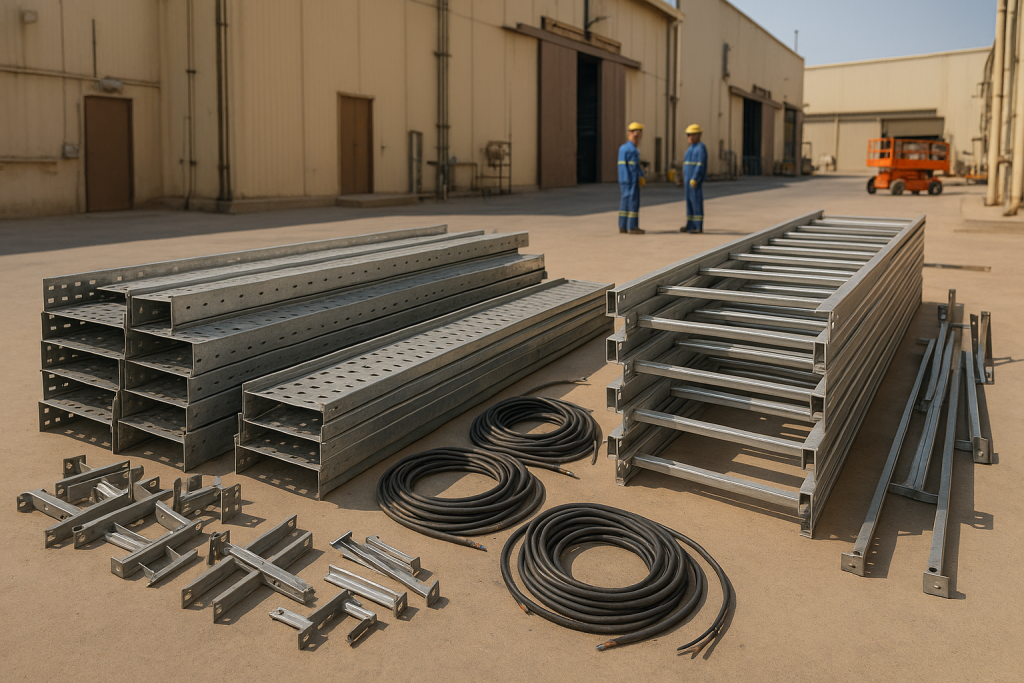
Cable trays support and route electrical, control, and communication cables. Common designs include perforated trays, ladder trays, wire-mesh baskets, solid-bottom channels, and supporting brackets. Industrial systems may be made from galvanized steel, painted carbon steel, stainless steel, or aluminum. Covers, hangers, threaded rods, fasteners, and mounting frames may add other metal grades to the load.
- Galvanized steel: Usually magnetic and protected by a zinc coating.
- Aluminum: Lightweight, non-magnetic, and often brighter where scratched.
- Stainless steel: More corrosion-resistant, although magnet response varies by grade.
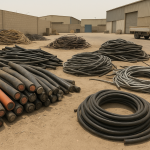
- Attached cable: May contain copper or aluminum conductors but should be assessed separately from the tray.
Visual appearance alone is not always enough to confirm a grade. Labels, project records, magnet testing, weight, and clearly exposed surfaces can help, while a buyer may need photographs or an inspection before final evaluation.
How to Plan industrial cable tray removal Dammam
Begin by defining whether the trays are already dismantled or remain installed overhead, in a service corridor, or around operating equipment. Removal from an active industrial site requires different planning from collecting stacked material at ground level. The site owner or contractor should control isolation, work authorization, access restrictions, and confirmation that cables are no longer energized before dismantling begins.
7 Smart, Essential Steps for Cable Tray Removal
The following seven steps help create a clear scope for contractors, site representatives, and potential scrap buyers.
- Survey the tray system. Record approximate lengths, widths, tray designs, installation heights, and the number of separate areas. Note whether sections are loose, stacked, bundled, or still fixed to walls, ceilings, racks, or structural supports.
- Confirm electrical isolation. Treat every remaining cable as potentially live until authorized site personnel confirm its status. Identify cables that must remain operational, and keep removal boundaries clear so reusable or active infrastructure is not mixed with scrap.
- Identify the main metals. Separate aluminum, galvanized steel, stainless steel, and ordinary steel where practical. Keep copper-bearing cable, aluminum cable, brackets, and mixed fasteners in distinct groups when they can be separated without unsafe or inefficient work.
- Remove avoidable contamination. Clear loose plastic ties, labels, rubber liners, insulation scraps, wood, packaging, ceiling material, and general construction waste. Do not burn insulation or use uncontrolled methods to strip coatings, because those practices can create safety and environmental problems.
- Prepare manageable sections. Long tray runs may need dismantling into transportable pieces. Cutting requirements depend on dimensions, installation position, site rules, and loading arrangements. Agree on responsibilities before work starts rather than assuming that a buyer will provide cutting or lifting equipment.
- Plan access and loading. Check gate restrictions, road conditions, loading zones, vehicle clearance, floor capacity, security procedures, and available working space. Mention stairs, basements, rooftops, narrow corridors, or production areas because difficult access can affect removal planning.
- Request an informed quotation. Share photographs, estimated quantity, material categories, condition, location, access details, and whether the trays are installed or ready for collection. Ask how weighing, collection costs, mixed materials, and final evaluation will be addressed.
What Affects Cable Tray Scrap Evaluation?
A quotation for industrial cable tray removal Dammam may depend on more than total weight. Metal type is fundamental because aluminum, stainless steel, galvanized steel, and carbon steel have different market categories. A clean, sorted load is also easier to assess than trays mixed with cables, insulation, concrete residue, plastics, or unrelated demolition waste.
- Confirmed material type and grade
- Estimated or measured quantity
- Degree of sorting and contamination
- Condition, size, and stacking method
- Whether dismantling or cutting is still required
- Site accessibility and loading requirements
- Current scrap-market conditions
Photos can support an initial discussion, but they may not establish exact weight or composition. Current values should be confirmed through a quotation rather than estimated from old online rates.
How Collection and Removal Generally Work
For industrial cable tray removal Dammam, the first discussion will usually establish the material, approximate volume, site status, and collection scope. A buyer may ask whether the tray is loose, bundled, or installed; whether cable remains attached; and whether lifting assistance is available at the site.
After the scope is reviewed, both parties can clarify responsibilities for dismantling, segregation, moving material to the loading point, and arranging collection. It also helps to agree on how mixed loads will be evaluated. Site contacts should communicate entry procedures, suitable arrival windows, and any operational restrictions without assuming a particular response time.
Dammam and Eastern Province Site Considerations
When organizing industrial cable tray removal Dammam, account for the conditions of local factories, workshops, warehouses, construction projects, and commercial facilities. Sites in Dammam industrial areas may have controlled gates, busy loading areas, contractor approvals, or restrictions around operating equipment. Projects elsewhere in the Eastern Province may also require additional transport coordination because distance, load size, and access can influence collection planning.
Metal Scrap Dammam serves Dammam and the Eastern Province. The Metal Scrap Dammam website provides the contact details needed to discuss a specific cable tray load.
Responsible Recycling and Material Recovery
Separating reusable metal from mixed construction waste supports resource conservation and can reduce avoidable disposal. Steel and aluminum trays should be kept clean and categorized where practical, while insulated cable and other electrical components should be handled as separate material streams. The UN Environment Programme provides broader information about resource efficiency, waste reduction, and sustainable material management.
Responsible preparation also means avoiding open burning, uncontrolled dumping, and unsafe cutting. Site representatives should follow their own safety procedures and confirm applicable handling requirements for unusual coatings, residues, or potentially contaminated material.
Frequently Asked Questions
How can I tell whether a cable tray is steel or aluminum?
Aluminum is generally lighter and non-magnetic, while ordinary and galvanized steel are usually magnetic and heavier for similar dimensions. Surface coatings can hide the base metal, so use project records, labels, clean exposed edges, or buyer assessment when the composition is uncertain.
Should cables be removed from trays before collection?
Separate trays and cables are normally easier to categorize and evaluate. Only authorized personnel should confirm isolation and remove electrical cables. If separation is impractical, send clear photographs and describe the approximate amount and type of attached cable when requesting a quotation.
Can installed overhead cable trays be included in a request?
They can be described in an enquiry, but do not assume dismantling is included. State the installation height, total length, access equipment requirements, operational restrictions, and whether the trays are empty. Ask who will be responsible for isolation, dismantling, cutting, moving, and loading.
What information is needed to request a quotation?
For industrial cable tray removal Dammam, provide the site area, tray material, estimated quantity, photographs, dimensions, condition, attached components, and access details. Explain whether the material is installed, loose, bundled, or positioned at a loading point, then ask about collection and evaluation options.
Discuss Your Cable Tray Scrap Requirements
To discuss industrial cable tray removal Dammam, contact Metal Scrap Dammam with details about the tray material, estimated quantity, current condition, site access, and preferred collection arrangements. No specific value or removal method should be assumed until the scope has been reviewed.
Visit Metal Scrap Dammam
Call / WhatsApp: +966532510699
Email: info@metalscrapdammam.com