Selling Industrial Bronze: bronze scrap buyer Dammam Guide
Bronze offcuts, worn bushings, valve bodies, bearings, gears, and obsolete components can retain recoverable metal value instead of occupying industrial storage space. If your business is looking for a bronze scrap buyer Dammam, begin by identifying the material, separating it from other alloys, and recording the approximate quantity. These steps help a potential buyer understand what is available and how collection may need to be arranged.
This guide explains how industrial sellers in Dammam can prepare bronze scrap, understand common evaluation factors, and plan a practical enquiry without relying on uncertain visual identification or assumed market rates.
What Counts as Industrial Bronze Scrap?
Bronze is a family of copper-based alloys. Traditional bronze commonly combines copper with tin, while specialized grades may contain aluminum, silicon, manganese, lead, or other elements. Because compositions vary, two bronze items that look similar may have different grades and uses. Bronze is non-ferrous, although a bronze assembly may still contain attached steel bolts, shafts, springs, or housings.
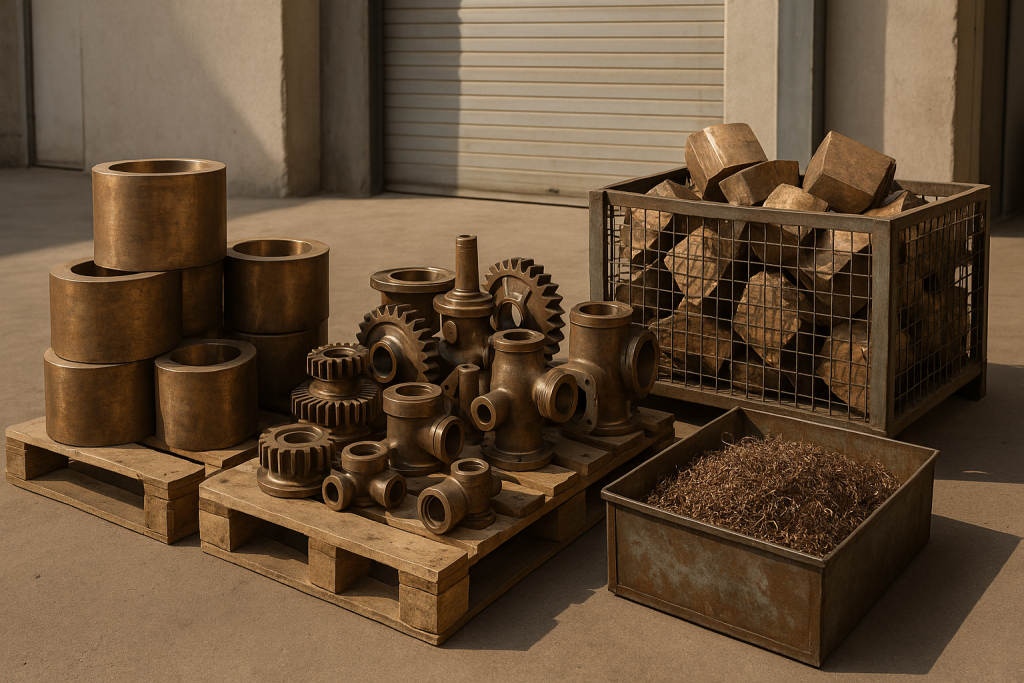
Industrial bronze scrap may come from bushings, bearings, pump parts, impellers, valve bodies, wear plates, gears, casting offcuts, machining swarf, and unused stock. Brass, pure copper, gunmetal, and some bronze grades can have similar colors. A magnet test, purchase records, part markings, and alloy information can provide useful clues, but color alone is not dependable proof of composition.
bronze scrap buyer Dammam: 7 Practical Preparation Tips
Good preparation makes the material easier to describe and assess. Use these seven practical steps before requesting a quotation or discussing collection.
- Check available records. Review purchase documents, component specifications, stock labels, or maintenance records for an alloy designation. Keep uncertain pieces in a separate group rather than assigning a grade based only on appearance.
- Separate other metals. Keep bronze apart from brass, copper, aluminum, stainless steel, iron, and mixed machinery. Segregation reduces confusion and allows each metal category to be considered on its own characteristics.
- Remove attachments when practical. Steel shafts, rubber seals, plastic handles, and excessive packaging can affect assessment. Remove them only when the work is safe, permitted by site procedures, and worthwhile for the quantity involved.
- Group similar bronze together. A bronze scrap buyer Dammam enquiry is clearer when clean offcuts, complete components, contaminated pieces, and machining residues are described as separate lots rather than one mixed pile.
- Control oil and moisture. Drain free liquid where site rules allow, use suitable containers for turnings, and keep the material protected from rain or unrelated waste. Never burn coatings or use unsafe cleaning methods.
- Estimate the quantity. Provide an approximate weight, container count, dimensions, or clear photographs with scale references. State whether the figure is measured or estimated so the buyer can interpret it correctly.
- Plan access and handling. Explain where the scrap is stored, whether stairs or restricted gates are involved, and what loading support is available at the site. Identify heavy or awkward pieces before collection is discussed.
How Bronze Scrap Is Evaluated
When reviewing material for a bronze scrap buyer Dammam, expect value to depend on more than total weight. Relevant factors can include the alloy family, copper content, grade consistency, contamination, physical form, quantity, market conditions, and collection requirements. Clean production offcuts with known specifications are generally easier to assess than mixed components containing seals, steel, oil, coatings, or unknown alloys.
Machining swarf may be evaluated differently from solid parts because it can retain cutting fluid, moisture, or debris. Large components may require additional handling, while small mixed pieces may require more sorting. No fixed rate should be assumed without a current review of the material and applicable market conditions.
How Industrial Collection Usually Works
A typical enquiry begins with a material summary. The seller usually shares photographs, suspected grade, approximate quantity, site location, access restrictions, and preferred timing. The buyer may request additional images or clarification before discussing an indicative quotation or site assessment.
- Photograph the overall lot and representative close-up details.
- Identify mixed metals, residues, coatings, and attached components.
- Confirm loading space, gate limits, and site contact procedures.
- Ask how weighing, collection costs, and final evaluation will be handled.
Before confirming arrangements with a bronze scrap buyer Dammam, clarify who will prepare the material, how access will be controlled, and whether site induction or scheduling requirements apply. Sellers should also ask what records are required for their own procurement, accounting, asset-control, or waste-management procedures. Collection timing and equipment needs should be agreed rather than assumed.
Planning Bronze Scrap Sales in Dammam
Industrial sites in Dammam can range from compact workshops to factories and warehouses in established industrial areas, including Second Industrial City. Storage layout, gate access, traffic controls, and production schedules can all affect removal planning. The Eastern Province’s warm, dusty, and coastal conditions can also leave metal with surface dirt or oxidation, so photographs should show the actual condition rather than only a cleaned sample.
Metal Scrap Dammam serves Dammam and the Eastern Province. Businesses considering a bronze scrap buyer Dammam can review contact information on the Metal Scrap Dammam website and discuss the material type, quantity, site access, and possible collection options.
Responsible Handling and Recycling Context
Recovering bronze supports the broader goal of keeping useful metal in circulation and reducing avoidable waste. The UN Environment Programme provides wider information about resource efficiency and sustainable material management. At site level, responsible preparation means preventing leaks, avoiding unsafe burning or cutting, separating unrelated waste, and keeping sharp or heavy pieces in stable containers until their next movement is agreed.
Frequently Asked Questions
How can I tell bronze from brass or copper?
Bronze often appears brownish or reddish, while many brasses appear more yellow, but dirt and oxidation make color unreliable. Check specifications, part markings, supplier records, and the component’s original purpose. Keep uncertain alloys separate and disclose that identification is unconfirmed.
Can mixed bronze components still be offered for evaluation?
Mixed components can be described to a potential buyer, but attached steel, rubber, plastic, oil, and other alloys may affect classification and value. Send clear photographs and identify known attachments instead of presenting the lot as clean bronze.
What information helps when requesting a quotation?
Provide the suspected bronze grade, material form, approximate weight, number of containers or pieces, condition, photographs, Dammam site location, and loading details. Mention whether machinery must be isolated or components remain installed.
Should bronze machining turnings be stored separately?
Yes, separating turnings from solid bronze parts makes assessment easier. Use stable containers, prevent unrelated waste from entering, and disclose cutting fluids or moisture. Follow your site’s procedures for handling residues and sharp metal swarf.
Discuss Your Industrial Bronze Scrap
If you are searching for a bronze scrap buyer Dammam businesses can contact, speak with Metal Scrap Dammam about the bronze material, estimated quantity, condition, site access, and collection options. For a current quotation discussion, use the following verified contact details:
- Website: https://metalscrapdammam.com/
- Call / WhatsApp: +966532510699
- Email: info@metalscrapdammam.com