industrial gearbox recycling Dammam: A Practical Guide for Obsolete Equipment
When obsolete gearboxes occupy factory floors, workshops, maintenance stores, or project sites, the main challenge is deciding how to identify, prepare, evaluate, and remove them efficiently. For industrial gearbox recycling Dammam, sellers should begin by recording the equipment type, quantity, approximate size, condition, attached components, and site-access requirements. These details help a prospective buyer understand the material and discuss realistic collection options.
Industrial gearboxes are dense machinery assets containing several metal grades, but they may also hold lubricant, seals, paint, dirt, and non-metallic components. Careful preparation can make inspection easier, reduce uncertainty, and prevent avoidable delays during handling or loading.
What Is Inside an Obsolete Industrial Gearbox?
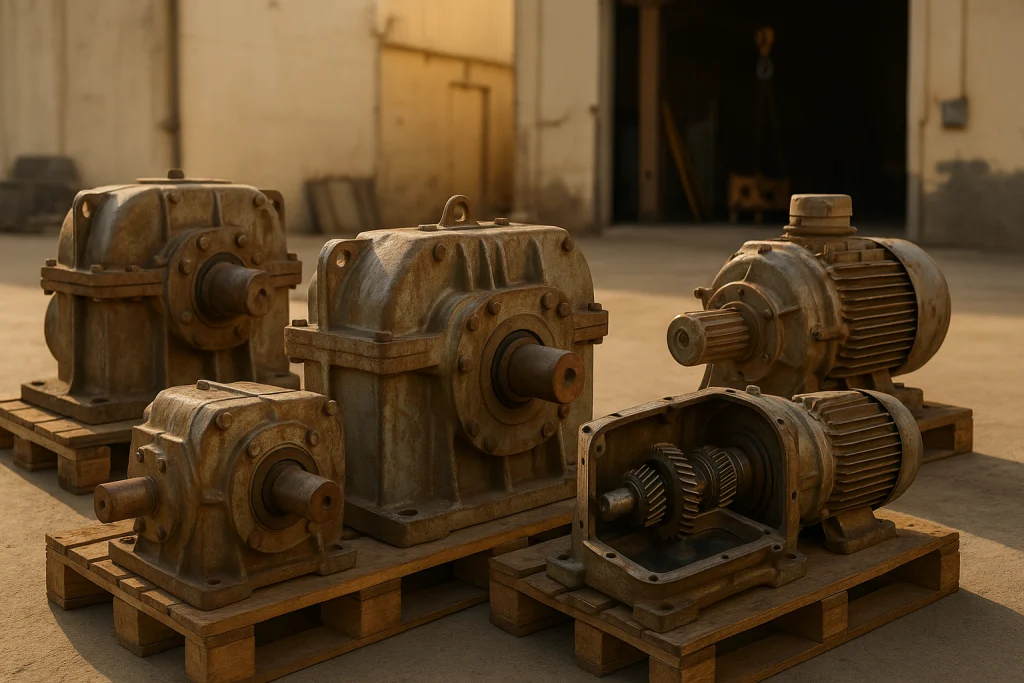
A typical industrial gearbox or speed reducer may have a cast-iron or fabricated-steel casing, hardened steel gears, steel shafts, bearings, fasteners, and internal supports. Depending on its design, it may also contain bronze bushes, brass fittings, aluminum covers, copper wiring from sensors, or an attached electric motor. The precise composition varies by manufacturer, application, size, and age.
The housing and internal steel usually represent the main ferrous-metal content. Non-ferrous parts may have a different recycling value, but dismantling is not always practical or safe. Heavy covers, stored mechanical tension, sharp edges, and trapped oil all require attention. Qualified site personnel should decide whether dismantling is appropriate under the site’s procedures.
- Gear unit: A standalone reducer with an input and output shaft.
- Geared motor: A gearbox connected directly to an electric motor.
- Drive assembly: A gearbox supplied with couplings, guards, brakes, or a base frame.
- Incomplete unit: A casing or assembly missing gears, shafts, covers, or other components.
7 Essential Steps for industrial gearbox recycling Dammam
The following preparation sequence gives maintenance teams, facility managers, contractors, and warehouse personnel a clear way to organise obsolete units before requesting an assessment.
- Create an accurate inventory. Count the gearboxes and record any readable nameplate information, such as manufacturer, model, ratio, rated power, or listed mass. Note whether each item is a complete gearbox, geared motor, loose housing, or dismantled group of parts. Photographs from several angles can clarify the inventory.
- Confirm that each unit is decommissioned. Gearboxes should be isolated from power sources and disconnected from operating machinery by suitable site personnel. Consider connected motors, couplings, belts, chains, guards, pipework, sensors, and foundations. Do not attempt removal while the equipment remains connected or mechanically loaded.
- Check for residual lubricant. Used gear oil affects handling and may leak when a unit is tilted. Record whether the gearbox has been drained and whether residue remains. Any removed fluid should be kept separate and managed according to applicable requirements and the site’s procedures rather than mixed with metal scrap.
- Sort complete units from loose materials. Group similar gearboxes together where practical. Keep loose steel, electric motors, cables, aluminum covers, stainless components, and non-metal waste distinguishable. Clear sorting helps a buyer understand the material mix without assuming every item has the same composition.
- Describe condition and contamination. Report heavy rust, fire damage, concrete, chemical residue, excessive grease, missing covers, or non-metal attachments. A clean appearance is not essential, but accurate information supports a more useful assessment and allows handling needs to be considered in advance.
- Measure the quantity and access. Provide unit counts, approximate dimensions, known weights, and the total footprint of the material. Explain whether the gearboxes are at ground level, on racks, inside a production area, or behind restricted access. Also note gates, loading space, floor limits, and site entry procedures.
- Request an informed quotation. A useful enquiry for industrial gearbox recycling Dammam includes photographs, inventory details, location, access conditions, loading responsibilities, and preferred collection timing. Ask how the material will be evaluated, how weight will be confirmed, and which items should remain separate.
How Obsolete Gearboxes Are Evaluated
For industrial gearbox recycling Dammam, no responsible evaluation should rely on appearance alone. Gearboxes are mixed assemblies, and their recoverable-metal content can differ significantly. A prospective buyer will usually consider whether the units are complete, their main housing material, the amount of steel inside, attached motors, non-ferrous components, contamination, quantity, current metal-market conditions, and collection requirements.
- Material composition: Cast iron, steel, bronze, brass, copper, and aluminum may be assessed differently.
- Completeness: An intact gearbox differs from an empty housing or loose gear set.
- Condition: Corrosion, oil, dirt, fire damage, and missing components can affect assessment.
- Sorting: Clearly separated motors, cables, housings, and loose metals are easier to identify.
- Quantity: A single reducer and a factory batch involve different collection planning.
- Removal scope: Restricted access, lifting needs, dismantling, and loading responsibilities matter.
Nameplate weight can be useful, but it may not represent the weight of an incomplete or modified unit. Sellers should ask how actual weight or estimated material content will be established. Current quotations should be requested directly rather than inferred from old online prices or unrelated machinery.
Collection Planning in Dammam and the Eastern Province
Industrial sites in Dammam may have security controls, production schedules, congested loading areas, or equipment positioned far from an external gate. Effective industrial gearbox recycling Dammam planning therefore includes more than a list of scrap items. The buyer and seller should clarify site access, lifting responsibility, permitted vehicle size, collection boundaries, and whether machinery must be moved to a designated loading point.
- Share a site contact and any visitor or vehicle-entry requirements.
- Identify whether loading equipment is available at the site.
- State if units are loose, palletised, bolted down, or connected to frames.
- Discuss timing around production, maintenance, and contractor activity.
Metal Scrap Dammam serves Dammam and the Eastern Province. To begin a discussion, use the Metal Scrap Dammam website and provide a concise description of the obsolete gearboxes, their quantity, condition, and location. If material is elsewhere in the Eastern Province, confirm the site details and available collection options when making the enquiry.
Responsible Handling and Recycling Context
Recovering iron, steel, and non-ferrous metals from obsolete machinery can return useful materials to industrial supply chains and reduce the amount of equipment treated as general waste. Responsible preparation also means preventing oil spills, separating unrelated waste, and avoiding unsafe dismantling. The broader principles of resource conservation, waste reduction, and sustainable material management are discussed by the UN Environment Programme. Sellers should confirm how residual fluids, contaminated parts, and non-metal components need to be handled under applicable site and regulatory requirements.
Frequently Asked Questions
Should gear oil be removed before a gearbox is collected?
It helps to tell the buyer whether oil remains in each unit. If draining is required, suitable site personnel should perform the task using appropriate containment. Keep recovered lubricant separate from scrap metal and manage it according to applicable requirements and site procedures.
Can geared motors be included with obsolete gearboxes?
Geared motors can be assessed as combined assemblies, but the attached electric motor should be identified clearly. Provide photographs and motor nameplate details where readable. Ask whether the motor should remain attached or be separated before collection.
What details should I provide for industrial gearbox recycling Dammam?
Provide the unit count, gearbox type, photographs, dimensions, known or estimated weight, condition, oil status, attached components, site location, and access details. Mention whether the equipment is disconnected, palletised, indoors, elevated, or secured to a base.
Do I need to dismantle a gearbox to separate its metals?
Not necessarily. Dismantling may create safety, labour, and handling issues, particularly with large or damaged units. Ask the prospective buyer whether separation is useful before opening housings or removing gears, shafts, bearings, and bushes.
Discuss Your Obsolete Industrial Gearboxes
For industrial gearbox recycling Dammam, contact Metal Scrap Dammam to discuss your material, quantity, condition, site access, and possible collection arrangements. Sharing clear photographs and an inventory will support a more focused conversation about the equipment.
Metal Scrap Dammam
https://metalscrapdammam.com/
Call / WhatsApp: +966532510699
Email: info@metalscrapdammam.com