Battery Scrap buyer Dammam
Metal Scrap Dammam is your reliable partner for responsible battery recycling across the Eastern Province. Whether you operate a business in Dammam, Khobar, Dhahran, Jubail, Ras Tanura, or Abqaiq, our Dammam yard accepts a wide range of battery scrap and offers competitive rates, safe handling, and fast payment.
Why choose Metal Scrap Dammam for battery recycling?
As a trusted Battery Scrap buyer Dammam, Metal Scrap Dammam combines local expertise with environmentally sound practices. We understand the specific needs of the Eastern Province market — from industrial lead-acid batteries used in forklifts and backup power systems to sealed lead-acid, lithium, and other battery types from electronics and vehicles.
Types of batteries we accept
- Automotive lead-acid batteries (car, truck, heavy equipment)
- Industrial batteries (UPS, telecom, forklift)
- Sealed lead-acid (SLA) and gel batteries
- Lithium-ion battery packs from electronics and EV components
- Small rechargeable batteries from tools and devices (in approved containers)
How we handle battery scrap safely
Safety and compliance are central to our operation. At our Dammam yard we follow strict protocols for sorting, neutralizing, and storing battery scrap to prevent leaks and contamination. Our trained staff use appropriate PPE and containment methods to protect people and soil, and we document chain-of-custody for larger commercial clients.
Preparing battery scrap for collection
To get the best price and ensure safe handling, please take these simple steps before delivering or arranging pickup:
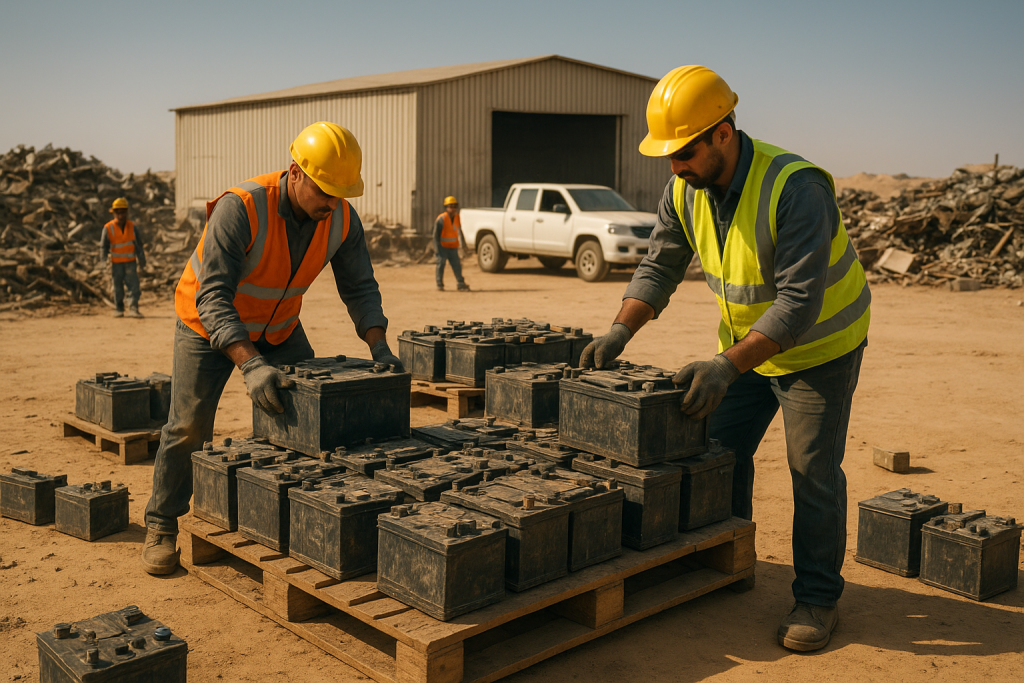
- Keep batteries upright and avoid stacking loosely — use pallets or boxes.
- For damaged or leaking batteries, contact the manufacturer or a qualified battery handler for chemistry-specific instructions before packaging or transport.
- Separate different chemistries (lead-acid vs lithium) and note quantities.
- Bring identification and documentation for commercial loads when requested.
Transparent pricing & pickup options
As a leading Battery Scrap buyer Dammam, Metal Scrap Dammam offers transparent pricing based on current market rates and battery condition. We buy single units from residents as well as full loads from businesses. For larger consignments in the Eastern Province (Dammam, Khobar, Dhahran, Jubail, Ras Tanura, Abqaiq) we can arrange scheduled pickup or onsite assessment. Payments are processed quickly — cash or bank transfer — once materials are weighed and verified at our yard in Dammam.
Environmental responsibility and regulations
Recycling batteries prevents hazardous materials like lead and acid from entering the environment. Metal Scrap Dammam complies with Saudi regulations for hazardous waste handling and follows best practices for recycling and material recovery. When you sell to an experienced Battery Scrap buyer Dammam, you help reduce pollution and support the circular economy in the Eastern Province.
Commercial accounts and regular collections
Businesses, workshops, and industrial sites can set up commercial accounts for regular collections. We serve manufacturers, maintenance companies, logistics yards, and recycling intermediaries across the Eastern Province. Setting up an account with Metal Scrap Dammam simplifies billing, provides prioritized pickups, and gives access to tailored reporting for environmental compliance.
Plan storage, collection and documentation
Before requesting collection, provide the battery chemistry, number of units, approximate sizes, condition and your Dammam or Eastern Province location. Identify damaged, swollen or leaking units separately in your enquiry and confirm acceptance before delivery. Businesses should discuss appropriate storage, packaging and transport with a qualified handler, rather than placing batteries into a general metal-scrap load. For recurring workshop or fleet collections, agree a collection schedule and a named person who approves each load.
Ask which weight records, transfer notes or recycling documentation can be supplied before booking. Retain the agreed description, measured quantity and payment details with your business records. Factories and warehouses can coordinate collections with maintenance work; contractors can discuss staged pickups as a project progresses. The available collection option depends on battery type, quantity, condition and site access. For damaged lithium-ion batteries, follow manufacturer-specific guidance; the EPA battery recycling guidance also explains why specialist handling matters. Confirm local requirements with the collection team.
Frequently asked questions
Do you accept single car batteries? Yes — we accept single automotive batteries as well as bulk loads.
Can you handle mixed loads? Yes, but please separate lithium packs from lead-acid where possible for safety and pricing accuracy.
Where is your yard? Our main yard is located in Dammam and is equipped to receive, weigh, and process battery scrap safely.
Contact Metal Scrap Dammam
Ready to sell or recycle battery scrap? Metal Scrap Dammam is here to help residents and businesses throughout the Eastern Province. For fast quotes, pickup arrangements, and answers about acceptable battery types, email us at info@metalscrapdammam.com or visit our website for more details. Remember, for trusted, compliant disposal choose a local Battery Scrap buyer Dammam who understands the market and safety requirements.
If you have battery scrap at your home or workplace and need reliable collection or drop-off, contact Metal Scrap Dammam today. Call or WhatsApp us at +966532510699 or visit https://metalscrapdammam.com/ to get a quote and arrange service at our Dammam yard.