transformer recycling Dammam: 6 Smart, Essential Steps
Factories, contractors, utilities, facility managers, and industrial property owners may need to remove transformers that are damaged, obsolete, decommissioned, or no longer suitable for a project. Arranging transformer recycling Dammam requires more than treating the equipment as ordinary steel scrap. Its electrical status, internal materials, insulating fluid, total weight, condition, site access, and lifting requirements must all be reviewed before collection.
Metal Scrap Dammam helps customers discuss the assessment, sale, and removal of suitable transformer scrap. Providing accurate equipment and site details at the beginning supports a clearer quotation and a safer, more efficient collection plan.
What Makes an Industrial Transformer Valuable as Scrap?
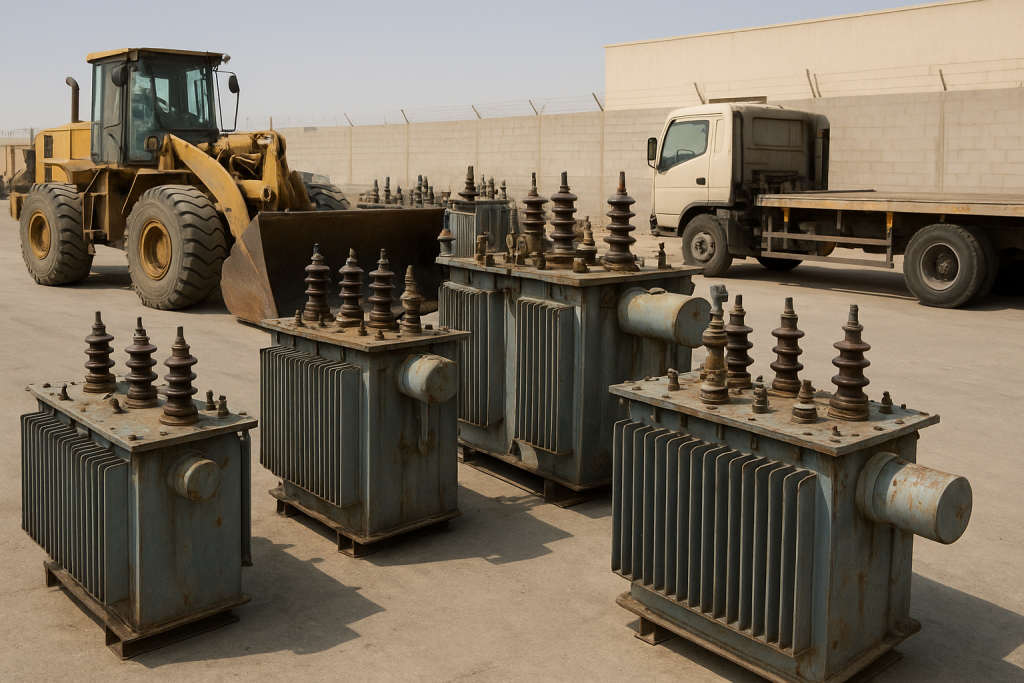
A transformer is a complex industrial asset rather than one uniform piece of metal. Depending on its design, it may contain a fabricated steel tank, a laminated ferrous core, copper or aluminum windings, metal radiators, cables, terminals, fasteners, and electrical connections. Bushings, insulation, paint, dirt, and insulating liquid are non-metallic or contamination-related elements that can affect handling and evaluation.
- Steel tank and core: These components contribute substantial ferrous weight but are valued differently from non-ferrous metals.
- Copper or aluminum windings: Winding material can significantly influence recoverable value, but it should not be assumed from exterior appearance alone.
- Radiators and fittings: Cooling assemblies, valves, brackets, and external connections should be documented during assessment.
- Insulating materials and fluids: Oil-filled units require careful condition reporting, especially if there is leakage, damage, or unknown fluid history.
The nameplate can help identify the manufacturer, rating, serial information, cooling type, and approximate equipment weight. However, it does not always confirm the internal winding metal or current condition. Customers should avoid opening a transformer merely to identify its contents.
How transformer recycling Dammam Works in 6 Steps
A structured process helps the scrap buyer understand the asset, organize transport, and avoid preventable delays. The following six steps apply to many commercial and industrial transformer removal projects.
- Confirm decommissioning and ownership. The asset owner should confirm that the transformer is approved for disposal. A qualified electrical professional must disconnect, isolate, and verify that the unit is de-energized before scrap assessment or removal work begins.
- Share transformer information. Provide clear photographs of the complete unit, nameplate, terminals, radiators, base, and visible damage. Include dimensions, estimated weight, quantity, whether the transformer is dry-type or liquid-filled, and any known maintenance or fluid records.
- Report condition and contamination. Disclose oil leaks, corrosion, fire damage, missing parts, attached cables, concrete bases, or mixed debris. Older or unknown liquid-filled equipment may require additional investigation by an appropriate specialist before it can enter a normal metal recycling route.
- Review site access. Explain whether the transformer is at ground level, inside a substation, behind restricted gates, or near operating equipment. Access width, overhead clearance, surface stability, loading distance, and site working hours can affect vehicle and lifting arrangements.
- Receive an assessment. The buyer reviews the expected metal composition, condition, quantity, recoverable materials, current market conditions, and collection requirements. Additional inspection may be needed when photographs or equipment records do not provide enough information.
- Coordinate collection and loading. Once suitability and commercial terms are agreed, the parties can arrange an appropriate collection window. Site contacts should manage entry permission, operational restrictions, and any required internal safety procedures before the truck or lifting equipment arrives.
Complex projects may require coordination among maintenance teams, electrical contractors, transport providers, and the scrap buyer. Clarifying each party’s responsibilities before collection helps prevent confusion on the day of removal.
Preparing a Transformer for Scrap Collection
Preparation should focus on identification, isolation, containment, and accessibility—not uncontrolled dismantling. Transformer casings can conceal heavy components, residual electrical risks, sharp edges, and insulating liquids. Cutting the tank or removing windings without suitable expertise can create safety, contamination, and handling problems.
- Keep the nameplate attached and photograph it clearly.
- Confirm disconnection and de-energization through qualified site personnel.
- Keep removable accessories together and identify which unit they belong to.
- Do not mix transformer parts with general rubbish, wood, packaging, or demolition debris.
- Report leaks immediately and use site-approved containment measures rather than allowing liquid to spread.
- Clear a practical route for loading equipment while maintaining separation from active operations.
If several units are available, label them individually and prepare a simple asset list with ratings, approximate dimensions, condition, and location. This helps distinguish complete transformers from incomplete shells, loose radiators, cores, or separate electrical components.
Factors That Affect Transformer Scrap Evaluation
No responsible assessment should be based only on the transformer’s outside size. For transformer recycling Dammam, value and collection feasibility can depend on the relationship between recoverable metal, non-metal content, equipment condition, and removal costs.
- Transformer design: Dry-type and liquid-filled transformers have different structures and handling considerations.
- Winding material: Copper and aluminum are non-ferrous metals with different scrap classifications and market values.
- Completeness: Missing cores, coils, radiators, terminals, or housings can change the assessment.
- Condition: Severe corrosion, fire damage, oil leakage, or contamination may require additional work or limit suitability.
- Quantity and sorting: Multiple identified units are easier to review than mixed, undocumented equipment and loose parts.
- Removal requirements: Crane access, forklift capacity, loading distance, restricted hours, and transport needs can affect the quotation.
Scrap metal markets change, so quotations should be based on current information rather than an old per-kilogram figure. Gross equipment weight is also not the same as recoverable non-ferrous weight. Contact Metal Scrap Dammam services with photographs and project details to request a current assessment without relying on unsupported price assumptions.
Industrial Collection in Dammam and the Eastern Province
Industrial sites in Dammam often have controlled gates, contractor approval procedures, busy loading areas, and production schedules. A practical transformer recycling Dammam plan should therefore account for access documents, the responsible site contact, equipment location, loading space, and any restrictions around live electrical infrastructure.
For transformers located in Dammam industrial areas or elsewhere in the Eastern Province, transport feasibility depends on the actual site rather than the city name alone. Customers in locations such as Al Khobar, Dhahran, or Jubail can share the exact collection area for review, but Dammam remains the primary service market. No collection should be assumed until the equipment and logistics have been discussed.
Responsible Material Recovery
Well-managed transformer recycling Dammam supports the recovery of useful steel, copper, and aluminum while reducing avoidable mixing with general waste. The equipment should move through an appropriate route for inspection, material separation, and recycling, with special attention given to insulating fluids and any suspected contamination.
Responsible recycling also supports broader goals of resource conservation and waste reduction discussed by the UN Environment Programme. For asset owners, good documentation and controlled handling provide a more accountable approach than abandoned equipment, informal dismantling, or disposal without material identification.
Frequently Asked Questions
Can an oil-filled transformer be collected as ordinary metal scrap?
Not automatically. Its condition, fluid status, records, leakage, and site controls should be disclosed first. Unknown or potentially problematic insulating liquid may require specialist testing or handling before the metal components can follow a normal recycling route.
Should we remove copper windings before requesting a quotation?
No. Avoid opening, cutting, or dismantling the transformer simply to find the winding material. Send nameplate details, complete-unit photographs, weight information, and maintenance records when available. The buyer can explain what further assessment is needed.
What information is needed to arrange transformer pickup?
For transformer recycling Dammam, provide the quantity, transformer type, nameplate photographs, dimensions, estimated weight, condition, fluid status, exact location, access route, loading equipment available, and confirmation that qualified personnel have disconnected and de-energized each unit.
Can several transformers and loose electrical components be assessed together?
Yes, they can be presented as one project, but list complete transformers separately from tanks, cores, radiators, cables, switchgear parts, and other machinery scrap. Clear sorting and photographs help the buyer assess each material category and plan suitable collection equipment.
Request a Transformer Scrap Assessment
If your business is planning transformer recycling Dammam, prepare equipment photographs, nameplate information, condition notes, quantity, and site-access details. Contact Metal Scrap Dammam to discuss a current quotation and appropriate collection arrangements for suitable decommissioned equipment.
Website: https://metalscrapdammam.com/
Call / WhatsApp: +966532510699
Email: info@metalscrapdammam.com