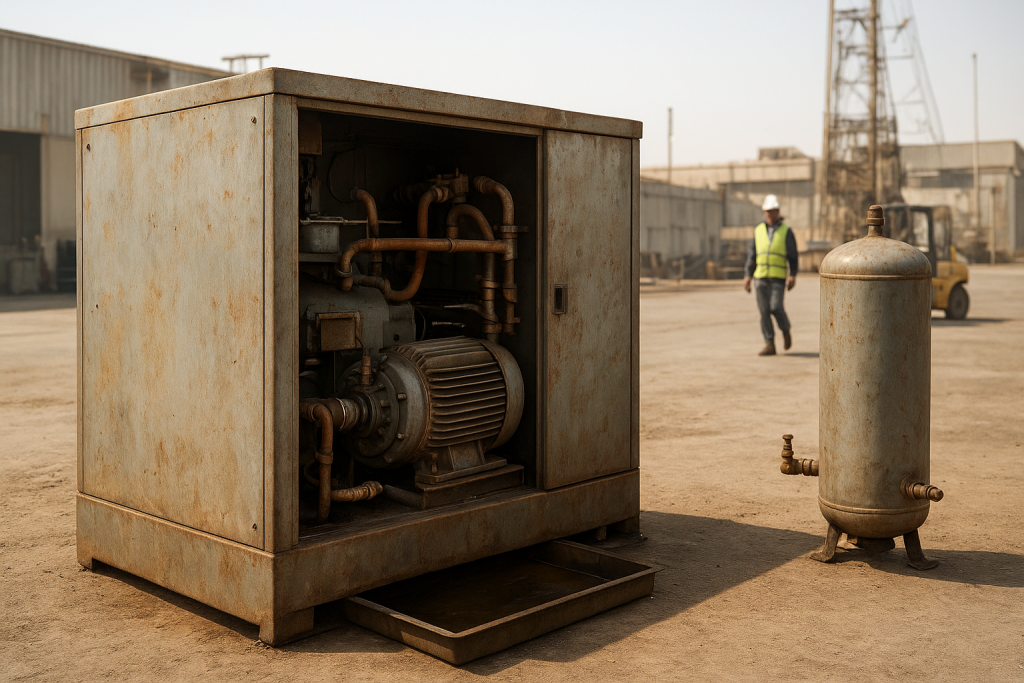
industrial air compressor disposal Dammam: Practical Recycling and Removal Guide
Retired compressors are heavy, may contain stored-energy hazards, and combine several metal grades with oils and electrical parts. For industrial air compressor disposal Dammam, the practical goal is to isolate the unit safely, document what is available, obtain a condition-based scrap assessment, and coordinate removal without disrupting the site.
Metal Scrap Dammam can review complete or dismantled units from factories, workshops, warehouses, and maintenance projects. This guide explains what to prepare before requesting collection through Metal Scrap Dammam machinery scrap services.
Which Air Compressor Assets Can Be Evaluated?
Air compressor scrap is not one uniform material. The equipment type, drive system, size, completeness, and attached components affect both handling and recoverable material. Common industrial assets include:
- Fixed rotary screw compressors in steel acoustic cabinets.
- Reciprocating or piston compressors with cast-iron pump assemblies.
- Large centrifugal compressor packages and associated drive motors.
- Portable or towable compressors with engines, batteries, and fuel systems.
Connected air receivers, aftercoolers, filters, dryers, electrical panels, and loose motors should be identified separately. A refrigerated dryer may contain refrigerant and must not be treated as an empty metal box. Sharing clear photos of every connected asset helps define the removal scope correctly.
6 Essential Steps for industrial air compressor disposal Dammam
Use these six steps to prepare the equipment and reduce avoidable uncertainty during assessment and collection.
- Identify the compressor and its configuration. Record whether it is rotary screw, piston, centrifugal, electric, or engine-driven. Photograph the complete unit, accessible nameplate information, motor, receiver, control cabinet, coolers, and detached parts. Include the number of units and approximate dimensions.
- Arrange proper isolation. Site-authorized electrical or maintenance personnel should disconnect the power supply, close connected air lines, and verify that stored pressure has been released. Do not cut a receiver, hose, or pipe simply because the compressor is switched off; residual pressure and electrical energy require controlled isolation.
- Identify oils and other service fluids. Compressor oil, oily condensate, coolant, diesel, and battery electrolyte require appropriate site handling. Keep fluids contained and disclose their presence before pickup. If a dryer or cooling system is included, confirm whether it contains refrigerant that needs separate recovery by suitable personnel.
- Avoid unnecessary dismantling. A complete unit can be easier to identify and assess than an unlabelled pile of mixed pieces. Separate only parts that are already loose or whose removal has been agreed. Keep cables, motors, coolers, valves, and control components grouped by their source unit where practical.
- Document access and lifting needs. Provide doorway sizes, floor level, loading-zone distance, and any restrictions on truck or forklift movement. State whether an operational forklift, crane, loading dock, or site lifting team is available. Heavy receiver tanks and compressor packages should not be moved with unsuitable equipment.
- Request assessment and confirm the collection scope. Send photos, quantities, location details, access conditions, and the preferred removal period. Before work begins, clarify who will disconnect, move, lift, load, and clear loose material. This helps align the quotation with the actual equipment and site requirements.
Recoverable Metals and Sorting Considerations
Steel normally forms much of the compressor cabinet, base frame, receiver, piping, and guards. Pump blocks and some housings may be cast iron. These ferrous materials are magnetic and usually differ from stainless steel, which may appear in selected piping, tanks, fasteners, or process-contact components. Heavy oxidation, attached insulation, rubber hoses, and mixed debris can affect preparation.
Non-ferrous content may include copper motor windings, power cable, brass valves, aluminum coolers, and aluminum motor or pump housings. Their presence does not mean the entire machine receives one non-ferrous classification. Evaluation considers whether these metals are accessible, genuinely separated, and free from excessive oil, plastic, or mixed attachments. Cutting sealed vessels or opening motors without an agreed plan can create safety and sorting problems.
How Compressor Scrap Is Evaluated
A quotation for industrial air compressor disposal Dammam depends on the actual asset rather than a fixed rate for every compressor. Useful evaluation factors include:
- Compressor type, drive method, and principal metal composition.
- Completeness and condition of the motor, cabinet, cooler, and pump.
- Quantity and combined recoverable material weight.
- Oil, condensate, insulation, plastic, or other contamination.
- Whether valuable metal grades are separated and identifiable.
- Distance from the equipment to an accessible loading area.
- Lifting, labor, transport, and industrial-site coordination requirements.
Market conditions for ferrous and non-ferrous scrap can also change. Assessment may use equipment details, visual inspection, known or estimated weight, and weighing arrangements where practical. For a current quotation, provide Metal Scrap Dammam with accurate photos and disclose anything that may complicate loading or recycling.
Collection and Industrial Site Coordination
Compressor removal should fit the site’s operating and safety arrangements. Maintenance teams may need to isolate utilities before a collection crew can approach the equipment. Security approval, vehicle entry, loading-zone availability, and production schedules can also affect timing. For internal plant removals, identify narrow doors, overhead pipes, floor-load concerns, stairs, or congested routes in advance.
- Consolidate loose panels, cables, and fittings near their source unit.
- Keep oily parts contained rather than placing them on bare ground.
- Maintain a clear route between the equipment and loading point.
- Confirm whether the receiver and dryer are separate collection items.
If the compressor is still installed, state this at the quotation stage. Scrap collection and mechanical disconnection are different tasks, so the responsibilities and required equipment should be agreed before pickup.
Dammam Industrial Context
Factories and workshops in Dammam often replace compressors during capacity upgrades, energy-efficiency projects, facility closures, or maintenance overhauls. Planning industrial air compressor disposal Dammam around site access is especially important in busy industrial areas, including facilities in and around Second Industrial City, where vehicle entry rules and loading windows may influence collection.
Grouping several retired units, receivers, motors, or related machinery into one documented clearance can simplify assessment. However, unrelated general waste should remain separate from equipment scrap so that the load is easier to inspect, handle, and route for recycling.
Responsible Recycling and Resource Recovery
Responsible industrial air compressor disposal Dammam separates recoverable metals from oils, batteries, electronic controls, rubber, insulation, and other non-metal components. This supports cleaner material streams and reduces the risk of liquids or unsuitable waste being mixed into a machinery scrap load.
The broader resource-conservation principles discussed by the UN Environment Programme support waste reduction and better material management. At site level, practical actions include preventing spills, preserving identifiable metal grades, avoiding uncontrolled cutting, and sending suitable ferrous and non-ferrous components into appropriate recycling channels.
Frequently Asked Questions
Can a complete industrial compressor be collected as scrap?
Complete units can be evaluated, including cabinets, motors, pump assemblies, and frames. Collection feasibility depends on size, condition, fluids, access, and available loading arrangements. Send full-unit photos and dimensions rather than dismantling the compressor before its configuration has been reviewed.
Should compressor oil be drained before collection?
Disclose all oil and condensate first and follow the site’s approved fluid-handling process. Do not drain liquids onto the ground or into ordinary waste containers. The agreed collection scope should state whether the unit arrives drained, contained, or requires another form of preparation.
What information is needed to request a quotation?
For industrial air compressor disposal Dammam enquiries, provide equipment photos, compressor type, quantity, approximate size or known weight, installation status, fluid condition, and exact loading constraints. Mention stairs, narrow entrances, lifting needs, restricted truck access, or mandatory site entry procedures.
Can pickup be coordinated from an operating industrial facility?
Pickup can be discussed for operating factories, workshops, and warehouses when the equipment is ready and the site requirements are clear. The facility should confirm isolation, security access, collection timing, loading responsibilities, and a safe route that avoids interference with production activities.
Arrange Compressor Scrap Assessment in Dammam
For industrial air compressor disposal Dammam, contact Metal Scrap Dammam with clear photographs, equipment details, quantity, condition, and access information. The team can review the material and discuss quotation and collection requirements without relying on an unsupported fixed price.
Metal Scrap Dammam
https://metalscrapdammam.com/
Call / WhatsApp: +966532510699
Email: info@metalscrapdammam.com