electrical panel recycling Dammam: Practical Industrial Guide
Factories, workshops, warehouses, contractors, and facility teams often need a practical way to remove obsolete switchgear, control cabinets, motor control centres, and distribution boards. Proper electrical panel recycling Dammam services help identify recoverable metals, separate unsuitable components, evaluate the lot, and coordinate collection without treating complex electrical equipment as ordinary mixed waste.
Metal Scrap Dammam can discuss industrial panel scrap, cable offcuts, copper busbars, steel enclosures, and related electrical items. Useful details such as panel quantity, dimensions, condition, location, and loading access make it easier to review the material and plan an appropriate pickup.
What electrical panel recycling Dammam Covers
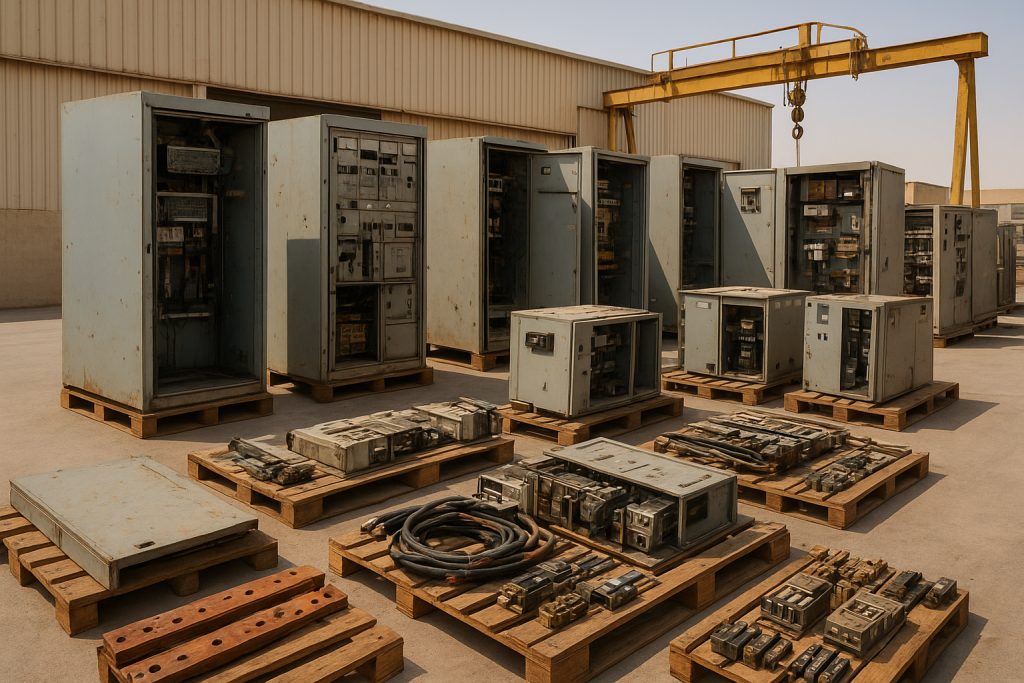
An industrial electrical panel is rarely made from one material. A typical unit may combine a painted steel or stainless steel cabinet with copper or aluminum busbars, insulated wiring, brass terminals, breakers, contactors, relays, meters, fans, and electronic control modules. Motor control centres and larger switchgear assemblies can also contain substantial frames, internal partitions, mounting plates, and cable-entry sections.
Recycling therefore involves more than removing a cabinet from a wall. The equipment must be confirmed as de-energized, described accurately, assessed for its material content, and prepared according to site conditions. Some items can be separated before collection, while others are better transported as complete units when dismantling would create unnecessary safety, labour, or housekeeping concerns.
Understanding the Recoverable Materials
Knowing what is inside a panel helps a seller prepare clearer photographs, avoid mixing grades, and understand why two cabinets of similar size may be evaluated differently.
Ferrous Enclosures and Structural Parts
Painted mild-steel cabinets, frames, doors, mounting plates, and supports are ferrous and can usually be identified with a magnet. Stainless steel may appear in cabinets used in corrosive or demanding environments, but its grade should not be assumed from appearance alone. Heavy paint, sealant, attached insulation, and non-metallic fittings can affect preparation.
Copper, Aluminum, and Brass
Copper may be present in busbars, earth bars, flexible links, cable, transformer windings, and terminals. Some panels use aluminum busbars or conductors instead. Brass can appear in terminal blocks, glands, connectors, and hardware. Insulation, plating, attached lugs, and mixed-metal joints influence whether these items can be classified separately or remain part of a mixed electrical assembly.
Breakers and Control Components
Circuit breakers, contactors, relays, meters, programmable controllers, variable-speed drives, and power supplies contain mixed metals, plastics, and electronic parts. They should not automatically be valued as clean copper scrap. Batteries, charged capacitors, lamps, and unidentified components may require separate review and should be disclosed before collection.
Safe Preparation and Sorting
Only authorized and competent site personnel should isolate electrical equipment. Before scrap handling begins, panels should be disconnected, de-energized, checked according to the facility’s procedures, and clearly released for removal. Capacitors or backup power devices can retain energy even after the main supply is switched off.
- Keep obsolete panels separate from equipment that remains operational.
- Retain labels or inventory references until the correct units are confirmed.
- Remove loose rubbish, packaging, and unrelated non-metal waste.
- Separate clean cable, copper busbars, and steel parts when this can be done safely.
- Photograph damaged, contaminated, oversized, or unusually heavy equipment.
Do not burn insulation, break sealed components, or dismantle unidentified energized assemblies to expose metal. If a panel contains oil, chemical residue, excessive dust, process contamination, or fire damage, mention this during the initial enquiry so handling requirements can be considered.
How Panel Scrap Is Evaluated
There is no single rate that applies to every electrical cabinet. Evaluation can depend on the panel type, total quantity, copper or aluminum content, enclosure metal, level of sorting, contamination, condition, current scrap market conditions, and the work required for collection. A useful enquiry for electrical panel recycling Dammam should include wide and close photographs, an estimated quantity or weight, cabinet dimensions, and a description of visible conductors.
Accessibility also matters. Ground-level pallets are different from wall-mounted cabinets inside a restricted production area. Stairs, narrow doors, loading-bay limits, lifting requirements, security procedures, and permitted collection times can all affect removal planning. Final weighing or lot assessment should reflect the agreed material classification and collection arrangement.
6 Essential Steps for electrical panel recycling Dammam
A structured process helps industrial sellers reduce uncertainty and prepare the site before the collection vehicle arrives.
- Confirm the equipment status: Identify the exact panels being discarded and have the facility’s responsible electrical personnel isolate and release them. Keep active equipment clearly separated from the scrap scope.
- Prepare an inventory: Record the number of cabinets, approximate dimensions, panel types, and whether units are complete or already dismantled. Include photographs of interiors, busbars, cables, nameplates, and visible damage.
- Sort practical material groups: Keep loose copper cable, aluminum conductors, steel enclosures, stainless parts, and mixed electrical components apart where safe. Avoid combining panel scrap with general rubbish or wet waste.
- Review access and handling: Check door widths, floor conditions, loading areas, vehicle access, unit weight, and lifting needs. Explain whether panels are palletized, floor-standing, wall-mounted, or located above ground level.
- Request an assessment: Send the inventory and site details to Metal Scrap Dammam. The review may consider recoverable metal content, sorting quality, quantity, market conditions, and labour or transport requirements.
- Coordinate collection: Agree on the material scope, site contact, access window, and loading responsibilities. Before handover, confirm that only approved scrap is loaded and that the collection area is left free of loose components.
Industrial Collection in Dammam
Planning electrical panel recycling Dammam for a factory or commercial property requires attention to industrial access rather than city-name repetition. Sites in Dammam industrial areas or the Second Industrial City may have gate passes, safety inductions, traffic controls, loading schedules, and restrictions around active production. Sharing these conditions in advance supports a more practical collection plan.
For multi-site work elsewhere in the Eastern Province, provide each location separately rather than combining all equipment into one vague estimate. The panel count, access, dismantling status, and responsible site contact may differ. Information about each lot helps determine whether collection should be coordinated together or reviewed independently.
Responsible Recycling and Resource Use
Recovering steel, copper, aluminum, and brass from obsolete panels keeps useful industrial materials in circulation and can reduce the amount sent into mixed waste streams. Electronic modules, batteries, contaminated items, and other non-metal components still need appropriate separation rather than careless disposal. The UN Environment Programme provides broader information about resource efficiency, waste reduction, and environmentally responsible material management.
Businesses can support responsible recycling by maintaining an accurate scrap inventory, preventing contamination, protecting reusable metal from rain or process waste, and working with a buyer that can review the actual material. More information about local metal collection is available through Metal Scrap Dammam scrap services.
Frequently Asked Questions
Which electrical panels can be considered for recycling?
Industrial distribution boards, switchgear cabinets, motor control centres, control panels, feeder pillars, steel enclosures, and dismantled internal metal parts may be reviewed. Acceptance depends on the material, condition, contamination, quantity, and whether hazardous or unidentified components are present.
Should copper busbars and cables be removed before pickup?
Separate, clean copper can be easier to classify, but dismantling is not always practical or safe. Remove conductors only after authorized isolation and when your team has suitable tools and procedures. Otherwise, provide interior photographs and request an assessment of complete units.
How do I request a quotation for industrial panel scrap?
For electrical panel recycling Dammam, send photographs, quantities, approximate dimensions, panel types, location details, and access information. State whether the equipment is disconnected, palletized, contaminated, or likely to require lifting. Quotations depend on material composition, sorting, market conditions, and removal requirements.
Can collection be planned around an operating factory?
Collection can be discussed for active industrial sites when the facility provides clear access rules, an approved collection window, and a responsible contact. Panels must be safely released from service, and vehicle routes, lifting needs, loading responsibilities, and production-area restrictions should be explained beforehand.
Arrange an Electrical Panel Scrap Assessment
For practical electrical panel recycling Dammam support, prepare photographs and basic information about your cabinets, switchgear, busbars, cables, quantity, and site access. Contact Metal Scrap Dammam through https://metalscrapdammam.com/, call or WhatsApp +966532510699, or email info@metalscrapdammam.com to discuss assessment and collection requirements.