commercial kitchen equipment recycling Dammam: 7 Essential Steps for Businesses
For businesses planning commercial kitchen equipment recycling Dammam, the main need is usually practical: identify unwanted assets, disconnect them safely, understand their metal content, and arrange an efficient assessment and collection. Restaurants, hotels, catering kitchens, bakeries, cafeterias, and food-production facilities may all accumulate equipment that is damaged, obsolete, uneconomical to repair, or left after a renovation.
Metal Scrap Dammam can discuss suitable recycling and removal arrangements based on the equipment, quantity, condition, and site access. Providing an accurate inventory and clear photographs helps a scrap metal buyer evaluate the job without relying on assumptions.
Why Commercial Kitchen Equipment Requires Careful Sorting
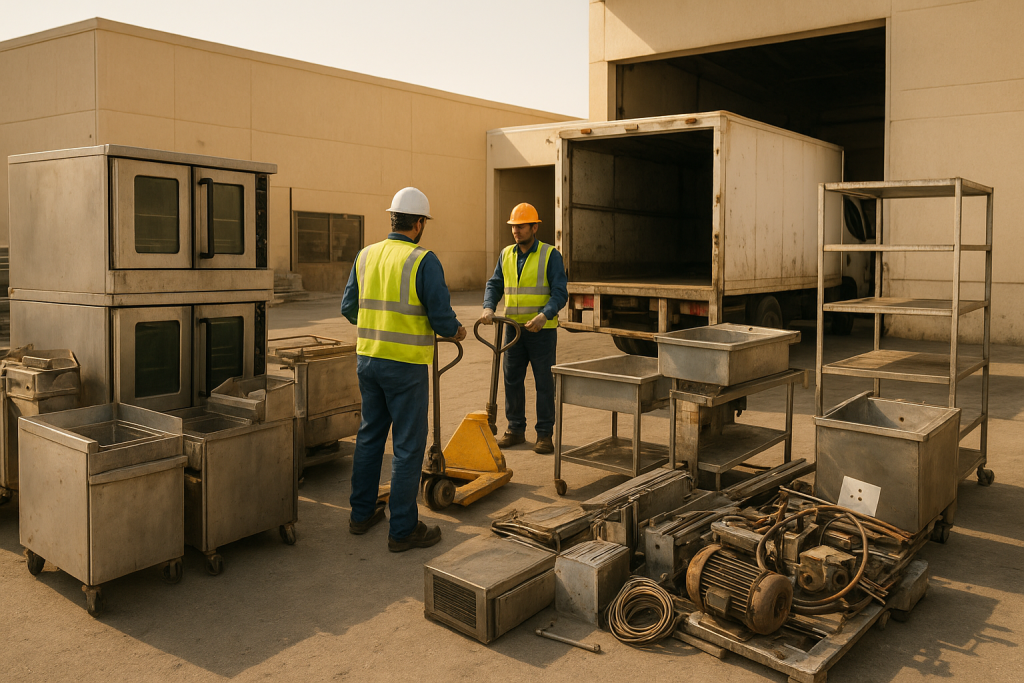
Commercial cooking and food-service equipment is rarely made from one material. Stainless steel may dominate sinks, preparation tables, shelves, counters, hood panels, and appliance bodies. Mild steel or cast iron can be found in frames, burners, grates, and heavy bases. Copper tubing, insulated cable, brass fittings, aluminum components, electric motors, compressors, and control assemblies may also be present.
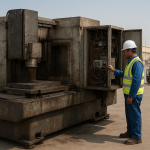
This mixed construction affects recycling value and removal planning. A clean stainless steel table is different from a complete oven containing insulation, glass, wiring, burners, and electronic controls. Refrigerators, freezers, ice machines, and refrigerated display units also require appropriate decommissioning because their cooling systems may contain refrigerant. Equipment should therefore be assessed by type rather than treated as an undifferentiated pile.
7 Essential Steps for commercial kitchen equipment recycling Dammam
These seven steps help facility managers, restaurant operators, contractors, and procurement teams prepare equipment for a more orderly assessment and collection.
- Create a detailed equipment inventory. List ovens, fryers, grills, dishwashers, sinks, preparation tables, shelving, cold rooms, freezers, ice machines, extraction hoods, and other assets separately. Record quantities, approximate dimensions, and condition. Include model labels when visible, but do not dismantle equipment merely to find them.
- Confirm that each asset is ready for disposal. Separate equipment approved for recycling from rented, leased, repairable, or reusable items. Remove business records, stock, utensils, trays, and removable accessories that the company intends to retain. This prevents confusion during a kitchen renovation or full restaurant clearance.
- Arrange safe utility disconnection. Electrical, gas, water, drainage, and ventilation connections should be isolated by appropriately skilled personnel. Refrigerants must be recovered and handled through suitable procedures before refrigeration equipment is processed. A scrap collection team should not be expected to disconnect live utilities or make an unsafe appliance ready for removal.
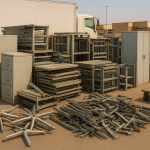
- Identify the main metal groups. Keep stainless steel fixtures apart from ordinary steel where practical, and separate loose copper, brass, and aluminum components. A magnet can provide an initial indication when comparing some ferrous and non-ferrous items, but it does not determine every stainless steel grade or establish final value by itself.
- Remove food residue and avoid contamination. Empty oils, grease, food, cleaning chemicals, and standing water from equipment. Wiping accessible surfaces and draining approved systems makes handling cleaner and allows the metal to be inspected. Used cooking oil, food waste, and chemical containers should follow their own disposal routes rather than being mixed with metal scrap.
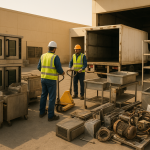
- Plan the removal route. Measure doors, corridors, lifts, loading bays, and stair access. Note whether equipment is bolted down, built into counters, located above ground level, or blocked by active kitchen operations. Heavy ovens and refrigeration units may need trolleys, lifting equipment, additional labor, or partial disassembly before loading.
- Request an assessment with useful evidence. Send photographs, the inventory, the site location, access details, and the preferred collection window. A clear enquiry for commercial kitchen equipment recycling Dammam should also identify any deadlines connected with a lease handover, renovation, or contractor programme.
How Kitchen Equipment Scrap Is Evaluated
An assessment for commercial kitchen equipment recycling Dammam is based on the recoverable material and the work required to collect it. External appearance alone is not enough. Two similar appliances can contain different grades, amounts of insulation, motors, electronic parts, or non-metal attachments.
- Material and grade: stainless steel, carbon steel, cast iron, copper, brass, and aluminum are evaluated differently.
- Condition and contamination: food residue, oil, water, insulation, glass, rubber, and mixed attachments affect preparation requirements.
- Quantity and sorting: a documented, separated batch is easier to inspect than unidentified mixed equipment.
- Accessibility: stairs, narrow doors, restricted loading areas, and fixed installations influence labor and equipment needs.
- Market conditions: scrap values change, so a current quotation should be requested instead of relying on an old rate.
No responsible evaluation should assume one price for every appliance. For a current quotation, share accurate details with Metal Scrap Dammam scrap collection services so the material and removal scope can be considered together.
What the Collection and Removal Process Involves
After the initial enquiry, the equipment list and photographs can be reviewed to clarify material types, approximate volume, loading requirements, and any items needing specialist preparation. A site assessment may be useful when the kitchen contains fixed counters, long hood sections, multiple cold-room panels, or heavy equipment with difficult access.
- Agree which equipment is included and which assets must remain on site.
- Confirm that utilities and refrigerant systems have been dealt with appropriately.
- Clear the route between the kitchen and the loading point.
- Coordinate collection around building access rules and active business operations.
On collection day, a site representative should be available to confirm the approved items. Loose components should be contained so that cables, fittings, shelves, and panels are not lost during handling. Where weighing or further material verification is required, the final evaluation can reflect the verified composition and condition rather than an unsupported estimate.
Responsible Recycling and Material Recovery
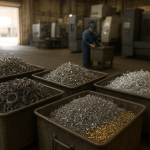
Separating recoverable metals keeps valuable stainless steel, copper, aluminum, brass, iron, and steel available for further processing. It also reduces the risk of food waste, oils, refrigerants, or mixed debris entering an unsuitable metal load. The UN Environment Programme provides broader information about resource efficiency, waste reduction, and responsible material management.
Recycling does not remove the business’s responsibility to prepare equipment properly. Safe isolation, refrigerant recovery, internal asset approval, and clean access should be addressed before pickup. These actions support more efficient handling and help prevent avoidable delays at a busy commercial property.
Planning Equipment Removal in Dammam
Demand for commercial kitchen equipment recycling Dammam can arise from restaurant refits, hotel upgrades, catering-facility changes, warehouse clearances, or replacement of food-production machinery. Dammam sites range from street-level restaurants to larger commercial and industrial properties, so vehicle access and loading conditions vary considerably.
Businesses in the wider Eastern Province may also need coordination when equipment is consolidated at a Dammam warehouse or removed as part of a regional refurbishment. The important details are the actual collection location, equipment quantity, access restrictions, and readiness of each asset—not an unnecessarily long list of city names.
Frequently Asked Questions
Which commercial kitchen items can be assessed for recycling?
Items may include stainless steel sinks, tables, shelves, counters, ovens, fryers, grills, dishwashers, hoods, freezers, refrigerators, ice machines, and food-processing equipment. Suitability depends on construction, condition, contamination, quantity, and whether the equipment has been safely disconnected.
Should stainless steel fixtures be separated from complete appliances?
Yes, when separation can be completed safely and without unnecessary damage. Clean stainless steel tables and sinks are easier to identify when kept apart from mixed ovens or refrigeration units containing insulation, wiring, glass, motors, and controls.
What information is needed for commercial kitchen equipment recycling Dammam?
Provide an item list, quantities, photographs, approximate sizes, condition, collection address, floor level, loading access, and utility-disconnection status. Mention fixed equipment, narrow routes, stairs, time restrictions, or a renovation deadline.
Can refrigeration equipment be collected without decommissioning?
Refrigerators, freezers, ice machines, and cold-room systems may contain refrigerant and connected electrical or drainage services. Appropriate technicians should isolate these systems and handle refrigerant correctly before the units are presented for scrap removal.
Arrange a Practical Kitchen Equipment Assessment
Good preparation makes commercial kitchen equipment recycling Dammam easier to evaluate and coordinate. Compile an inventory, separate materials where practical, remove food and oil, arrange safe disconnection, and document the loading route before requesting collection.
Contact Metal Scrap Dammam to discuss your commercial kitchen assets and request a current assessment. Website: https://metalscrapdammam.com/ | Call / WhatsApp: +966532510699 | Email: info@metalscrapdammam.com