shipping container scrap buyer Dammam: Selling Damaged Containers
Damaged shipping containers can occupy valuable yard space and create handling problems after collision, corrosion, fire, failed modification, or heavy structural wear. If repair or resale is no longer practical, a shipping container scrap buyer Dammam enquiry can help establish the recoverable metal, suitable removal method, and information needed for a quotation.
The process requires more than treating the complete unit as an ordinary pile of steel. Container type, ownership, previous cargo, flooring, attached equipment, structural stability, and loading access all affect how the asset should be assessed and collected.
When Is a Damaged Container Suitable for Scrap?
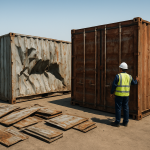
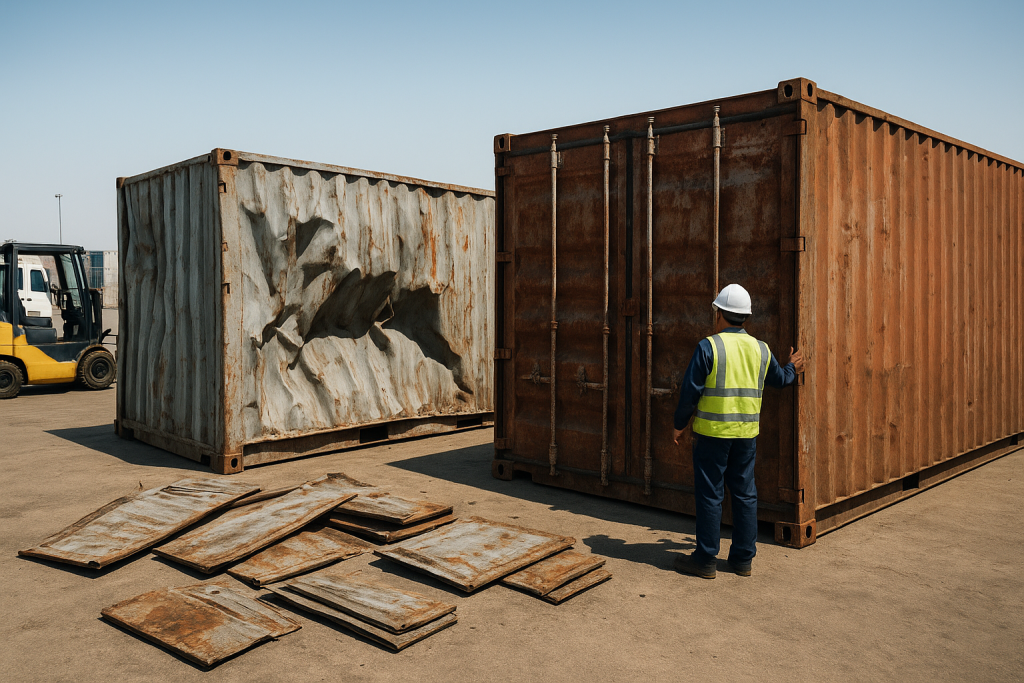
A container may become a scrap candidate when structural repairs are uneconomical or it can no longer perform its intended storage or transport role. Before choosing recycling, consider whether the doors, panels, frame, or complete unit still have legitimate reuse value. Scrap disposal is generally considered for problems such as:
- Severely twisted corner posts, rails, or structural frames
- Extensive corrosion, perforation, or weakened floor supports
- Major impact, fire, or lifting damage
- Incomplete conversions that are difficult to restore or reuse
The seller should have clear authority to release the container. Record identification details before removal and resolve any leasing, ownership, customs, or cargo-related restrictions that may apply.
What a shipping container scrap buyer Dammam Enquiry Should Cover
An accurate enquiry identifies the container design, approximate dimensions, condition, quantity, location, and access conditions. Clear photographs of every side, the roof, doors, underside where visible, and major damage can support an initial assessment without concealing safety concerns.
Metal Composition and Recoverable Components
Many dry-freight containers have corrugated weathering-steel panels, steel roof sections, cross-members, side rails, end frames, locking bars, hinges, and steel corner fittings. The floor is commonly supported by metal cross-members but may contain plywood, bamboo, composite board, coatings, or sealants. Some specialist units can also include aluminum, stainless steel, copper wiring, or mechanical equipment.
- Separate loose steel panels and structural sections where practical.
- Identify aluminum or stainless components rather than mixing grades.
- Keep detached locking gear and metal fittings together.
- Disclose non-metal floors, insulation, rubber seals, and debris.
Refrigerated, Tank, and Contaminated Containers
Refrigerated containers require additional review because they may contain insulation, electrical controls, compressors, coils, wiring, refrigerant, and mixed metals. Tank containers or units associated with chemicals, fuel, food residue, or unknown cargo should not be handled as clean steel scrap. Provide the known cargo history and relevant safety information. Do not enter, cut, drill, or use hot work on a closed or contaminated unit without competent controls and an agreed method.
6 Practical Steps for Selling a Damaged Container
These six steps help a seller prepare useful information and avoid preventable collection delays.
- Confirm ownership and release authority. Gather the container number, available ownership records, release documents, and site contact details. If the unit was leased, abandoned, imported, or connected to a contractor, verify who has authority to approve dismantling or removal.
- Identify the container type. State whether it is a standard dry container, high-cube unit, open-top design, refrigerated container, tank container, converted site unit, or another specialist type. Mention attached shelving, electrical equipment, ventilation, pipework, or access modifications.
- Document condition and contents. Photograph buckled rails, holes, rust, damaged doors, unstable panels, flooring, stored material, and debris. Report whether the unit is empty. Dimensions shown on an identification plate are useful, but they do not replace an inspection of the actual condition.
- Send practical collection information. A shipping container scrap buyer Dammam enquiry should explain whether the unit can be lifted whole or requires controlled dismantling. Include the number of containers, ground conditions, gate width, overhead restrictions, operating hours, and available loading equipment.
- Prepare the surrounding area. Remove unrelated stock, vehicles, pallets, and waste from the agreed work zone. Provide clear access for suitable lifting or transport equipment. Do not attempt to move a structurally unstable container using improvised chains, unsuitable forklifts, or unplanned lifting points.
- Agree on scope before collection. Clarify who will empty the unit, remove non-metal material, isolate services, arrange lifting, load the metal, and clear remaining debris. Confirm how the material will be assessed or weighed and which documents or site procedures are required.
How Container Scrap Is Evaluated
A quotation cannot be based on exterior size alone. When a shipping container scrap buyer Dammam reviews a unit, the recoverable metal and work required to collect it are both relevant. Common evaluation factors include:
- Container type, construction, and dominant metal grade
- Quantity and whether units are complete or dismantled
- Corrosion, fire damage, deformation, and missing components
- Flooring, insulation, cargo residue, and other contamination
- Separation of steel from non-ferrous metal and non-metal material
- Accessibility for lifting, cutting, loading, and transport
- Current scrap-market conditions at the time of quotation
A stated tare weight may provide context, but it is not necessarily the final recoverable scrap weight. Floors, insulation, removed parts, modifications, moisture, and debris can change the material available. For a current assessment, provide photographs and site details to Metal Scrap Dammam industrial scrap services.
Container Collection in Dammam
Industrial premises in Dammam can have busy vehicle routes, controlled gates, limited crane positions, and strict operating schedules. A shipping container scrap buyer Dammam collection request should therefore identify the exact site contact, entry requirements, safe work area, and whether the container is at ground level, stacked, blocked by stock, or positioned beside a building.
Planning Lifting and Site Coordination
A complete container may require suitable lifting and transport equipment, while a collapsed unit may need a different removal plan. The chosen method depends on structural integrity, available space, nearby utilities, and permission for dismantling. Facilities should communicate induction procedures and coordinate collection around production, warehouse, or contractor activity. Similar planning may be relevant for projects elsewhere in the Eastern Province, but Dammam remains the primary service context.
Responsible Recycling and Material Management
Separating usable steel and non-ferrous components supports resource conservation and reduces avoidable disposal. Floors, insulation, rubber, cargo residue, refrigerants, and electrical parts should follow appropriate handling routes rather than being mixed into metal loads. The UN Environment Programme provides broader information about resource efficiency and environmentally responsible material management. At site level, good recycling begins with honest disclosure, safe preparation, and clear separation of materials.
Frequently Asked Questions
Can every damaged shipping container be sold as ordinary steel scrap?
No. Standard dry containers are largely steel, but floors, seals, coatings, and modifications require consideration. Refrigerated and tank containers can contain insulation, machinery, refrigerant, mixed metals, or residues that need separate assessment before acceptance or dismantling.
Should I remove the plywood floor before requesting a quotation?
Not necessarily. First disclose the floor type and condition. Removal may improve material separation, but it also involves labor, fasteners, coatings, and possible contamination. Agree on responsibility for floor removal before starting work.
What details should accompany a shipping container scrap buyer Dammam enquiry?
Send the container type, quantity, approximate size, photographs, ownership status, previous use, damage description, contents, site location, and access details. Also mention whether lifting equipment is available and whether the unit can be removed whole.
How is the value of a damaged container determined?
Assessment generally considers recoverable metal type and quantity, condition, contamination, sorting, current market conditions, and collection requirements. Loading, dismantling, transport access, and disposal of non-metal components may also affect the quotation.
Request a Container Scrap Assessment
If damaged containers are occupying an industrial site, warehouse yard, or project area, contact Metal Scrap Dammam to discuss condition, material composition, access, and collection requirements. For a shipping container scrap buyer Dammam assessment, visit https://metalscrapdammam.com/, call or WhatsApp +966532510699, or email info@metalscrapdammam.com.