radiator scrap buyer Dammam: Workshop Selling Guide
For auto workshops, used radiators are more than bulky parts taking up rack or floor space. A radiator scrap buyer Dammam can help turn separated, drained units into recyclable metal while coordinating collection around workshop access. This guide explains how to identify radiator types, prepare them, understand evaluation, and provide the information needed for a practical quotation.
The most useful approach is to keep radiator scrap separate from general steel, remove avoidable non-metal attachments, and describe the load honestly. Workshops can also review Metal Scrap Dammam services before discussing pickup, quantity, and loading conditions.
Understanding Automotive Radiator Scrap
Vehicle radiators transfer engine heat through thin tubes and fins, but their construction varies. Older units may have copper-brass cores and brass tanks, while many modern units use aluminum cores with plastic end tanks. Steel side plates, fan assemblies, rubber hoses, caps, sensors, and mounting hardware can add mixed material that affects sorting and evaluation.
Copper-Brass and Aluminum Radiators
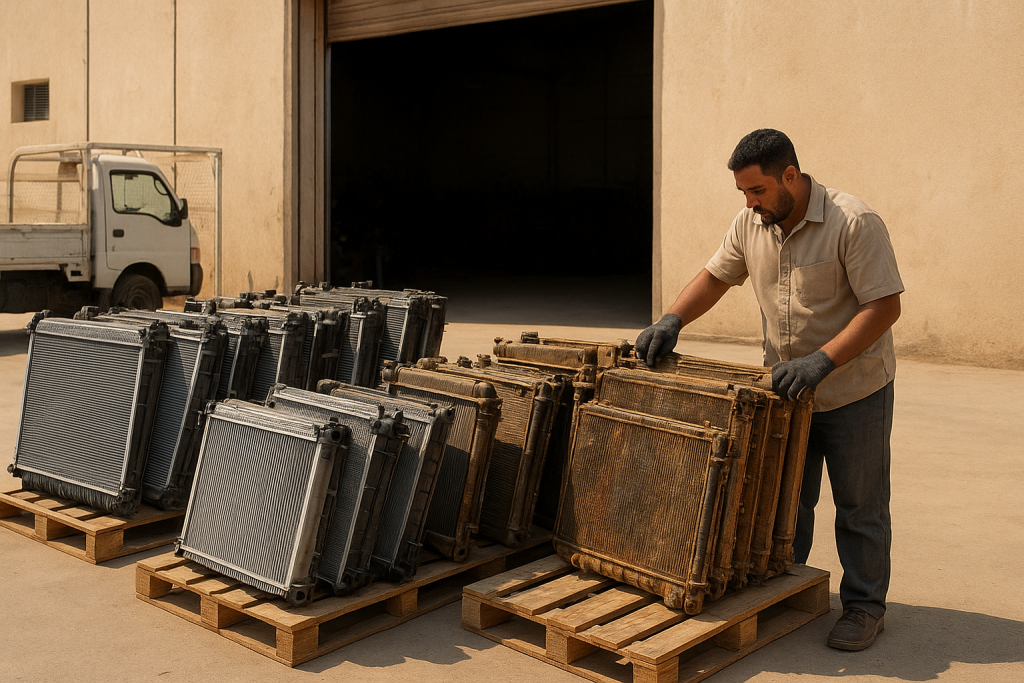
Copper-brass radiators often show yellow or reddish metal where a clean edge, tube, or tank is visible. Aluminum radiator cores are generally lighter and have silvery fins, frequently combined with crimped plastic tanks. Surface dirt or paint can hide these signs, so workshops should use construction details rather than color alone. A magnet can help identify attached steel brackets, but it does not establish the grade of the radiator core.
Air-conditioning condensers and heater cores may resemble radiators, yet they can have different construction and contamination. Keep these components in clearly identified groups instead of assuming that every finned automotive part belongs to one grade.
7 Smart, Essential Tips When Using a radiator scrap buyer Dammam
These seven tips help workshop teams prepare cleaner loads, reduce handling delays, and provide useful quotation details.
- Separate radiators by construction. Keep copper-brass units apart from aluminum radiators with plastic tanks. Place heater cores, condensers, and unidentified finned components in separate groups. Better sorting allows each material category to be assessed on its actual composition rather than as an undifferentiated mixed load.
- Drain residual coolant responsibly. Radiators should not be presented with coolant still inside. Drain fluids into suitable workshop containers and manage them through the workshop’s established procedures and applicable requirements. Never release coolant onto soil, drains, or the loading area simply to prepare metal for collection.
- Remove easy non-metal attachments. Detach loose hoses, oversized plastic fan shrouds, foam, packaging, and unrelated components when this can be done safely. Ask before cutting away firmly crimped plastic tanks because the labor may not improve the net result for a small or mixed batch.
- Keep the fins reasonably clean. Heavy oil, mud, trapped debris, and non-metal waste can complicate inspection and handling. Radiators do not need to look new, but they should not be used as containers for bolts, filters, rags, or workshop rubbish. Ordinary wear and bent fins should be reported honestly.
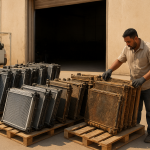
- Store units safely and accessibly. Stack radiators on a stable pallet or in a suitable metal cage without crushing the load into an unsafe shape. Protect workers from sharp fins and brackets. Keep the stock where collection personnel or lifting equipment can reach it without obstructing active repair bays.
- Provide accurate load information. Before contacting a radiator scrap buyer Dammam workshop teams should estimate the number of units, identify the main types, and send clear photographs. Include pallet dimensions or an approximate total quantity when available, along with details about stairs, narrow gates, or restricted vehicle access.
- Do not mix unrelated workshop scrap. Brake discs, steel exhaust sections, batteries, wiring, compressors, and engines belong in different material groups. They may still be relevant to a broader scrap enquiry, but separating them from radiators makes evaluation, weighing, loading, and recycling preparation more transparent.
Factors That Influence Radiator Scrap Evaluation
A radiator scrap buyer Dammam may assess a workshop load from photographs and descriptions before confirming details during collection or delivery. There is no single rate that applies to every radiator. Metal composition, recoverable material, current market conditions, preparation, and collection requirements can all influence a quotation.
- Core material: Copper-brass and aluminum units represent different scrap categories.
- Purity: Plastic tanks, steel frames, rubber hoses, and fan assemblies add mixed material.
- Condition: Coolant, oil, mud, and excessive debris can affect handling and recovery.
- Quantity: A palletized workshop batch requires different planning from a few loose units.
- Access: Loading space, vehicle entry, lifting needs, and site restrictions affect collection.
Ask for a current quotation rather than relying on an old rate or a price for a different radiator grade. Useful photographs should show the complete stock, close views of the cores and tanks, attached fans or frames, and the proposed pickup area.
How Workshop Collection Generally Works
Initial Material Review
The workshop shares the radiator types, approximate quantity, photographs, location, and preferred collection details. The buyer may request clarification when the load contains both copper-brass and aluminum units or includes condensers, heater cores, and other automotive scrap.
Access and Loading Coordination
Before pickup, both sides should clarify whether the radiators are loose, palletized, or stored in cages. Vehicle access, workshop operating hours, gate restrictions, loading equipment, and the distance between the storage point and collection vehicle are practical details that prevent avoidable disruption.
Inspection and Final Assessment
The material can be checked for type, attachments, contamination, and consistency with the information supplied. Depending on the arrangement, evaluation may also involve weighing appropriate material groups. Keeping batches separated helps the assessment reflect the contents of each group.
Radiator Scrap Collection in Dammam
Dammam has active repair workshops, spare-parts businesses, fleet maintenance operations, and industrial vehicle service facilities that can accumulate radiators over time. Heat, dust, and limited storage space make organized removal particularly practical. For a radiator scrap buyer Dammam collection planning should account for busy workshop entrances, industrial-area traffic, loading room, and safe access to the stored material.
Businesses elsewhere in the Eastern Province may have different transport considerations, but availability should be confirmed directly. Dammam remains the primary market, and workshops should provide their exact area and load details when requesting service.
Responsible Recycling and Workshop Safety
Recycling radiator metals can return aluminum, copper, brass, and steel to productive material streams. This supports broader goals involving resource conservation and waste reduction, topics promoted by the UN Environment Programme. Responsible recycling begins at the workshop: control coolant, avoid mixing rubbish with metal, and keep sharp components stable during storage and handling.
Workers should use suitable protective equipment under their site’s procedures. Damaged fins, cut brackets, broken plastic, and leaking residue can create handling hazards. Do not burn, aggressively crush, or dismantle radiator assemblies with unsuitable tools merely to change their appearance before sale.
Frequently Asked Questions
What types of automotive radiators can a workshop offer?
Workshops may offer copper-brass radiators, modern aluminum radiators with plastic tanks, and related finned components for review. Keep heater cores and air-conditioning condensers separate and identify them clearly. Photographs help determine how each group should be classified before collection.
Should used radiators be drained before collection?
Yes. Residual coolant should be drained into an appropriate workshop container and handled through established procedures. The units should not be dripping during storage or loading. Tell the buyer if a damaged radiator still contains fluid so handling can be discussed beforehand.
Does removing plastic tanks always increase the value?
Not necessarily. Separation can reduce mixed material, but firmly crimped tanks may require time, tools, and safe handling. The result depends on radiator construction, quantity, and evaluation method. Ask whether removal is worthwhile before dismantling an entire workshop batch.
Can a radiator scrap buyer Dammam collect a large workshop batch?
Collection planning depends on quantity, material type, site access, loading conditions, and scheduling. Provide photographs, an estimated unit count or weight, and the workshop area. Mention whether the stock is palletized and whether on-site lifting equipment is available.
Request a Radiator Scrap Quotation
If your workshop needs a radiator scrap buyer Dammam, prepare photographs of the sorted units and note their construction, quantity, condition, attachments, and pickup access. Contact Metal Scrap Dammam for a current quotation and to discuss suitable collection arrangements without relying on unverified scrap rates.
- Metal Scrap Dammam
- Website: https://metalscrapdammam.com/
- Call / WhatsApp: +966532510699
- Email: info@metalscrapdammam.com