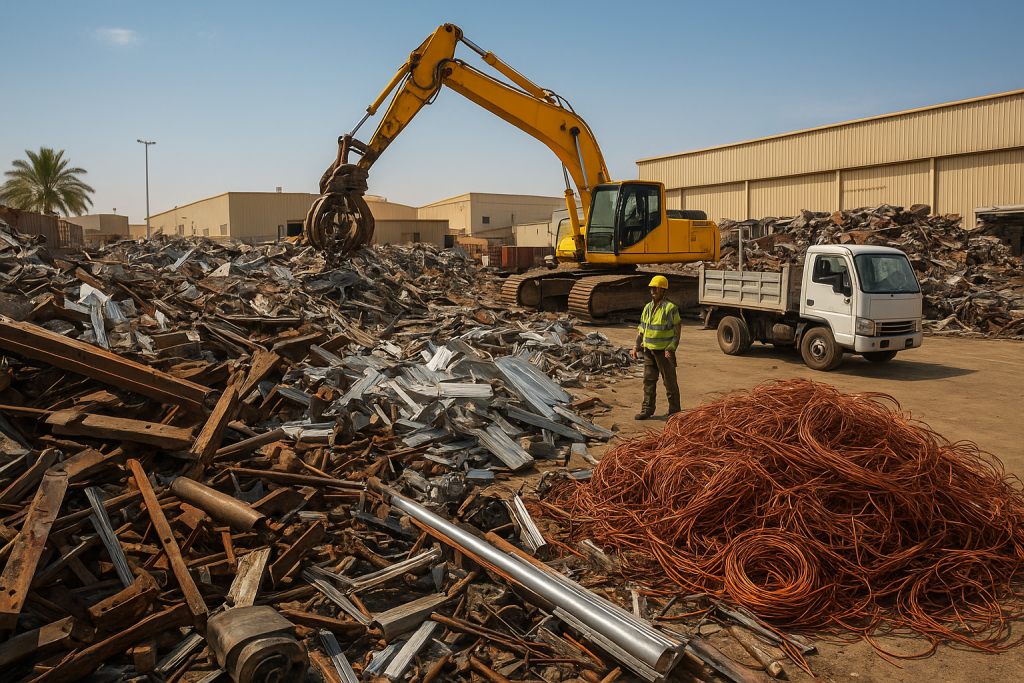
Mixed Metal Scrap Sorting Checklist Dammam
Companies selling their own factory, warehouse, workshop, or construction scrap can prepare a clearer enquiry by separating materials before requesting a quotation. A mixed metal scrap sorting checklist Dammam sellers can follow helps identify valuable grades, reveal contamination, document quantity, and explain collection requirements without relying on guesswork.
The objective is not to dismantle every item. It is to create safe, understandable groups and give a prospective buyer enough information to assess the material, ask relevant questions, and discuss collection options.
Why Sort Mixed Metal Before Requesting a Quotation?
A mixed pile may contain carbon steel, cast iron, stainless steel, aluminum, copper, brass, insulated cable, electric motors, or metal attached to non-metal components. These materials differ in composition and potential recycling routes. Separating obvious categories makes the load easier to describe and can prevent higher-value non-ferrous metals from being treated as part of a general ferrous pile.
Sorting also exposes issues that affect evaluation, including oil, paint, insulation, rubber, plastic, concrete, moisture, and mixed attachments. A handheld magnet can help with initial screening because common iron and steel grades are magnetic, while copper, aluminum, and brass are not. However, magnet response alone does not prove a precise grade, and some stainless-steel grades behave differently.
Mixed Metal Scrap Sorting Checklist Dammam: 7 Practical Steps
Use the following seven steps to organize company-owned industrial scrap without making unsupported assumptions about metal grade or weight.
- Confirm ownership and release status. Verify that the material belongs to the selling company and is approved for disposal. Separate rented equipment, customer property, reusable spares, tools, and assets that have not been formally released. Keep internal approval or asset records available where relevant.
- Divide ferrous and non-ferrous metals. Place common steel and iron in a ferrous group. Create separate groups for recognizable copper, aluminum, brass, stainless steel, and insulated cable. If identification is uncertain, label the group as unknown rather than assigning an unsupported grade.
- Separate distinct forms and grades. Keep clean sheet, profiles, pipes, structural sections, turnings, radiators, cables, motors, and assemblies apart when practical. Copper cable should not automatically be described as clean copper because insulation, plugs, armor, and terminals affect its composition.
- Control non-metal contamination. Remove loose packaging, timber, soil, concrete, rubber, and general waste when this can be done safely. Do not undertake risky cutting or dismantling merely to improve separation. Record any coatings, insulation, residues, or attached components that remain.
- Isolate unusual or potentially risky items. Keep sealed containers, pressurized components, batteries, unidentified drums, and equipment containing residual liquids away from routine metal piles. Confirm suitable handling and acceptance requirements with the buyer and an appropriately qualified party before movement.
- Record quantity and condition. Note verified weights where reliable records exist, or provide piece counts, dimensions, container numbers, and the method used to obtain any stated quantity. Describe whether items are loose, bundled, palletized, corroded, wet, oily, oversized, or still installed.
- Plan site access and loading. Record gate restrictions, loading-zone dimensions, floor level, overhead clearance, equipment isolation status, and any site induction requirements. Explain whether the seller can load the material or whether removal arrangements need to be discussed with the buyer.
When the mixed metal scrap sorting checklist Dammam is applied consistently, quotation discussions can focus on identifiable material groups and real site conditions rather than a single photograph of an unsorted heap.
Prepare Useful Seller Records
A concise scrap register is more useful than a broad description such as “mixed metal available.” Create one line for each material group and include the internal reference, likely material type, physical form, condition, location within the site, and release status.
- Material descriptions such as steel offcuts, aluminum profiles, insulated copper cable, stainless tanks, or mixed machinery components
- Verified weight records where available, plus the weighing method and date
- Piece counts and approximate dimensions for large or irregular assets
- Clear photographs of the material, attachments, identification plates, and surrounding access
- Known contamination, liquids, insulation, coatings, or non-metal content
- Loading responsibility, site contact procedure, gate access, and preferred coordination window
Photographs support identification and access planning, but weight should not be estimated from photographs alone. A completed mixed metal scrap sorting checklist Dammam record should distinguish measured facts from estimates and unknown details.
What Influences a Mixed-Scrap Quotation?
There is no single fixed value for a mixed load. A buyer will usually consider the metal type, grade, purity, condition, contamination, quantity, sorting quality, current market conditions, and the work required for collection or removal. Clean, identifiable groups are generally easier to evaluate than piles containing multiple metals and unrelated waste.
Final assessment may also depend on whether the material is loose or bundled, accessible at ground level, still connected to equipment, or spread across several areas. Large pieces may require a removal plan, while small offcuts may need suitable containers. Sellers should disclose these conditions before collection planning begins.
Where weighing is relevant, ask how quantity will be established and which records may be available. Do not assume that a visual estimate, equipment nameplate, or original asset weight represents the recoverable scrap-metal weight.
Dammam and Eastern Province Site Coordination
For the mixed metal scrap sorting checklist Dammam businesses use to be effective, it should include local site-access information as well as material details. Industrial compounds, workshops, warehouses, and construction locations may have different gate procedures, loading areas, traffic controls, shift restrictions, and contractor-entry requirements.
Before discussing collection, identify who can authorize access, where the material is stored, and whether internal movement is needed. Note narrow entrances, covered loading bays, soft ground, height restrictions, or occupied work areas. For sites elsewhere in the Eastern Province, provide the precise location rather than assuming transport requirements are the same as in Dammam.
How Quotation and Collection Generally Work
Industry practice usually begins with a seller sharing a material list, photographs, quantity information, site location, and access notes. A prospective buyer can then ask questions about composition, contamination, ownership, loading, and timing.
- The seller prepares separate material groups and an accurate scrap register.
- The buyer reviews the information and clarifies unknown grades or attachments.
- Both parties discuss assessment, loading responsibility, access, and collection options.
- The material is kept separated and protected from new contamination while arrangements are pending.
- Any final quantity or grade differences are addressed using the agreed evaluation method.
To present industrial material for discussion, use the industrial scrap seller enquiry page. Include facts that can be verified and clearly label anything that remains uncertain.
Responsible Handling and Recycling Context
Sorting supports responsible material management because recyclable metals are easier to direct into appropriate recovery streams when they are separated from general waste. It can also reduce unnecessary handling and help preserve reusable metal resources. The UN Environment Programme provides broader information about resource efficiency, waste reduction, and sustainable material management.
Sellers should avoid burning insulation, releasing fluids, or dismantling equipment without suitable controls. Ask relevant parties about material-specific handling, transport, and documentation requirements before moving unfamiliar or potentially hazardous items.
Frequently Asked Questions
How Can I Distinguish Ferrous Scrap from Non-ferrous Scrap?
A magnet is useful for basic screening: common carbon steel and iron are generally magnetic, while copper, aluminum, and brass are not. It is not a complete grade test because stainless steels and complex assemblies vary. Label uncertain material separately and provide clear photographs or composition records.
Should Cable Insulation and Equipment Attachments Be Removed?
Not automatically. Removal may be unnecessary, uneconomical, or unsafe. Separate loose contamination where practical, but do not burn insulation or cut equipment without proper controls. Describe insulation, plugs, steel armor, motors, plastic housings, and other attachments so their effect can be considered during evaluation.
Can the Mixed Metal Scrap Sorting Checklist Dammam Be Used for Machinery and Cable Offcuts?
Yes, as a preparation framework. Keep machinery, motors, cable, clean metal offcuts, and unknown assemblies in distinct groups. Record whether equipment is disconnected, drained where appropriately required, accessible for removal, and formally released by the owning company. Do not claim a metal grade that has not been verified.
What Information Should Accompany a Collection Enquiry?
Provide the site location, material categories, verified weights or piece counts, dimensions of large items, condition, contamination, photographs, loading responsibility, and access restrictions. Mention whether scrap is loose, palletized, bundled, indoors, outdoors, at ground level, or distributed across several work areas.
Prepare a Clear Mixed-Metal Enquiry
Use the mixed metal scrap sorting checklist Dammam as a practical record for separating grades, documenting company-owned material, and explaining collection conditions. Accurate descriptions help all parties discuss the quotation without relying on unsupported assumptions about composition, weight, timing, or value.
Contact Metal Scrap Dammam to discuss your material, quantity, Dammam or Eastern Province site location, access requirements, and collection options. Visit Metal Scrap Dammam, call or WhatsApp +966532510699, or email info@metalscrapdammam.com.
Related material information: our relevant scrap buying and preparation guide.