HMS Scrap Inspection Checklist Dammam
Before requesting an assessment or collection, industrial sellers should identify what is in their steel scrap pile and record the condition of the material. The HMS scrap inspection checklist Dammam helps factories, workshops, contractors, warehouses, and facility teams prepare useful details about grade, contamination, quantity, and site access. A careful inspection supports a clearer enquiry while reducing avoidable questions about mixed metals, unsuitable items, loading needs, and ownership records.
What Counts as HMS Scrap?
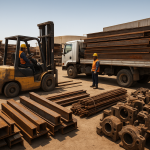
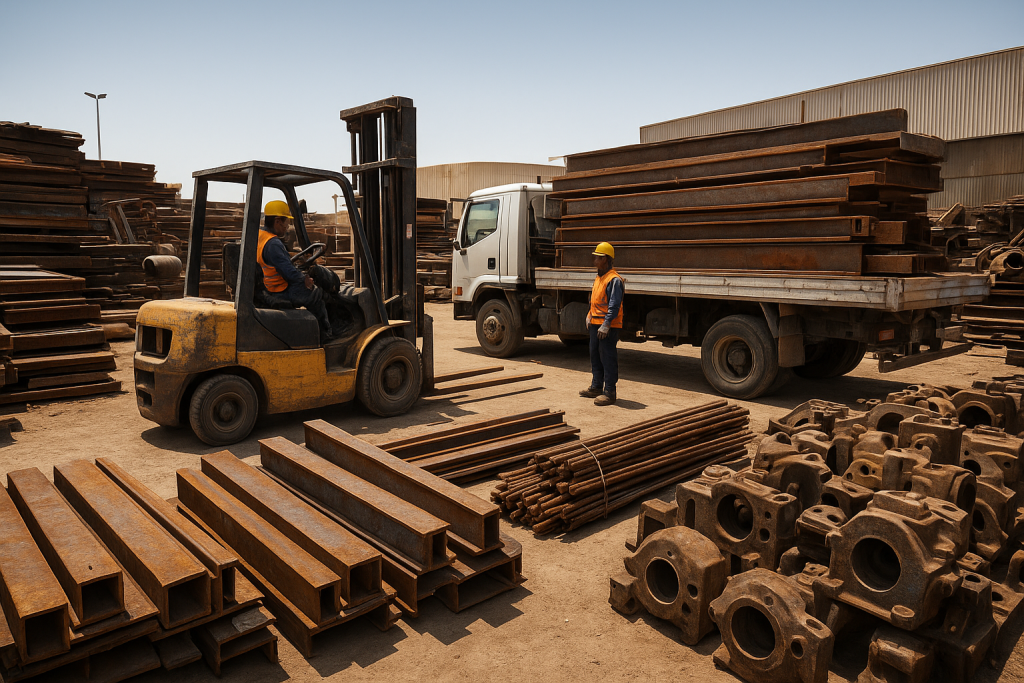
HMS means heavy melting steel, a broad trade description for substantial ferrous scrap intended for metal recycling. Typical examples can include steel plate, structural sections, pipes, beams, machinery frames, and heavy fabrication offcuts. A magnet can help distinguish ordinary carbon steel and iron from many non-ferrous metals, but coatings, attachments, and stainless alloys may require closer identification.
Labels such as HMS 1 or HMS 1/2 may appear in commercial specifications, although definitions and allowable mixtures can vary. Sellers should not assign a grade from appearance alone. Record dimensions, thickness, source, and visible attachments, then ask the buyer which written grade requirements apply.
7 Checks in the HMS Scrap Inspection Checklist Dammam
Inspect the seller’s own material systematically, without moving unstable or unfamiliar items merely to obtain a better photograph.
- Confirm the material is ferrous. Separate carbon-steel beams, plate, pipes, frames, and heavy cut sections from aluminum, copper, brass, cables, motors, and stainless steel where practical. Mixed non-ferrous attachments can affect classification. Note any pieces that are difficult to identify rather than assuming every metallic object belongs in the HMS category.
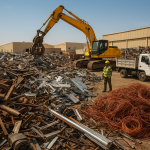
- Group similar grades and forms. Keep heavy structural steel apart from light sheet, turnings, wire, rebar, cast iron, and sealed equipment. A buyer will usually evaluate a consistent pile more easily than a mixed load. Record whether the material comes from fabrication, maintenance, construction, demolition, or retired machinery.
- Check contamination and attachments. Look for excessive soil, concrete, rubber, plastic, insulation, timber, oil, grease, paint, or non-metallic contents. Identify closed containers, pressurized cylinders, batteries, and components containing unknown liquids separately. Do not cut, drain, open, or dismantle unfamiliar items without suitable site procedures and competent guidance.
- Record dimensions and condition. Measure representative lengths, widths, thicknesses, and the largest individual pieces. Note heavy rust, fire damage, coatings, bent sections, enclosed spaces, sharp edges, and assemblies that remain bolted or welded together. Size and condition can influence sorting, loading, transport planning, and the preparation required before collection.
- Document quantity without guessing. Use available inventory, production, purchase, container, or verified weighing records where possible. State whether the quantity is a measured weight, an internal estimate, or an approximate number of pieces. Photographs can show scale and composition, but they should not be used to calculate or confirm scrap weight.
- Inspect access and loading conditions. Record gate width, road surface, height restrictions, turning space, loading zone, security entry procedures, and working-area limitations. Explain whether pieces are loose, stacked, inside a building, elevated, or obstructed. Also clarify what loading support is available at the seller’s site instead of assuming particular equipment will be supplied.
- Prepare clear records and photographs. Take wide views of the full pile and close views of representative pieces, contamination, labels, and attachments. Remove confidential information from images when necessary. Keep internal ownership, asset-release, and site-contact records ready, and describe any collection timing or permit-to-work constraints that a buyer should review.
Completing the HMS scrap inspection checklist Dammam creates a consistent summary for procurement, facility, and scrap contacts. It does not replace physical verification, weighing, or the buyer’s applicable purchase specification.
Seller Records That Support a Clear Enquiry
Create one material schedule with the scrap source, general description, estimated or measured quantity, dimensions, storage position, contamination notes, and responsible site contact. If several departments contributed material, confirm that each item has been released for disposal. Keep machinery components and reusable assets separate until their status is clear.
Attach current photographs, but identify their date and the area shown. Existing or illustrative images are not evidence of the seller’s present site condition. For a focused request, businesses can use the industrial scrap seller enquiry page to provide relevant material and access information.
How HMS Scrap Is Commonly Evaluated
Using the HMS scrap inspection checklist Dammam can make evaluation inputs easier to understand. Commercial value may depend on the confirmed grade, ferrous content, thickness, sorting quality, contamination, quantity, condition, market conditions, and the work needed for loading or removal. No photograph or checklist can establish a current final price by itself.
A buyer will usually review the submitted description before confirming what further assessment is needed. Weight may be verified through an agreed weighing method, and the applicable grade should be matched to the buyer’s specification. Sellers should ask how deductions, mixed material, and collection requirements will be treated before approving a transaction.
Collection and Industrial Site Coordination
A typical process begins with a material summary, photographs, quantity basis, and collection address. The parties can then discuss access, loading responsibilities, site induction, scheduling constraints, and whether oversized pieces need preparation. Any cutting or dismantling should be planned separately and performed only under appropriate site controls.
Before collection, keep pedestrian routes and emergency access clear, isolate sharp or unstable material, and avoid stacking steel where it may shift. The site contact should be able to identify the approved pile and prevent unrelated assets from being loaded. These practical controls are especially important during factory, warehouse, construction-site, or maintenance clearances.
Responsible Recycling and Material Handling
Recovering suitable steel scrap can return ferrous material to productive use and reduce unnecessary disposal. Responsible preparation begins with accurate identification, separation, and control of oils, batteries, sealed vessels, and other potentially problematic contents. The UN Environment Programme provides broader information about resource conservation, waste reduction, and sustainable material management. Sellers should also confirm the requirements that apply to their material and site.
Dammam and Eastern Province Considerations
For local planning, the HMS scrap inspection checklist Dammam should reflect industrial access conditions as well as the steel itself. Outdoor storage in the Eastern Province may expose material to dust, moisture, and oxidation, while busy industrial sites can have gate controls and restricted loading windows. Accurate directions, access notes, and a named site contact help the parties discuss practical collection options without assuming a particular vehicle, method, or response time.
Frequently Asked Questions
Can All Rusty Steel Be Classified as HMS?
No. Surface rust alone does not determine the grade. Thickness, form, composition, size, attachments, and contamination also matter. Separate light-gauge sheet, turnings, wire, sealed items, and uncertain alloys, then request confirmation against the buyer’s specification.
Should Copper, Aluminum, and Stainless Attachments Be Removed?
They should at least be identified and recorded. Separation may improve classification when it can be completed safely and economically. Do not dismantle complex equipment or cut unfamiliar components without suitable procedures and an understanding of their contents.
Can Photos Complete the HMS Scrap Inspection Checklist Dammam?
Photos are useful for showing material form, condition, scale, and access, but they cannot confirm weight, composition, or final grade. Provide wide and close views alongside measurements, inventory records, contamination notes, and the basis used for the stated quantity.
What Details Are Needed to Discuss HMS Collection?
Provide the material type, quantity basis, representative dimensions, photographs, contamination, storage position, site address, gate restrictions, loading arrangements, and timing constraints. Mention any internal induction or clearance process so collection options can be discussed accurately.
Prepare Your HMS Scrap Enquiry
Use the HMS scrap inspection checklist Dammam to organize your material description before contacting Metal Scrap Dammam. Review the Metal Scrap Dammam website, or discuss your material, quantity, site access, and collection options directly. Call / WhatsApp: +966532510699. Email: info@metalscrapdammam.com.
Related material information: our relevant scrap buying and preparation guide.