industrial conveyor dismantling Dammam: A Practical Recycling Guide
Businesses searching for industrial conveyor dismantling Dammam usually need more than ordinary scrap collection. A conveyor is an interconnected machine containing structural frames, drives, rollers, belts, electrical parts, guards, and anchored supports. Removing it requires an organized plan that protects the site, separates recoverable metals, and prepares bulky sections for loading.
Metal Scrap Dammam can discuss conveyor systems being retired during factory upgrades, warehouse clearance, production-line changes, or complete equipment removal. Clear photographs, equipment dimensions, access details, and an approximate quantity help establish the likely dismantling and collection requirements before work is arranged.
Understanding the Conveyor System Before Removal
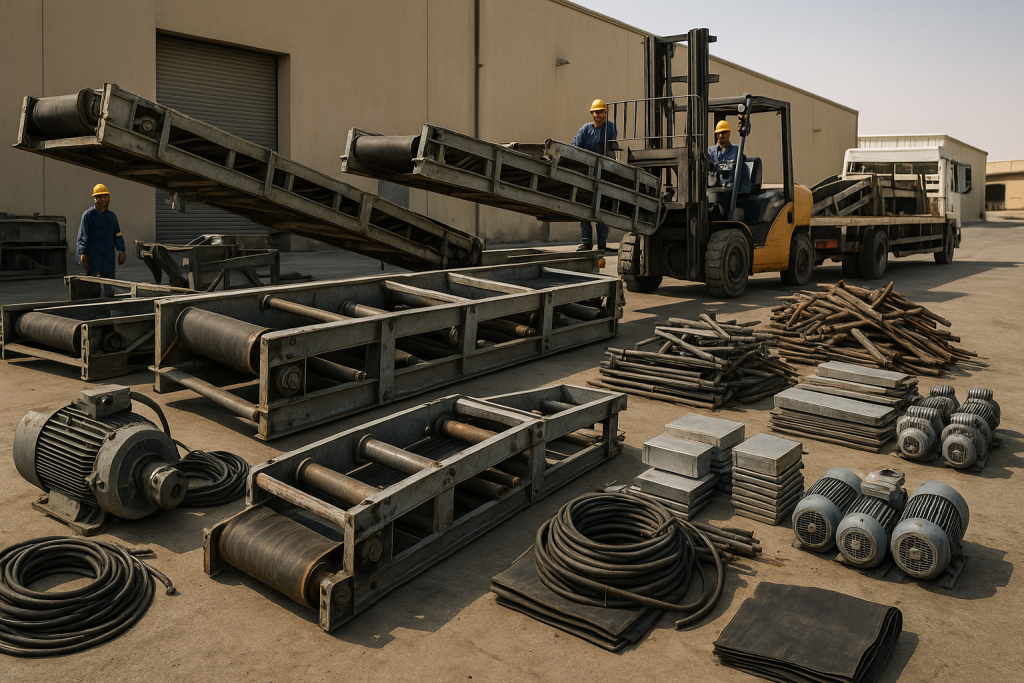
Industrial conveyors vary considerably. A belt conveyor may have long steel frames, rubber or PVC belting, rollers, gearboxes, motors, and control cabinets. Roller, chain, screw, and bucket conveyors can contain different grades and proportions of steel, stainless steel, aluminum, copper cable, and mechanical components.
- Structural metal: frames, legs, platforms, braces, and supports.
- Mechanical components: rollers, chains, shafts, bearings, pulleys, and gearboxes.
- Electrical equipment: motors, cables, switches, sensors, and control panels.
- Non-metal material: belting, rubber lagging, plastic guards, and product residue.
- Site connections: anchors, overhead supports, chutes, and adjoining machinery.
Identifying these elements prevents reusable equipment, higher-value non-ferrous metals, and ordinary ferrous scrap from being mixed together. It also shows which parts require controlled lifting or specialist isolation before dismantling begins.
6 Smart, Essential Steps for industrial conveyor dismantling Dammam
A successful project begins with site information and follows a controlled sequence rather than cutting equipment into random pieces.
- Survey the conveyor and define the scope. Record its length, width, height, construction, approximate weight, and connections to other equipment. Confirm whether the requirement covers one conveyor, an entire production line, or associated platforms, chutes, motors, and controls.
- Arrange shutdown and energy isolation. The site operator should have authorized personnel disconnect electricity, release stored mechanical tension, and apply its required lockout procedures. Dismantling should not start while belts, chains, elevated loads, or connected machinery can move unexpectedly.
- Plan access, lifting, and removal routes. Check door widths, ceiling clearance, floor capacity, loading areas, traffic restrictions, and space for lifting equipment. Long frames may need to be divided into manageable sections before they can leave the building.
- Remove components in a stable sequence. Detach guards, belts, electrical items, drives, rollers, and supported sections without undermining the remaining structure. Suspended conveyors, mezzanine-mounted lines, and heavy drive assemblies need especially careful sequencing.
- Separate metals and non-metal contamination. Keep carbon steel, stainless steel, aluminum, motors, copper-bearing cables, and control equipment apart where practical. Remove loose product, oil containers, rubber belts, and unrelated waste rather than mixing them into a metal load.
- Prepare sections for collection. Group dismantled material near an accessible loading point, while keeping emergency routes and daily operations clear. Share the estimated quantity, largest component dimensions, available loading support, and preferred collection schedule with the scrap buyer.
Sorting Conveyor Components for Recycling
Sorting can make assessment clearer and reduce unnecessary handling. Most conveyor frames and rollers are ferrous because a magnet is attracted to carbon steel or iron. Stainless components may require closer grade assessment, while aluminum is lighter and non-magnetic. Copper is commonly found in power cables and motor windings but should not be extracted through unsafe burning or crude processing.
- Place clean structural steel and iron together.
- Keep stainless steel separate from painted carbon steel.
- Group aluminum guards, profiles, or trays separately.
- Retain complete motors and gearboxes for proper evaluation.
- Separate rubber belting and production residue from metal.
Components do not need to look new. Scratches, worn paint, oxidation, and ordinary industrial wear are expected in machinery scrap. However, excessive oil, chemicals, insulation, food residue, concrete, or mixed waste can affect handling and recycling preparation.
How Conveyor Scrap Is Evaluated
A quotation for industrial conveyor dismantling Dammam is not based on one universal rate. The assessment must consider both recoverable material and the practical work needed to release, move, and load it. Current metal market conditions can also affect the resulting quotation.
- Types and grades of metal present
- Estimated recoverable metal quantity
- Level of contamination or attached non-metal material
- Condition and completeness of motors or equipment
- Height, anchoring, and accessibility of the conveyor
- Cutting, lifting, labor, transport, and loading requirements
Clear images of the complete line are more useful than close-ups alone. Include the drive unit, supports, loading route, stairs or mezzanines, and the area where a collection vehicle could stand. Metal Scrap Dammam can then discuss the project details and provide a current quotation without relying on invented per-kilogram figures.
Industrial Site Coordination in Dammam
For industrial conveyor dismantling Dammam projects, coordination matters because removal may take place beside active production, warehouse traffic, utilities, or other machinery. The facility contact should identify working-hour restrictions, induction requirements, loading access, operational boundaries, and any components that must remain in service.
Dammam and its industrial areas contain varied factory and logistics environments, from compact workshops to large production and storage sites. Conditions can also include heat, dust, limited indoor maneuvering space, and busy vehicle routes. A site-specific plan is therefore more useful than assuming every conveyor can be handled in the same way.
Responsible Recycling and Waste Reduction
Recovering conveyor steel, stainless steel, aluminum, copper-bearing equipment, and other metals returns useful material to recycling streams. Proper separation also prevents belts, oils, product residue, and mixed waste from reducing the quality of recyclable loads. The broader resource-conservation principles discussed by the UN Environment Programme support responsible material management and waste reduction.
Some conveyor parts may also be suitable for reuse if their ownership, condition, and intended destination are clear. Reuse and scrap recycling should be considered separately so that serviceable items are not automatically damaged during removal.
From Initial Assessment to Scrap Collection
A practical industrial conveyor dismantling Dammam workflow starts with photographs, dimensions, location, material details, and the required clearance date. A site discussion or inspection may then be needed to confirm access, dismantling boundaries, loading arrangements, and whether the customer has already completed electrical or mechanical isolation.
After the scope is agreed, material can be dismantled, sorted, moved to the loading area, and collected according to site conditions. For related machinery and industrial scrap enquiries, review Metal Scrap Dammam services and provide enough information for a relevant assessment.
Frequently Asked Questions
Which parts of an industrial conveyor can be recycled?
Steel frames, rollers, shafts, chains, stainless components, aluminum guards, motors, gearboxes, control cabinets, and copper-bearing cable may be recyclable. Rubber belts, plastics, oils, and process residue should be identified and separated because they are not the same material category as metal scrap.
Should our facility cut the conveyor into pieces before requesting collection?
Not necessarily. Premature cutting can make components unstable, damage items intended for reuse, or create sections that remain difficult to load. First provide overall dimensions, photographs, anchor details, and access information so a suitable removal and sectioning approach can be discussed.
What information is needed to request a quotation?
For industrial conveyor dismantling Dammam, provide the site area, conveyor type, approximate dimensions, number of lines, materials, photographs, shutdown status, floor or elevated position, vehicle access, loading support, and required completion period. Mention attached platforms, chutes, cables, or adjacent equipment.
Can conveyor removal be coordinated around factory operations?
Scheduling can be discussed based on the project’s scope and site restrictions. The facility should explain production hours, internal traffic, restricted zones, permit procedures, and shutdown windows. These details help determine whether dismantling should be phased and where removed sections can be staged safely.
Plan Your Conveyor Removal
Organized dismantling makes an obsolete conveyor easier to assess, separate, load, and recycle. To discuss industrial conveyor dismantling Dammam for a factory, warehouse, workshop, or industrial clearance, send photographs and project details to Metal Scrap Dammam.
Metal Scrap Dammam
https://metalscrapdammam.com/
Call / WhatsApp: +966532510699
Email: info@metalscrapdammam.com