boiler scrap removal Dammam: 6 Smart, Essential Steps
Removing a decommissioned industrial boiler is not the same as collecting loose steel. For facilities considering boiler scrap removal Dammam, the immediate priorities are to confirm what is being removed, make the unit safe, identify recoverable metals, assess access, and coordinate suitable lifting and transport. A clear scope helps a scrap buyer evaluate the boiler and avoids preventable delays at the site.
Metal Scrap Dammam supports industrial customers seeking assessment, collection, and responsible recycling options for retired boilers and associated equipment. Useful quotation details normally include photographs, approximate dimensions, location within the site, known materials, dismantling status, and loading conditions.
What Is Included in Industrial Boiler Scrap?
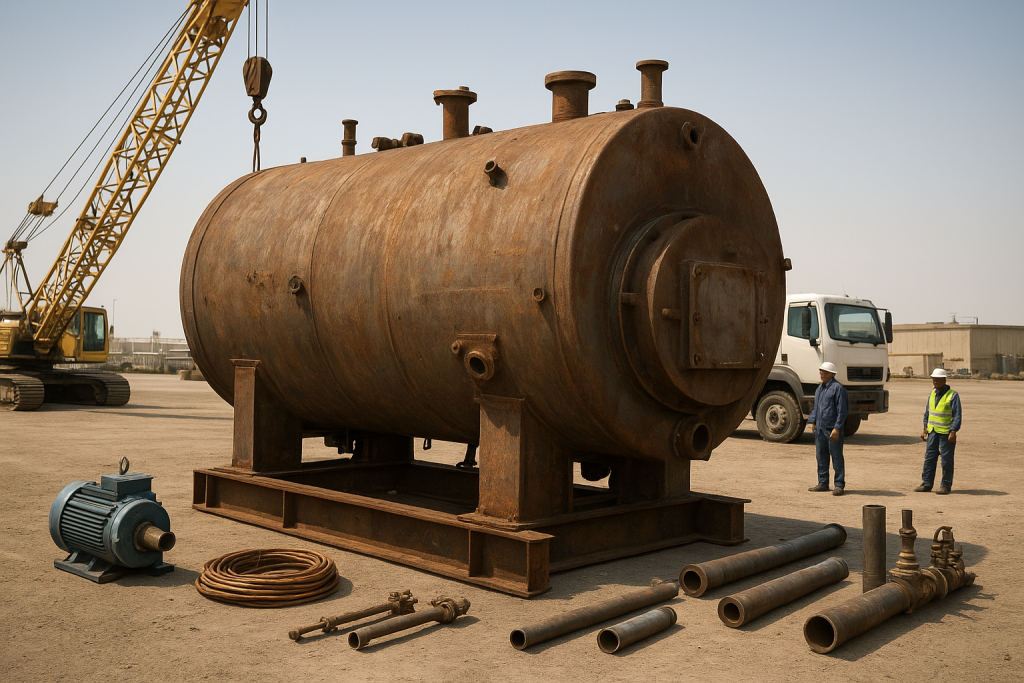
An industrial boiler may contain much more than one large steel shell. Its construction depends on the boiler design, operating purpose, fuel system, age, and modifications made during service. Carbon steel usually forms most of the shell, pressure vessel, tubes, headers, supports, and base frame, while smaller components may contain stainless steel, copper, aluminum, brass, or cast iron.
- Main body: steel shell, drums, tube plates, tubes, headers, and structural supports.
- Burner assembly: metal housings, fans, shafts, motors, valves, and fuel-system components.
- Auxiliary equipment: feedwater pumps, tanks, heat exchangers, control panels, and connected pipework.
- Non-ferrous material: copper cable, motor windings, brass fittings, and aluminum parts where present.
- Non-metal material: refractory lining, insulation, seals, scale, sludge, and residual operating material.
These materials should not automatically be treated as one grade. Separating clean non-ferrous components from bulk ferrous scrap can improve identification and evaluation. Insulation, refractory, liquids, and process residues also require attention because they can affect handling, weight, recycling preparation, and site safety.
6 Essential Steps for boiler scrap removal Dammam
A planned sequence is especially important when a boiler sits inside an operating plant, utility room, workshop, or restricted industrial compound.
- Define the removal scope. Confirm whether the project covers only the boiler body or also includes burners, pumps, tanks, platforms, pipework, control cabinets, and base structures. Record approximate dimensions, estimated weight if documented, and whether the boiler must be removed whole or in sections.
- Complete safe decommissioning. The site owner or appropriately competent contractor should shut down the system, isolate energy sources, disconnect fuel and electrical supplies, relieve pressure, drain liquids, and confirm that the equipment is safe to approach. A scrap collection team should not be expected to treat an operating or pressurized boiler as ordinary scrap.
- Identify and separate materials. Keep copper cable, electric motors, stainless parts, brass valves, and aluminum components separate when practical. Do not mix clean metal with refractory debris, insulation, oil, sludge, general waste, or unrelated demolition material. Clear sorting makes the load easier to assess.
- Survey access and lifting needs. Check door widths, overhead clearance, road access, floor condition, nearby equipment, crane positioning, forklift capacity, and safe truck parking. If cutting is necessary, identify where it can be performed without damaging live services or interfering with plant operations.
- Request an informed assessment. Provide current photographs, equipment tags if available, material details, quantities, contamination information, and a description of the loading area. The buyer can then consider recoverable material alongside dismantling, labor, lifting, transport, and collection requirements.
- Coordinate removal and handover. Agree on site contacts, entry procedures, working boundaries, collection timing, loading responsibilities, and the condition in which the area should be left. Keep scrap grouped by agreed categories so the boiler sections and associated components can be loaded efficiently.
How Boiler Scrap Is Evaluated
A quotation for boiler scrap removal Dammam is influenced by more than the boiler’s outside size. A large unit can contain valuable recyclable steel, but difficult access, heavy refractory, mixed waste, or extensive cutting can materially change the removal requirements.
- Type and grade of ferrous and non-ferrous metals
- Approximate recoverable metal quantity
- Condition, corrosion, scale, and attached non-metal material
- Oil, water, chemicals, sludge, or other contamination
- Whether components are sorted or mixed
- Cutting, lifting, loading, labor, and transport needs
- Current scrap-market conditions when the quotation is prepared
There is no responsible way to quote a universal rate without understanding these factors. Recent photos and accurate site information are useful for an initial review, while complex or unusually large equipment may require a closer assessment. For a current quotation, contact Metal Scrap Dammam with the available boiler and access details.
Preparing the Boiler and Collection Area
Before boiler scrap removal Dammam is scheduled, the facility should confirm that operational hazards and non-scrap contents have been addressed. Unknown insulation or lining material should be identified through the site’s appropriate procedures rather than broken apart or mixed into a metal load. Residual liquids and process chemicals should also be managed by suitable personnel.
- Disconnect and clearly isolate electrical, fuel, steam, water, and compressed-air services.
- Remove loose records, tools, packaging, and unrelated general waste.
- Keep dismantled copper, motors, stainless parts, and bulk steel in separate groups.
- Provide unobstructed access for agreed trucks and lifting equipment.
- Inform the collector about security checks, restricted hours, permits, and traffic controls.
Avoid cutting pressure-containing sections until their status has been confirmed. Facility teams should also protect nearby production assets, cables, pipe racks, walls, and floors. Good preparation reduces unnecessary material handling and helps the collection team bring equipment suited to the actual job.
Responsible Recycling of Retired Boilers
Once prepared, boiler steel can enter a metal-recycling stream instead of occupying plant storage or being mixed with general disposal material. Motors, cables, brass fittings, stainless components, and other distinct metals can also be directed to appropriate processing when they are correctly identified and separated.
This approach supports resource conservation and waste reduction by retaining usable metal as a secondary raw material. The broader importance of sustainable material management is also reflected in the work of the UN Environment Programme. Responsible recycling still begins at the site: hazardous or unidentified residues must not be concealed inside an apparently clean scrap load.
Industrial Coordination in Dammam
For boiler scrap removal Dammam, local planning should reflect the realities of industrial compounds: controlled entry, active production zones, heavy vehicle movement, limited loading windows, and equipment located inside enclosed utility areas. Facilities in Dammam’s industrial districts may also need to coordinate the work with maintenance, safety, security, procurement, and transport teams.
Provide the exact site area and access instructions when requesting service; this does not require publishing sensitive facility information. Customers can review Metal Scrap Dammam services and share project-specific details privately. For collection elsewhere in the Eastern Province, availability and logistics should be confirmed for the particular site rather than assumed.
Frequently Asked Questions
Can an industrial boiler be collected as one complete unit?
Possibly, but this depends on its dimensions, weight, lifting points, structural condition, route to the loading area, and suitable transport. A boiler installed inside a building may need controlled dismantling into manageable sections. Photographs of the unit and its full removal route help determine a practical approach.
Should refractory lining and insulation be removed first?
Clean separation can help, but unknown material should not be disturbed without appropriate identification and site procedures. Refractory and insulation add non-metal weight and may affect cutting or recycling preparation. Tell the buyer what is attached and provide any available equipment or maintenance records.
What determines the scrap value of a retired boiler?
Evaluation can depend on metal type, grade, recoverable quantity, contamination, condition, sorting, current market conditions, and the cost of cutting, lifting, loading, and transport. Copper, brass, stainless steel, and motors should be identified separately when present. A final quotation should reflect the actual project scope.
What information is needed to arrange boiler scrap removal Dammam?
Share boiler photographs, approximate dimensions, quantity, known weight if documented, installation location, dismantling status, attached equipment, access restrictions, and available lifting support. Also disclose insulation, refractory, liquids, sludge, or other residues. Clear information allows the removal and collection requirements to be reviewed realistically.
Request Boiler Scrap Assessment and Collection
For a practical discussion about boiler scrap removal Dammam, contact Metal Scrap Dammam. Send photographs and basic site information so the boiler’s materials, condition, access, loading needs, and collection scope can be considered before a quotation is prepared.
- Call / WhatsApp: +966532510699
- Email: info@metalscrapdammam.com
- Website: https://metalscrapdammam.com/