Brass Scrap Selling Guide for Businesses in Dammam
If your factory, workshop, or construction site needs a reliable buyer, this guide explains how to work with a brass scrap buyer Dammam to get the process right. Selling brass scrap can be straightforward when you prepare materials, understand local logistics, and use a professional service that handles collection, weighing and responsible recycling.
Why professional scrap handling matters for businesses
Commercial quantities of brass—valves, fittings, tubing, and offcuts—require safe handling, accurate weighing, and clear documentation. Professional scrap handlers reduce on-site disruption during factory clearance, protect staff from sharp edges, and arrange compliant transport to recycling facilities. For warehouses, contractors, and facility managers, efficient scrap collection translates into reclaimed space, documented waste diversion, and fewer safety hazards.
Working with a brass scrap buyer Dammam: 7 Easy Tips
-
Sort and separate by type
Before scheduling collection, separate brass from mixed metals. Remove heavy contamination (plastics, wood) and segregate fittings, sheets, and cable ends. Buyers often pay more for clean, well-sorted bundles because less onsite processing is required.
-
Check for non-metal attachments and hazardous components
Look for rubber seals, insulation, electrical components or PCB elements and remove them. Items with oil, chemical residue, or asbestos-containing parts require special handling—disclose these to your collector so they can plan compliant removal.
-
Prepare documentation and access
Have basic details ready: company name, site contact, approximate weight, and access instructions. When you notify a brass scrap buyer Dammam, clear loading areas and provide forklift access if available—this speeds collection and reduces time on site.
-
Request transparent weighing and paperwork
Ask for vehicle tare and gross weight measurements and a written receipt that lists materials collected. Clear documentation protects both parties and helps facility managers track waste diversion for compliance and corporate reporting.
-
Agree on acceptance criteria and contamination tolerance
Discuss what level of contamination is acceptable and whether certain items (for example, brass mixed with heavy steel) will be rejected. That clarity avoids surprises when the load is weighed and evaluated by the buyer.
-
Plan logistics: pickup, scheduling, and safety
Coordinate a pickup window that fits your operations. Professional buyers bring suitable trucks, lifting equipment, and PPE. Confirm safety protocols for site workers during loading and ensure traffic flow is managed for large collections.
-
Choose responsible recycling and end-of-life handling
Ask where your brass will go and whether the buyer recycles domestically or exports for processing. Responsible buyers prioritize downstream recycling pathways that recover value and reduce environmental impact.
How the sale and pickup process generally works
Typical steps include an initial assessment (often a photo or site visit), an agreed time for pickup, on-site weighing and inspection, and issuance of a receipt or material report. For large factory scrap or warehouse clearance, buyers may provide containerized collection or full truckload removal. Always confirm whether the buyer provides a contract or waste transfer note for your records.
Benefits of professional scrap handling for commercial clients
- Faster clearance of storage or production areas
- Reduced safety risks from loose or sharp metal
- Accurate documentation for asset recovery and compliance
- Better recovery rates for clean, separated brass
Environmental advantages and responsible recycling
Recycling brass conserves natural resources and energy compared with primary production. Professional collection ensures materials reach appropriate facilities and reduces landfill disposal. For more information on global environmental guidance, see the UN Environment Programme.
Local considerations for Dammam and the Eastern Province
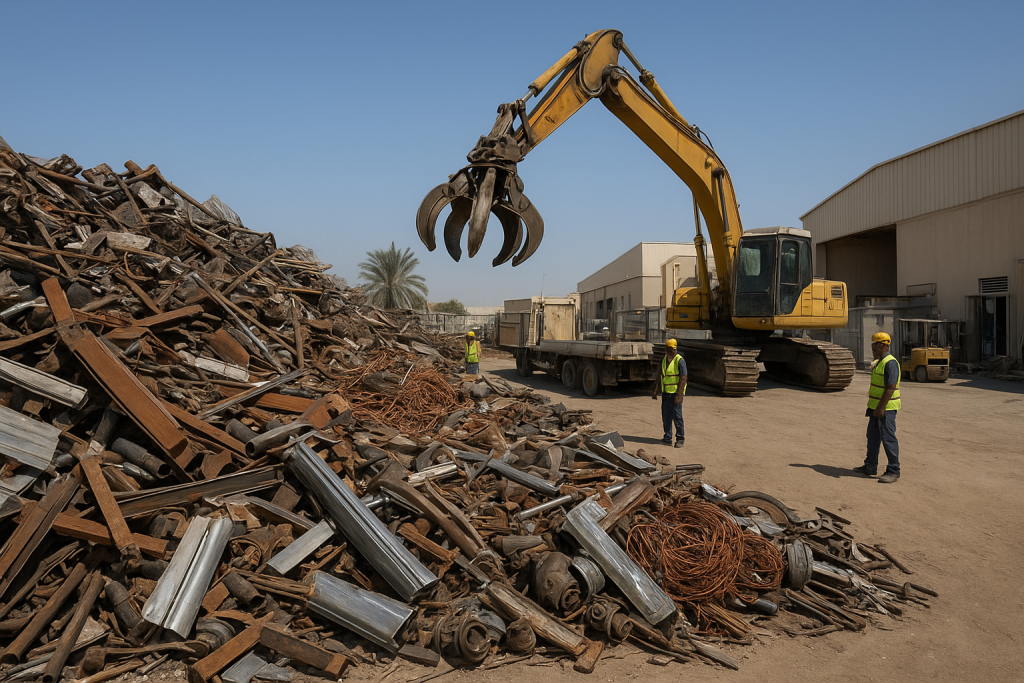
Businesses in Dammam, Khobar, Dhahran and nearby industrial areas often deal with large volumes from manufacturing, shipping, and construction. Choose a buyer familiar with local traffic patterns, industrial access points, and port-side logistics. Working with a regional provider speeds collections and avoids coordination issues during busy industrial hours.
Who should read this guide?
Useful for factories, warehouses, contractors, workshops, construction companies, facility managers and commercial offices, this guide explains practical steps to sell brass scrap safely and efficiently. Whether planning a one-off warehouse clearance or regular scrap pickup, preparation reduces delays.
FAQs
1. What counts as brass scrap?
Brass scrap typically includes valves, fittings, rods, tubing, and offcuts made of copper-zinc alloys. Confirm with your buyer whether mixed-metal assemblies are accepted.
2. How should businesses prepare heavy or bulky brass items?
Provide clear access, remove non-metal attachments, and, where possible, break larger assemblies into manageable pieces. Inform the buyer if cranes or forklifts are needed.
3. Will I receive documentation for the collected scrap?
Professional collectors issue weight tickets and receipts. Ask for an itemized material report if you require evidence for waste diversion or asset recovery.
4. Can households sell small amounts of brass?
Many buyers focus on commercial volumes, but some accept household or mixed loads. Contact the buyer to confirm minimum quantities and any special requirements.
Conclusion and next steps
Following these 7 easy tips will streamline sales and pickups with a brass scrap buyer Dammam and help your business recover value while meeting safety and environmental expectations. For reliable collection, clear paperwork, and specialist handling, contact Metal Scrap Dammam services at the link below to arrange an assessment or pickup.
Contact
To schedule a collection or get a site consultation, email info@metalscrapdammam.com or call/WhatsApp +966532510699. Our team can advise on preparation, access and documentation for commercial brass collections in Dammam and the Eastern Province.