industrial furnace scrap removal Dammam: Practical Site Guide
An obsolete, damaged, or replaced furnace can occupy valuable production space and contain substantial recoverable metal. A well-planned industrial furnace scrap removal Dammam project identifies the equipment, separates valuable components, controls site access, and coordinates dismantling with the facility’s shutdown and safety procedures. The immediate goal is not simply to remove a large machine; it is to create a workable recovery plan for its different materials.
Metal Scrap Dammam supports factories, workshops, contractors, and facility teams seeking assessment, collection, and recycling options for furnace-related scrap. Before requesting a quotation, customers can review the practical points below and contact Metal Scrap Dammam services with equipment details, photographs, dimensions, and access information.
What Industrial Furnace Dismantling Involves
Industrial furnaces are not uniform pieces of scrap. A furnace may have a carbon-steel outer shell, stainless steel in heat-exposed areas, cast iron doors, copper power connections, electric motors, burners, fans, control cabinets, ducts, and structural supports. Electric resistance, induction, heat-treatment, and fuel-fired units can each present a different combination of recoverable materials.
They may also contain refractory brick, ceramic fibre, insulation, scale, process residue, oil, or attached non-metallic equipment. These materials should not be mixed automatically with metal scrap. The site owner should identify the previous process, arrange shutdown and isolation through authorized personnel, and disclose known residues before dismantling or collection is planned.
6 Essential Steps for industrial furnace scrap removal Dammam
The following six steps provide a practical framework. The final method should reflect the furnace design, site rules, available lifting equipment, and whether removal is completed whole or in controlled sections.
- Define the scope and ownership. Confirm which furnace, platforms, ducts, burners, control panels, cables, motors, and foundations are included. Mark any components that must remain connected to production. Clear ownership and scope reduce disputes and prevent useful plant assets from being removed with scrap.
- Complete shutdown and isolation. The facility’s authorized team should cool the furnace, disconnect electrical power, isolate fuel or gas lines, and address stored energy. Known process residues should be assessed before work starts. Scrap handling should begin only after the equipment has been formally released under the site’s procedures.
- Prepare a material and component inventory. Record the furnace type, approximate dimensions, construction, visible attachments, and condition. Photographs of identification plates, access routes, steel shells, copper connections, drives, and control cabinets help a scrap buyer understand the likely material mix without assuming that every component has the same grade or value.
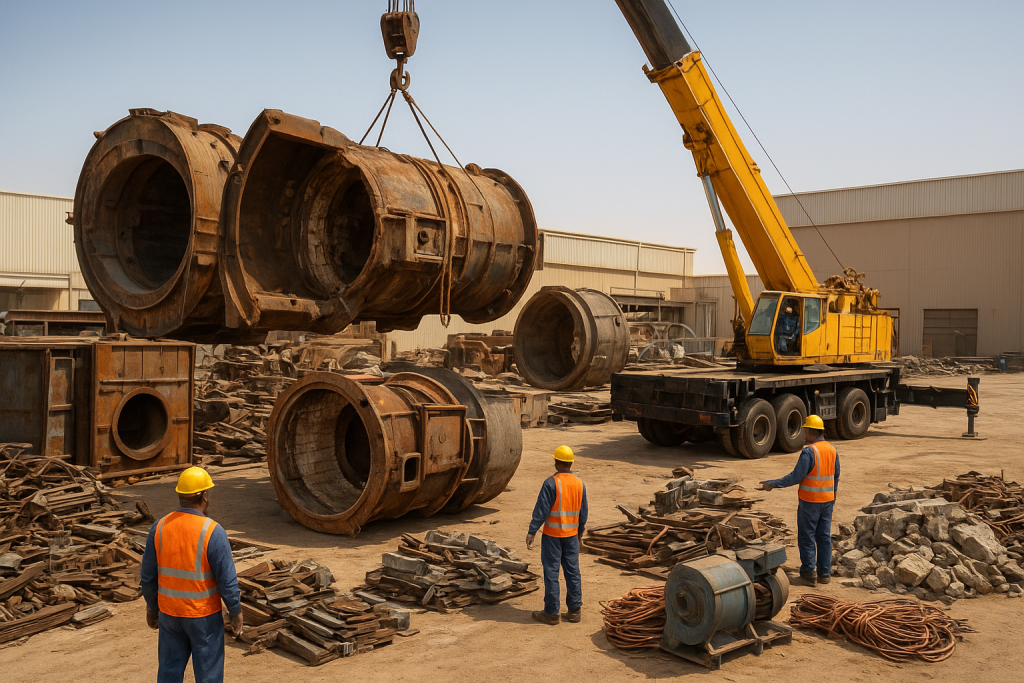
- Plan dismantling, lifting, and access. Determine whether the unit can leave whole or needs sectional removal. Consider doorway clearance, overhead restrictions, floor capacity, crane or forklift access, cutting permissions, loading space, and vehicle positioning. Any specialist dismantling or hot work should be handled by competent, site-approved personnel.
- Separate metals and non-metallic material. Keep carbon steel, stainless steel, copper-bearing parts, motors, and electrical equipment segregated where practical. Refractory, insulation, ash, and production residue should be managed separately. Better separation supports clearer assessment and avoids reducing a clean metal load with unnecessary contamination.
- Confirm evaluation and collection arrangements. Agree on the included materials, loading responsibilities, removal sequence, weighing approach, and site documentation before dispatch. Share access hours and induction requirements. This allows vehicles and lifting resources to be matched to the actual load rather than estimated from the furnace exterior alone.
Sorting Furnace Components for Scrap Recovery
The heavy outer casing may dominate the load, but smaller components can contain different metals and should be identified before everything is combined. Relevant material groups can include:
- Carbon steel: shells, frames, skids, platforms, guards, ducts, and structural supports.
- Stainless steel: selected chambers, trays, heat-resistant panels, flues, or process-contact parts.
- Copper-bearing items: busbars, power cables, induction coils, windings, and electrical connections.
- Machinery components: motors, blowers, gearboxes, burners, valves, and cast iron doors.
- Non-metallic material: refractory brick, insulation, ceramic components, residue, and attached plastics.
Visual appearance alone may not establish a metal grade. Stainless steel can resemble coated carbon steel, while cables may vary in conductor material and insulation content. Keep uncertain components separate for assessment. Do not remove protective coatings, insulation, or refractory by unsafe methods merely to make the load look cleaner.
How Furnace Scrap Is Evaluated
A quotation for industrial furnace scrap removal Dammam may consider both the recoverable material and the work required to collect it. A complete description gives the buyer a better basis for evaluation than a single photograph of the assembled furnace.
- Metal type, grade, and estimated quantity
- Purity and separation of recoverable components
- Condition, corrosion, coatings, and attached residue
- Refractory, insulation, and other non-metallic content
- Dismantling, cutting, lifting, and loading requirements
- Access conditions and prevailing scrap market conditions
No fixed rate suits every furnace. A clean, sorted load differs from a complete unit containing refractory and mixed attachments. Current quotations should therefore be based on available site information and, when appropriate, an inspection. Customers should clarify whether transport, lifting, labour, or specialist dismantling is included in the proposed arrangement.
Dammam Industrial Site Coordination
For industrial furnace scrap removal Dammam facilities should plan around production schedules, security procedures, vehicle access, and contractor controls. Industrial sites in Dammam and the wider Eastern Province may have busy yards, restricted loading zones, or operating equipment near the removal route. Sharing a site map, gate restrictions, available lifting capacity, and collection window helps define a realistic method.
The facility manager should also identify internal responsibilities. Maintenance may manage isolation, safety staff may control permits, security may approve entry, and procurement may authorize disposal. Coordinating these parties before collection can reduce avoidable waiting and protect nearby machinery, floors, utilities, and pedestrian routes.
Responsible Recycling and Waste Reduction
Responsible industrial furnace scrap removal Dammam work keeps recoverable steel and non-ferrous metals separate from refractory and process waste wherever practical. Sorted metals can move into appropriate recycling channels, while non-metallic or contaminated material can be directed to suitable handling routes based on its condition and the site’s requirements.
This approach supports resource conservation and avoids treating an entire furnace as undifferentiated waste. Broader information about sustainable material use, waste reduction, and environmental responsibility is available from the UN Environment Programme.
Frequently Asked Questions
Which parts of an industrial furnace may be recoverable as scrap?
Common recoverable parts include steel shells, frames, stainless panels, cast iron doors, motors, blowers, copper cables, busbars, and selected control equipment. The actual material mix depends on the furnace design. Refractory, insulation, ceramics, and process residue are normally assessed separately from metal.
Does the furnace need to be dismantled before requesting a quotation?
Not necessarily. Start with photographs, dimensions, furnace type, known weight, material details, and access information. State whether the unit is disconnected and whether site-approved dismantling resources are available. This helps determine if an inspection or additional removal planning is needed.
How is a furnace removal quotation determined?
The evaluation for industrial furnace scrap removal Dammam can depend on metal grades, quantity, sorting, contamination, market conditions, access, lifting needs, and collection responsibilities. Because these factors vary, request a current quotation rather than relying on a general scrap rate.
Can removal be coordinated while the facility remains operational?
It may be possible when the facility establishes safe boundaries, isolation, access controls, and an approved work schedule. The site team should identify conflicts with production traffic, nearby equipment, utilities, and loading activity before agreeing on the dismantling and collection window.
Request Furnace Scrap Assessment and Collection
For industrial furnace scrap removal Dammam enquiries, provide the furnace type, photographs, dimensions, location within the site, shutdown status, material information, and loading constraints. Metal Scrap Dammam can review the supplied details and discuss suitable assessment, sorting, and collection arrangements without relying on unsupported price assumptions.
Metal Scrap Dammam
https://metalscrapdammam.com/
Call / WhatsApp: +966532510699
Email: info@metalscrapdammam.com