industrial valve recycling Dammam: 6 Smart Essential Steps
Obsolete valves should not remain indefinitely in plant stores, maintenance workshops or outdoor laydown areas. For businesses seeking industrial valve recycling Dammam, the practical objective is to identify the valves, remove process hazards, separate valuable alloys and arrange suitable collection. This applies to planned replacement programs, shutdown maintenance, factory clearance and accumulated machinery scrap.
Metal Scrap Dammam can assess valve lots using photographs, descriptions and site information before discussing collection. Good preparation supports a clearer evaluation and reduces avoidable handling during removal.
Why Obsolete Industrial Valves Require Careful Handling
An industrial valve is more complex than a simple piece of steel scrap. Its body, bonnet, trim, stem, seat, fasteners and actuator may contain different materials. A carbon steel body could contain stainless internal parts, while a control valve may also include an aluminum pneumatic actuator, copper wiring or electronic accessories.
- Large valves may be heavy, awkward or difficult to lift safely.
- Closed cavities can retain liquid, sludge, scale or process residue.
- Paint, insulation, rubber seats and attached gaskets affect material cleanliness.
- Mixed alloy grades can lose sorting value when combined indiscriminately.
These issues make identification, isolation and access planning important before a scrap buyer or collection vehicle arrives.
Valve Types and Recoverable Materials
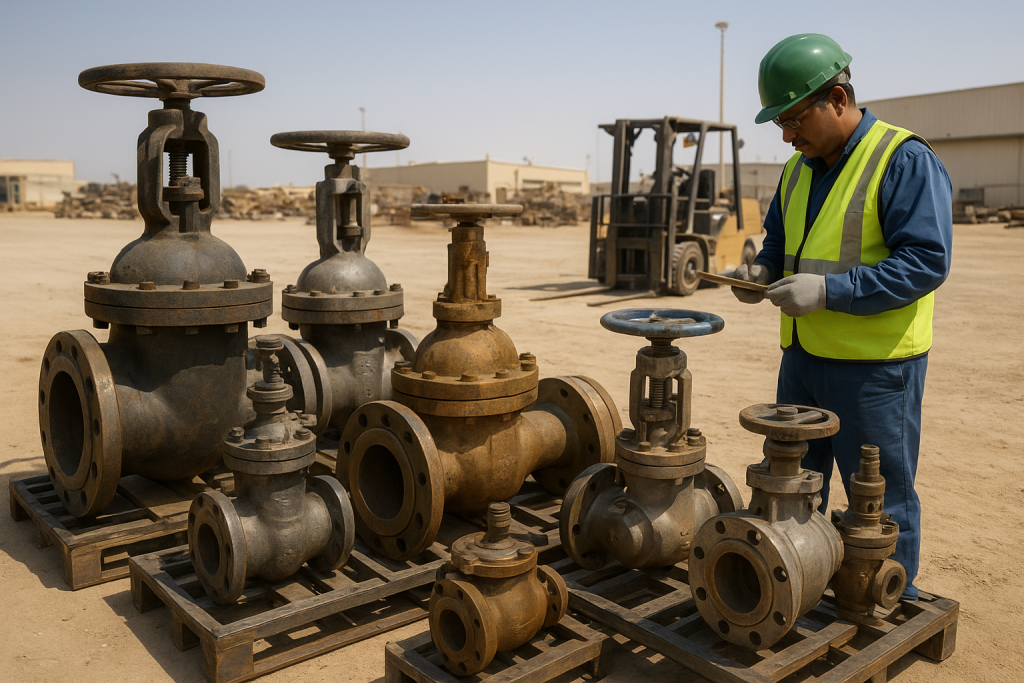
Common obsolete equipment includes gate, globe, ball, butterfly, check, plug and control valves. Pressure-reducing and relief valves may also enter a scrap stream after authorized replacement. Size alone does not determine value; composition, condition, quantity and removal requirements all matter.
- Carbon steel and cast iron: Often found in general pipelines, water systems and industrial utility services. These are ferrous and normally respond strongly to a magnet.
- Stainless steel: Used where corrosion resistance, hygiene or process compatibility is required. Different stainless grades should remain separated when they can be reliably identified.
- Brass and bronze: Common in smaller valve bodies, internal trim and some marine or utility applications. Their color may help identification, but coatings and dirt can conceal the base metal.
- Special alloys and mixed assemblies: Certain process valves contain alloy steel, nickel-bearing components or dissimilar trim. Markings and maintenance records are more dependable than visual assumptions.
Actuators should be assessed separately where practical. Electric actuators can contain motors, cables and control components, while pneumatic units may include aluminum housings and steel mechanisms.
6 Essential Steps for industrial valve recycling Dammam
The following six steps help facility managers, maintenance teams and contractors prepare a valve lot without unnecessary dismantling or mixing.
- Confirm that the valves are released for disposal. Check asset records, maintenance approvals and ownership before moving anything. Segregate reusable spares from condemned equipment so functioning assets are not accidentally included in the scrap load.
- Isolate, depressurize and drain the equipment. Qualified site personnel should disconnect valves under the facility’s operating and safety procedures. Drain trapped media, open cavities where authorized and address process residue before the equipment enters a general metal recycling stream.
- Identify valve bodies and attached components. Record valve type, approximate dimensions, body markings, alloy information and actuator type. Photographs of nameplates, casting marks and the complete lot can support an initial assessment without relying on guesswork.
- Sort by material and assembly type. Keep stainless steel, carbon steel, cast iron and copper-alloy valves apart when identification is reliable. Separate loose actuators, cables and clearly different metals, but avoid unsafe cutting or dismantling merely to expose internal trim.
- Prepare the collection area. Place smaller valves in stable metal bins or on suitable pallets. Position large units where lifting equipment can approach, and disclose narrow gates, overhead restrictions, soft ground, stairs or other access constraints.
- Share accurate load and pickup details. Provide estimated quantities, representative photographs, the site location, loading support and preferred collection window. Mention whether a forklift, crane, lifting accessories or additional labor may need to be considered.
A documented industrial valve recycling Dammam project allows both the site team and scrap collector to understand the material, hazards and loading conditions before removal begins.
How Obsolete Valve Scrap Is Evaluated
A quotation for industrial valve recycling Dammam may depend on body metal, verified grade, internal contamination, attached non-metallic parts, total quantity and current market conditions. Sorting quality also matters because a clean group of identifiable stainless or bronze valves is different from an unsorted load containing steel pipe, actuators, insulation and general factory waste.
Removal requirements can affect the overall assessment. Loose valves positioned beside a loading area are simpler to handle than units still installed in pipework or stored in a restricted plant room. Current photographs, approximate sizes, quantities and known specifications help Metal Scrap Dammam discuss a relevant quotation without inventing a rate per kilogram.
Collection and Industrial Site Coordination
When arranging industrial valve recycling Dammam, share the site’s entry procedure, working hours, vehicle restrictions and loading arrangements in advance. Confirm whether the valves are already disconnected and whether the facility will provide a forklift, crane or authorized rigging team. Heavy equipment should be moved only with suitable lifting methods and competent site supervision.
During an industrial scrap collection, the load may be checked against the description, separated where practical and prepared for transport. Visit Metal Scrap Dammam services to discuss obsolete valves, related machinery scrap and pickup requirements. Clear coordination is especially useful during shutdowns, warehouse clearance or time-sensitive maintenance work.
Responsible Recycling and Resource Recovery
Recovering steel, stainless steel, brass, bronze and aluminum from retired valves keeps useful metals in circulation. It also helps prevent abandoned equipment from occupying operational space or deteriorating outdoors. The UN Environment Programme provides broader information about resource efficiency, waste reduction and responsible material management.
Responsible handling begins before transport. Process residue, oils, insulation and other non-metal attachments should be identified rather than hidden within a load. A clean, correctly described scrap stream is easier to sort and route for further metal processing.
Dammam Industrial Context
industrial valve recycling Dammam is especially relevant to factories, fabrication workshops, utility contractors, warehouses and maintenance operations in Dammam industrial areas, including projects connected with Second Industrial City. Valves may accumulate after pipeline upgrades, plant modifications, equipment replacement or scheduled shutdown work.
Local planning should account for industrial gate access, traffic windows, equipment permits and the distance between stored material and the loading point. These practical details can be as important as the valve quantity when organizing an efficient removal.
Frequently Asked Questions
Can different industrial valve types be recycled together?
Gate, ball, butterfly, globe and check valves can form one collection, but they should be grouped by known body metal where practical. Keep stainless steel and copper-alloy valves separate from ordinary ferrous material, and identify attached actuators or electronics.
How should valves with process residue be prepared?
The facility’s authorized personnel should isolate, depressurize, drain and decontaminate them according to site procedures and the previous service medium. Tell the scrap buyer about any remaining residue or uncertainty before arranging pickup.
What information is needed to request a valve scrap quotation?
Provide photographs, quantities, approximate sizes, valve types, visible grade markings and the Dammam pickup location. Also explain whether the material is loose or installed, how it can be accessed and what loading equipment is available.
Should actuators be removed before collection?
Not always. Separating loose electric or pneumatic actuators can improve material identification, but dismantling should only occur when it is practical and authorized. Send photographs of complete assemblies so their construction and handling needs can be reviewed.
Arrange an Assessment for Obsolete Industrial Valves
To discuss industrial valve recycling Dammam, send Metal Scrap Dammam clear photographs, material details, approximate quantities and site-access information. The team can review the valve lot and discuss an appropriate assessment, pickup or industrial scrap removal arrangement.
- Business: Metal Scrap Dammam
- Website: https://metalscrapdammam.com/
- Call / WhatsApp: +966532510699
- Email: info@metalscrapdammam.com