transformer recycling Dammam: Industrial Transformer Disposal Guide
An unwanted industrial transformer is not ordinary mixed scrap. It may combine a steel tank and core, copper or aluminum windings, radiators, bushings, cables, insulation, and insulating liquid. For businesses seeking transformer recycling Dammam, the immediate priorities are electrical isolation, oil and contamination control, realistic material assessment, and a collection plan suited to the unit’s weight and location.
Metal Scrap Dammam helps factories, contractors, warehouses, and facility teams discuss transformer scrap assessment and removal requirements. Before arranging collection, customers can review Metal Scrap Dammam services and provide clear equipment, access, and condition details.
What Materials Are Found in an Industrial Transformer?
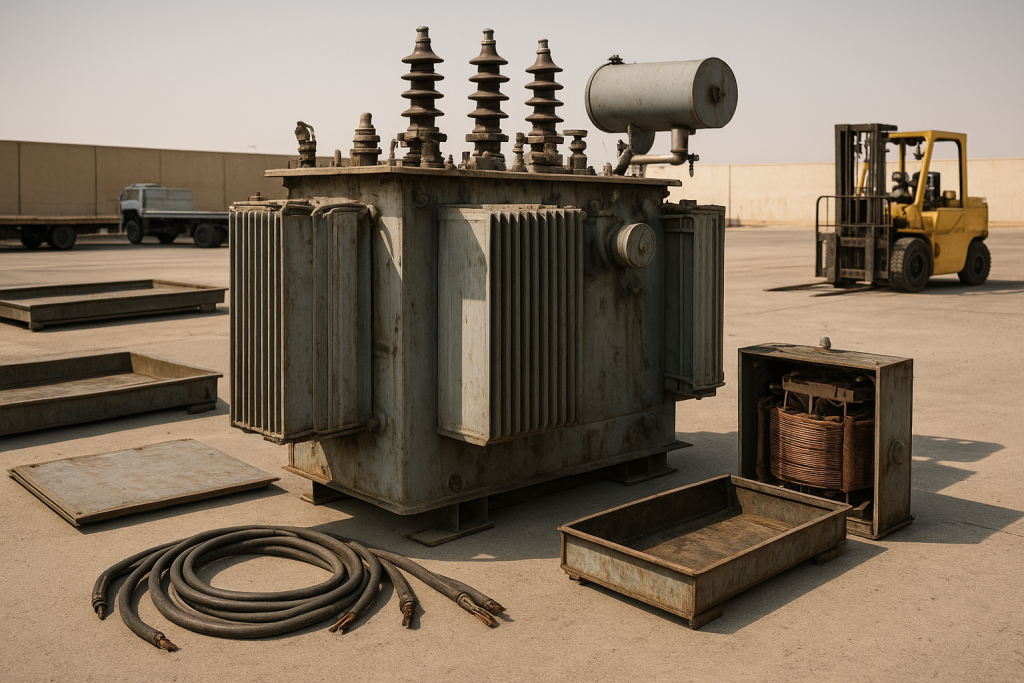
Transformer construction varies by capacity, design, age, and application. Common components include a welded steel enclosure, laminated electrical-steel core, cooling fins or radiators, terminals, cable connections, and internal windings. The windings may be copper or aluminum, but external appearance alone does not reliably confirm the conductor metal. Nameplates, technical records, and safe inspection findings can support identification.
Oil-filled units also contain insulating liquid and absorbent insulation materials. Dry-type transformers use different insulation systems but may still contain dust, resin, varnish, or damaged electrical components. These non-metallic materials affect dismantling and recycling preparation. A transformer should therefore be assessed as industrial equipment rather than valued only by its visible outer steel shell.
Planning for transformer recycling Dammam Projects
Disposal planning should begin only after the site owner confirms that the transformer is disconnected, de-energized, isolated from connected systems, and released for removal. Qualified site personnel should manage electrical isolation and any required verification. The unit’s oil status, signs of leakage, maintenance history, and available documentation should also be disclosed. Older or damaged equipment may require additional testing or specialist handling, so oil should never be drained, mixed, or discarded casually.
6 Essential Steps for Transformer Disposal and Recycling
A well-organized transformer recycling Dammam project follows six practical steps from initial identification through collection and material recovery.
- Confirm decommissioning status. Verify that authorized personnel have isolated the transformer and that it is no longer connected to electrical cables, busbars, foundations, or operating systems. Identify site rules, work permits, restricted areas, and any shutdown limitations before discussing physical removal.
- Record equipment information. Photograph the complete transformer, nameplate, radiators, terminals, base, and visible damage. Share the manufacturer-stated weight or capacity when readable, along with dimensions, unit quantity, winding information if documented, and whether oil remains inside. Avoid guessing hidden metal content.
- Check condition and contamination. Look for oil stains, damaged valves, corroded panels, cracked bushings, missing parts, or previous dismantling. Keep drain points closed and protect the surrounding surface. A leaking or fire-damaged unit needs a different collection plan from a clean, complete transformer.
- Prepare safe access. Measure gates, doorways, internal roads, overhead clearances, and the space around the equipment. State whether the transformer is at ground level, inside a plant room, on a plinth, or behind operating machinery. Reliable access information helps determine suitable loading equipment.
- Request an informed assessment. Provide photographs, location details, equipment records, condition, quantity, and removal constraints to the scrap buyer. Clarify whether the customer can load the unit or requires collection support. This allows recoverable materials and logistical costs to be considered together.
- Coordinate pickup and segregation. Agree on site contact details, arrival procedures, loading responsibilities, and the intended collection area. Loose radiators, cables, steel parts, and associated electrical scrap should be identified separately rather than hidden in mixed waste. Maintain oil containment throughout movement and loading.
How Transformer Scrap Is Evaluated
When discussing transformer recycling Dammam with a scrap buyer, value depends on more than transformer size. Relevant factors include verified or documented weight, copper or aluminum winding type, completeness, steel content, oil status, contamination, damage, quantity, and current metal market conditions. A complete unit may be assessed differently from a stripped tank, loose core, or pile of mixed transformer components.
Removal requirements also matter. Restricted gates, indoor positioning, weak access surfaces, lifting limitations, long cable disconnection work, or the need for special handling can affect collection planning. Customers should ask whether an assessment uses documented weight, verified weight, or another agreed basis. Accurate photographs and honest condition information make quotation discussions more useful.
Responsible Recycling and Material Recovery
After controlled decommissioning and collection, recoverable metals can be separated into suitable recycling streams. Steel housings and cores are ferrous materials, while copper or aluminum windings and certain cable components are non-ferrous. Bushings, insulation, oil residues, and contaminated absorbents should remain separate from clean metal wherever appropriate. Mixing these materials can reduce recoverability and create avoidable handling concerns.
Responsible recycling supports waste reduction and keeps usable metals in productive circulation. Guidance and wider context from the UN Environment Programme emphasize resource efficiency and sound waste management. For transformer owners, practical responsibility starts with preventing spills, preserving records, and choosing an orderly recovery route instead of uncontrolled dismantling or disposal.
Industrial Collection Considerations in Dammam
Planning transformer recycling Dammam operations requires attention to active industrial sites, truck access, security entry procedures, loading zones, and coordination with maintenance or facility teams. Transformers in Dammam industrial areas or the Second Industrial City may be located beside operating equipment, within substations, or in restricted utility spaces. Collection details should therefore be agreed before a vehicle or lifting arrangement reaches the site.
For projects elsewhere in the Eastern Province, transport distance and site conditions may influence feasibility and scheduling, but Dammam remains the primary service market. Customers should provide the exact collection area without implying that the transformer can be moved by ordinary warehouse equipment. Heavy units may require an appropriately rated forklift, crane, skates, or other equipment selected by competent personnel.
Frequently Asked Questions
Can an oil-filled transformer be collected without draining it?
That depends on its condition, transport requirements, and the agreed collection method. Do not drain oil merely to prepare the transformer as scrap. Report the liquid status, leaks, damaged valves, and available oil records so suitable containment and handling requirements can be considered before movement.
How can I identify copper or aluminum transformer windings?
Check the nameplate, technical documents, maintenance records, or original equipment specifications. Do not rely on transformer size or external color, and do not open an energized or oil-filled unit to inspect it. Where records are unavailable, describe the winding material as unconfirmed during assessment.
What details are needed to request a transformer quotation?
Provide clear photographs, nameplate information, approximate dimensions, documented weight if available, quantity, oil status, condition, collection location, and access details. For transformer recycling Dammam enquiries, also explain whether the unit is already disconnected and whether loading equipment is available at the site.
Can loose transformer parts be assessed with the main unit?
Yes, associated radiators, steel panels, cores, cables, terminals, and other components can be described during the enquiry. Keep different materials visible and reasonably sorted. State whether parts came from the same transformer and identify contamination, missing components, or prior dismantling so the assessment reflects their actual condition.
Arrange an Industrial Transformer Scrap Enquiry
To discuss transformer recycling Dammam for a decommissioned unit, send Metal Scrap Dammam the equipment photographs, nameplate details, quantity, oil condition, site access information, and preferred collection requirements. Clear information helps determine whether further inspection, preparation, loading coordination, or material separation may be necessary before an appropriate quotation can be considered.
Metal Scrap Dammam
https://metalscrapdammam.com/
Call / WhatsApp: +966532510699
Email: info@metalscrapdammam.com