tungsten carbide scrap buyer Dammam: A Practical Workshop Guide
Used carbide inserts, drills, end mills and wear components can retain recycling value after they are no longer suitable for machining. Before contacting a tungsten carbide scrap buyer Dammam, workshops should identify the material, separate it from ordinary tool steel and provide clear details about quantity and condition. Proper preparation makes assessment and collection planning more efficient.
This guide explains what commonly qualifies as carbide scrap, how to sort it and which factors may affect a quotation. It is intended for machine shops, toolrooms, maintenance contractors, factories and industrial stores in Dammam.
What Counts as Tungsten Carbide Scrap?
Cemented carbide is a hard composite commonly made from tungsten carbide particles held together by a metallic binder, often cobalt and sometimes nickel. It is not the same as ordinary ferrous tool steel, although carbide cutting pieces may be brazed or mechanically fixed to steel holders. Its density, wear resistance and brittleness make it useful for cutting, drilling, forming and abrasion-resistant applications.
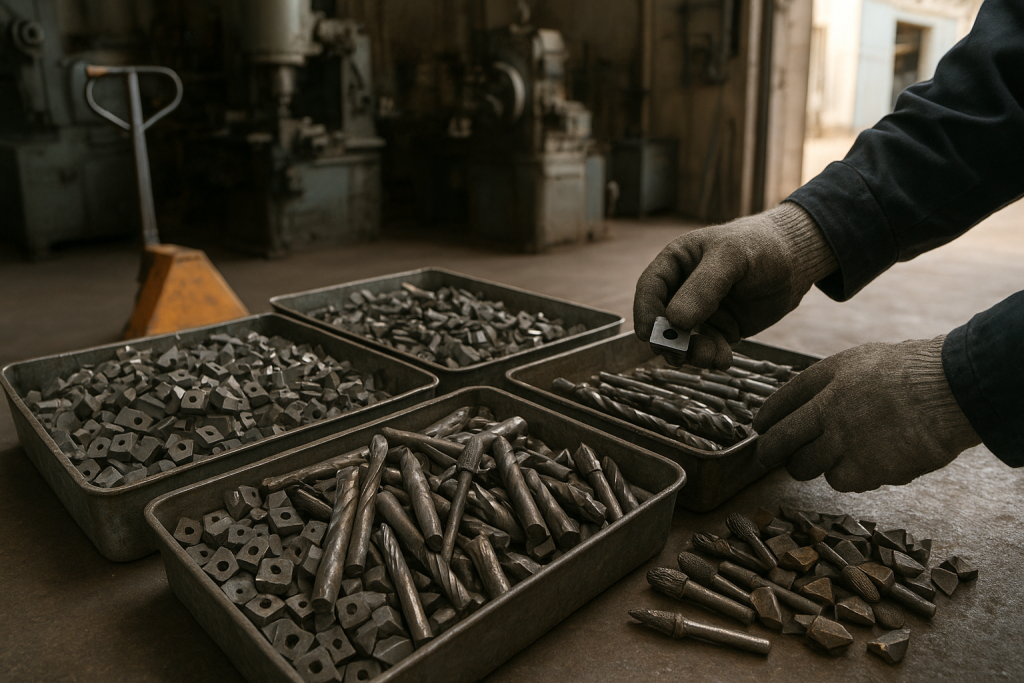
Common workshop carbide scrap includes:
- Indexable turning and milling inserts
- Solid carbide drills, end mills, reamers and rotary burrs
- Brazed carbide cutting tips and tooling
- Carbide dies, punches, nozzles and wear parts
- Mining, drilling or construction-tool buttons where composition is known
Grinding sludge, powder and sweepings require separate discussion because they may contain coolant, oil, abrasive particles and other metals. Do not mix these residues with clean solid carbide. Unknown tools should also be kept apart until their markings, purchasing records or material composition can be checked.
How a tungsten carbide scrap buyer Dammam Assesses Material
An initial assessment usually begins with photographs and a description of the scrap. A buyer may examine whether the batch contains solid cemented carbide, carbide attached to steel, mixed cutting tools or contaminated residues. Manufacturer markings and original tool records can support identification, but a visual inspection may still be needed.
Carbide often feels unusually heavy for its size and may appear dark grey, but appearance alone is not conclusive. Magnet response is also unreliable because binder composition and attached steel can influence the result. Avoid unsafe identification methods such as uncontrolled grinding, breaking or heating.
7 Smart, Essential Tips for Preparing Carbide Scrap
Use these practical steps before requesting an evaluation or pickup:
- Confirm the material category. Review tool labels, purchase records and workshop knowledge. Keep suspected carbide separate from high-speed steel, ceramic inserts and ordinary metal tooling. If identification remains uncertain, photograph the items and describe their former application.
- Separate solid carbide from attached steel. Place solid inserts and solid carbide cutting tools in one group. Keep brazed tips, drill bodies and pieces fixed to steel shanks in another because the additional metal can affect processing and evaluation.
- Sort recognizable forms and grades. Separate inserts, round tools, wear parts and residues. If grade or binder information is reliably available, retain those groups and labels. Do not guess at grades or mark an unknown batch as pure carbide.
- Control contamination. Drain free coolant where site procedures permit and remove loose packaging, plastic, rubber and general workshop waste. Do not use aggressive chemicals or grind tools merely to improve their appearance; these actions can create unnecessary safety and contamination concerns.
- Use strong, dry containers. Carbide pieces are dense, sharp and sometimes brittle. Use containers suitable for the load, avoid overfilling them and secure lids before movement. Keep fine residues in separate sealed containers appropriate to their condition.
- Record the quantity clearly. Provide an approximate weight, container count and representative photographs. Show both the overall batch and close views of inserts, markings, shanks or contamination so the buyer can understand what is being offered.
- Plan safe access for collection. Explain where the containers are stored, whether loading equipment is available and whether site induction or collection scheduling is required. Confirm that pallets, drums or boxes can be approached without disrupting workshop operations.
Following these steps helps a tungsten carbide scrap buyer Dammam distinguish reusable recycling feedstock from mixed workshop waste without relying on unsupported assumptions about grade or purity.
Factors That Influence Carbide Scrap Evaluation
There is no responsible way to quote every carbide batch at one fixed rate. Evaluation may reflect several connected factors:
- Material form: solid carbide, brazed tooling, mixed tools, sludge or powder
- Composition and grade: known binder and grade information where verifiable
- Purity: the proportion of carbide compared with steel and other materials
- Condition: moisture, oil, abrasive dust, coatings and general contamination
- Sorting: whether clean solids and attached components are separated
- Quantity: total weight, packaging and accumulation frequency
- Logistics: access, loading needs, collection distance and handling requirements
- Market conditions: current demand and recoverable material considerations
For a current quotation, give a tungsten carbide scrap buyer Dammam accurate information rather than relying on an old rate or a price for a different carbide form. Final weighing or inspection may be required before the transaction is confirmed.
How Workshop Collection and Selling Generally Work
Start by contacting Metal Scrap Dammam services with the material type, estimated quantity, photographs and collection location. Mention whether the batch is clean solid carbide, mixed tooling, brazed tips or residue. The information helps determine whether further inspection and pickup coordination are appropriate.
- Share photographs and a realistic quantity estimate.
- Discuss material condition, packaging and any attached steel.
- Confirm site access, preferred collection window and loading support.
- Keep the agreed batch separate until assessment and removal.
For larger workshop or factory quantities, appoint a site contact who understands the material and access rules. Containers should be stable, identifiable and ready for safe movement. If a forklift, pallet jack or lifting assistance is necessary, disclose that before collection rather than when the vehicle arrives.
Dammam and Eastern Province Workshop Considerations
Dammam has machining, fabrication and industrial maintenance activity that can generate worn cutting tools in small batches or recurring production quantities. A workshop seeking a tungsten carbide scrap buyer Dammam should consider how scrap moves from machines to storage. A designated carbide container can prevent valuable material from entering mixed steel bins.
Collections involving an industrial area may require gate instructions, driver identification procedures, restricted working hours or coordination with safety and security teams. Sharing these requirements early supports practical planning within Dammam and, where relevant, nearby Eastern Province industrial operations.
Responsible Recycling and Resource Conservation
Separating carbide from general waste supports the recovery of valuable industrial materials and reduces avoidable disposal. The recycling route depends on material form, cleanliness and processor requirements, so careful segregation remains important. The broader work of the UN Environment Programme also highlights resource efficiency, waste reduction and responsible material management. Workshops can contribute by maintaining clear records, preventing cross-contamination and using suitable recycling channels.
Frequently Asked Questions
How can I tell carbide tools from high-speed steel?
Check manufacturer markings, tool records and the original application. Carbide is often denser and more brittle, but appearance and magnet tests are not definitive. Keep uncertain tools separate for assessment.
Should carbide inserts be removed from steel holders?
Removable inserts should be separated where this can be done through normal, safe workshop procedures. Do not cut or grind brazed tips from shanks solely for sale; instead, classify them as attached carbide tooling.
Can oily carbide sludge be mixed with solid inserts?
No. Sludge may contain coolant, oil, abrasives and fine metal particles, so it should remain sealed and separate. Describe its source, condition and approximate quantity before requesting acceptance or collection guidance.
Can a Dammam workshop request pickup for carbide scrap?
Pickup may be discussed based on quantity, material type, location and access. Send photographs and handling details to the tungsten carbide scrap buyer Dammam so collection requirements and a current quotation can be considered.
Request a Carbide Scrap Assessment
To discuss clean inserts, solid carbide tools, brazed tips or separated workshop carbide, contact Metal Scrap Dammam. A tungsten carbide scrap buyer Dammam can review the information you provide and discuss suitable assessment and collection arrangements.
Website: Metal Scrap Dammam
Call / WhatsApp: +966532510699
Email: info@metalscrapdammam.com